DOJ seeks forfeiture of over $1.1 billion in USDC
The Justice Department filed a civil claim to forfeit more than $1.1 billion in USDC, the dollar-pegged stablecoin issued by Circle Internet Financial that settles trades and moves value across most major exchanges and DeFi protocols. The money is tied to a roughly $6 billion theft from Binance that North Korean cyber actors allegedly carried out on or about Oct. 29, last month.
- DOJ filed a civil forfeiture claim for over $1.1 billion in USDC.
- The government has helped freeze, seize or return over $2.9 billion of the roughly $6 billion stolen.
- No criminal charges are named in the release; the action is a civil asset-forfeiture proceeding, not a conviction.
- $1.1B USDC named in the civil forfeiture claim
- $6B total stolen from Binance in the October hack
- $2.9B total recovered or frozen across sources to date
The Justice Department said in the release that it had taken action “to forfeit over $1.1 billion in cryptocurrency that was criminally obtained by North Korean actors from Binance last month.” The filing targets USDC that prosecutors say is “proceeds and laundered funds” from the theft. The funds were already under a government restraining order before Monday’s civil claim.
$1.1 Billion Claim Moves Through DC Courts
The civil forfeiture claim was filed in the District of Columbia, where U.S. Attorney Jeanine Ferris Pirro’s office is handling the matter alongside national security and cybercrime prosecutors from Main Justice. Civil forfeiture lets the government seize assets tied to alleged crime without a criminal conviction against a person.
The release does not name any individual or entity as a criminal defendant, and no indictment is cited. The action proceeds against the USDC itself as the res, the standard posture in asset-recovery cases where the suspects are outside U.S. jurisdiction.
Binance Theft and the $2.9 Billion Recovered
The release frames the forfeiture as part of a larger effort tied to the October hack, in which North Korean actors allegedly stole more than $6 billion from Binance. Of that total, the government says it has helped freeze, seize or return over $2.9 billion since the theft, a figure that includes this $1.1 billion USDC claim.
The document gives no breakdown of how much of the $2.9 billion has actually been returned to Binance or its users versus merely frozen pending further proceedings.
Circle’s Role and What It Does Not Say
Circle Internet Financial is credited in the release as providing “valuable assistance” in the case, a role that typically means freezing or blacklisting the specific USDC tokens at the smart-contract level once law enforcement identifies the addresses.
The release does not detail which blockchain the USDC moved on, how many addresses were frozen, or whether Circle acted under subpoena or voluntary request.
The document also does not say how or when any recovered funds would be distributed to Binance or affected users. It references an earlier DOJ announcement on disrupting North Korea’s crypto theft operations without specifying how that prior action connects procedurally to Monday’s claim.
What Changes for Exchanges and Stablecoin Users
For Binance users whose funds were caught up in the October hack, the forfeiture claim is a procedural step toward possible recovery, not a payout. For USDC holders generally, the episode confirms that Circle can and will freeze tokens identified as theft proceeds, regardless of which wallet holds them, when U.S. law enforcement requests it.
Exchanges and custodians handling large USDC flows should expect similar freeze requests to follow other state-sponsored hacks, since the release frames this case as a template for “public-private partnerships” rather than a one-off.
The CCS Read
The CCS read. A $1.1 billion freeze-to-forfeiture turnaround in under a month shows stablecoin issuers are now the fastest chokepoint against state-linked laundering, faster than exchanges or mixers ever were. That speed is good for victims and bad for anyone assuming USDC moves outside U.S. reach once it leaves a centralized rail.
Watch the District of Columbia docket for the government’s next filing in the civil forfeiture case, which will determine how and when any recovered USDC moves toward Binance and affected users.
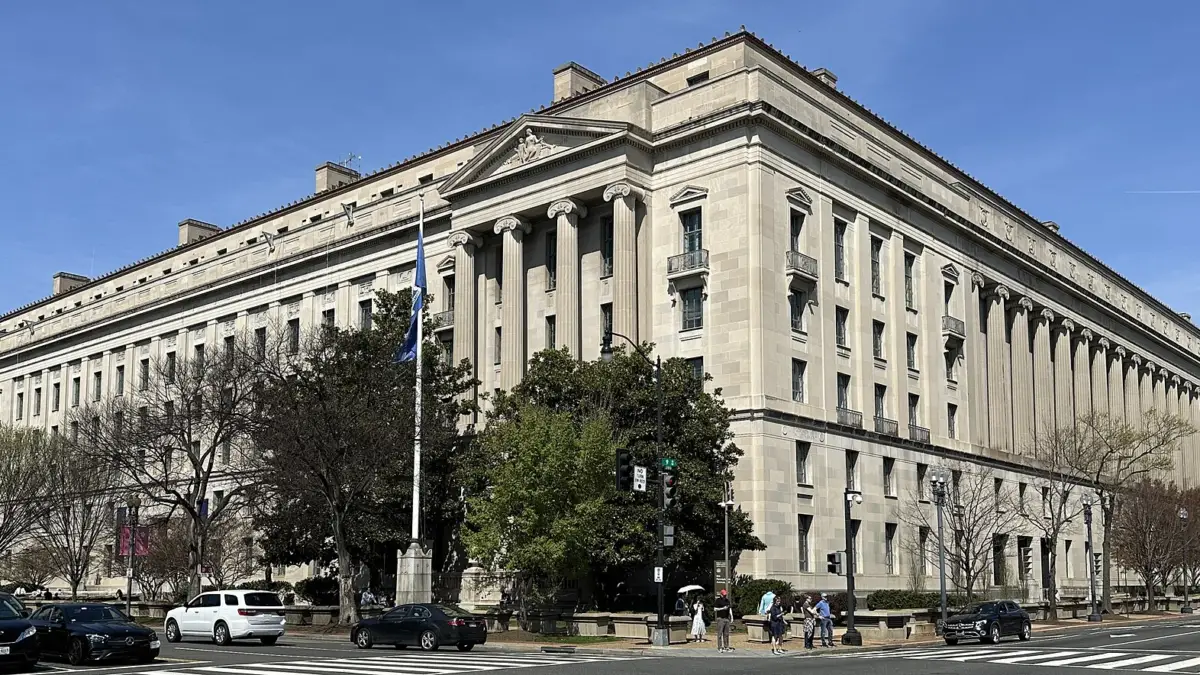
Lead image: Robert F. Kennedy Department of Justice Building, Washington. APK, CC BY 4.0