Tether charges hack victims 20% fees despite 10% public recovery policy
Tether’s public recovery policy caps fees at 10% for mistaken transfers, but the stablecoin issuer has sought 20% charges from some hack victims, a practice that exposes the gap between its published terms and discretionary enforcement. For institutions managing custody and loss recovery, the absence of binding standards means reissuance costs and timelines remain unpredictable.
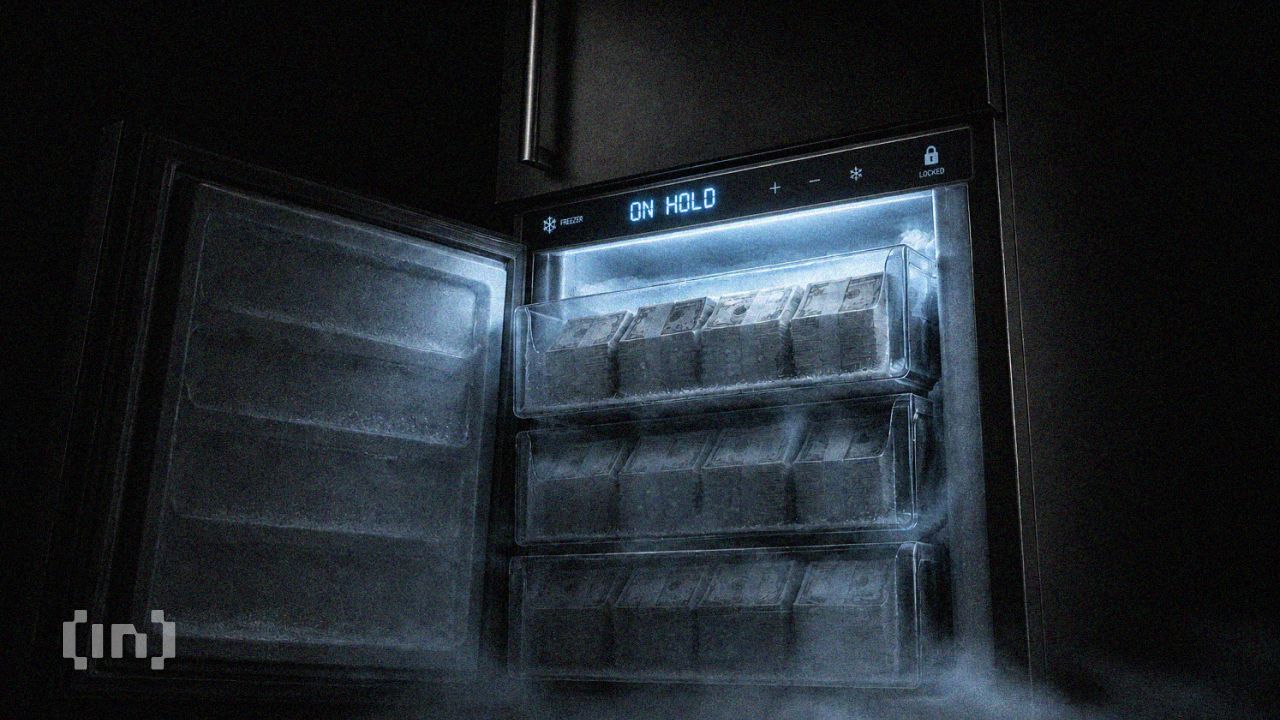
- Tether froze $1.5 billion in USDT within 30 minutes of the October Binance hack, but recovery timelines and fees vary by case.
- Bloomberg reported Tether sought 20% reissuance fees from some victims, including Singapore exchange Bittok waiting over five years for return.
- Tether’s public policy caps recovery fees at up to 10%, but CEO Paolo Ardoino said hack cases go to a separate team with different terms.
- $1.5B USDT frozen by Tether within 30 minutes after October Binance breach
- 20% Reissuance fee sought from some hack victims versus 10% in published policy
- 5+ years Bittok has waited for recovery of frozen USDT since June 2020 theft
Tether’s approach to returning frozen USDT divides victims into two streams, accidental transfers and theft cases, with sharply different recovery terms that the company does not publicly disclose. According to Tether’s published recovery policy, the company charges up to 10% of the recovery amount or $1,000, whichever is greater, for tokens mistakenly sent to unsupported addresses. But first reported by BeInCrypto, citing a Bloomberg investigation, Tether has demanded 20% reissuance fees from some hack victims before returning their funds, a multiple that undercuts both the stated policy and victims’ willingness to accept recovery costs.
The Bittok case illustrates the disparity’s real cost. Hackers stole $50 million from the Singapore exchange in June 2020; Tether froze part of the stolen USDT, but according to Bloomberg’s review of internal emails, a Tether lawyer told Bittok’s buyer that a 20% “reissuance fee” would apply to any returned tokens. More than five years later, the funds have not been returned.
Tether separates theft recovery from its standard 10% policy with no public disclosure of the difference
Tether’s public recovery policy, available on its website, explicitly caps fees at 10% for “token recoveries”, the process of returning USDT sent to wrong addresses or incompatible contracts.
The policy states that Tether “will charge you a fee of up to 10% of the recovery amount or $1000 (whichever is greater)” and reserves the right to reject recovery requests entirely “in its sole and absolute discretion.” Critically, the policy makes no mention of hack cases or the separate terms that govern them.
CEO Paolo Ardoino told Bloomberg that theft and hack cases route to a separate team operating under different rules. Tether says it has reissued $1.2 billion in USDT across all recovery requests, and that fees cover processing and legal costs.
But the company does not publish which cases trigger 10% charges and which trigger 20%, nor does it disclose the criteria for routing cases between the standard recovery team and the theft team. This discretion leaves institutional clients, exchanges, custodians, and their customers, unable to forecast reissuance costs or recovery timelines.
The problem is there is no guidance, there is no law that guides this.
Paolo Ardoino, CEO of Tether
Ardoino’s acknowledgment that no law governs USDT recovery is accurate: stablecooin reissuance sits in a regulatory void. Tether holds more than $7 billion in frozen USDT, according to the company, with no binding standard for how or when those tokens return to owners or their representatives. In the absence of regulation, Tether’s discretion is contractually absolute.
Binance’s October theft forced the speed test; Tether won approval to freeze but courts now control release
When North Korean hackers drained $6.3 billion from Binance in October, Tether froze more than $1.5 billion in USDT within 30 minutes, demonstrating the technical speed with which the issuer can immobilize tokens. Circle, issuer of USD Coin, froze $1.1 billion in USDC in the same window. Speed, however, is not the same as restitution.
Binance has since obtained a court order to reclaim part of its stolen funds, shifting control from Tether’s discretion to judicial review.
That shift matters. As long as Tether alone decides which frozen tokens return and under what terms, victims and their lawyers lack recourse. Courts, by contrast, can compel release and may reject Tether’s fee structure as unreasonable.
The absence of published standards for hack recoveries has drawn criticism from crypto industry observers. Crypto Rover, a known market analyst, stated on X that “victims already lost their money to hackers. Now some are being asked to give up a huge portion of it just to get the rest back.” The critique captures a central tension: Tether argues that fees offset its legal and operational burden, but victims have already borne the cost of the theft itself. In institutions’ view, mandatory fees on recovery create a second loss and an incentive to settle claims rather than pursue full restitution.
No timeline guarantee and no escalation path creates institutional uncertainty over custody strategy
Tether’s recovery policy explicitly states that “there is no time frame or time limit for any discretionary recovery process,” warning that “it is not uncommon for recovery requests to sometimes take several months.” Bittok’s wait, more than five years without return, exceeds even that vague ceiling and raises the question of what “completion” means when years pass with no resolution.
For institutions managing USDT custody or accepting it as collateral, the lack of a binding timeline or escalation path creates material risk. A five-year freeze on $50 million ties up capital, blocks accounting closure, and forces reserves management around uncertain recovery dates.
If an exchange or custodian cannot predict when frozen USDT will be returned, it cannot reliably model its liquidity. Tether’s policy offers no recourse: it instructs users not to contact the company and instead to “wait for a notification,” making it impossible for institutions to track case status or challenge delays.
The policy also requires users to become “verified users under Tether’s Terms of Service,” a step that may exclude entities Tether deems high-risk or undesirable, giving the issuer another gate through which to deny recovery without public justification.
The CCS read. We see a stablecoin issuer using its technical monopoly on reissuance to extract economic value from crime victims while concealing the cost structure from public view. For institutional crypto firms, this signals that USDT frozen in a hack is not simply delayed, it may never come back, or may cost 20% to retrieve. The gap between Tether’s 10% published policy and its 20% ad hoc practice should factor into custody risk premiums and collateral haircuts.
The question now centers on whether courts will intervene. Binance’s successful suit for a release order may set precedent that compels Tether to unfreeze stolen USDT regardless of recovery fees, or it may force the issuer to justify its 20% charges in a public filing. US Senator Richard Blumenthal has also criticized Tether for inadequate sanctions compliance; that pressure, combined with litigation, could force publication of recovery standards within the next 12 months.
From the CCS interview archive
All 1,000+ interviews Lars Christensen on what crypto needs before the next bull runLars Seier Christensen, Concordium · Sep 2023
- REV3AL brings cyber security to Hedera with Adam Russell and Mo KumarsiAdam Russell, REV3AL · Jul 2022
- Minterest launches private beta for yield generation platformJosh Rogers, Minterest · Feb 2022