New York secures lifetime industry ban and $35 million settlement from Celsius founder Mashinsky
New York’s attorney general has secured a permanent ban on Celsius founder Alex Mashinsky from the securities, commodities, and crypto industries, with up to $35 million in conditional payment obligations that hinge on his federal forfeiture and prison compliance. The settlement resolves state civil claims but leaves a carve-out allowing Mashinsky to trade his own assets, a rare exception that underscores the legal line between operating a platform and personal trading.
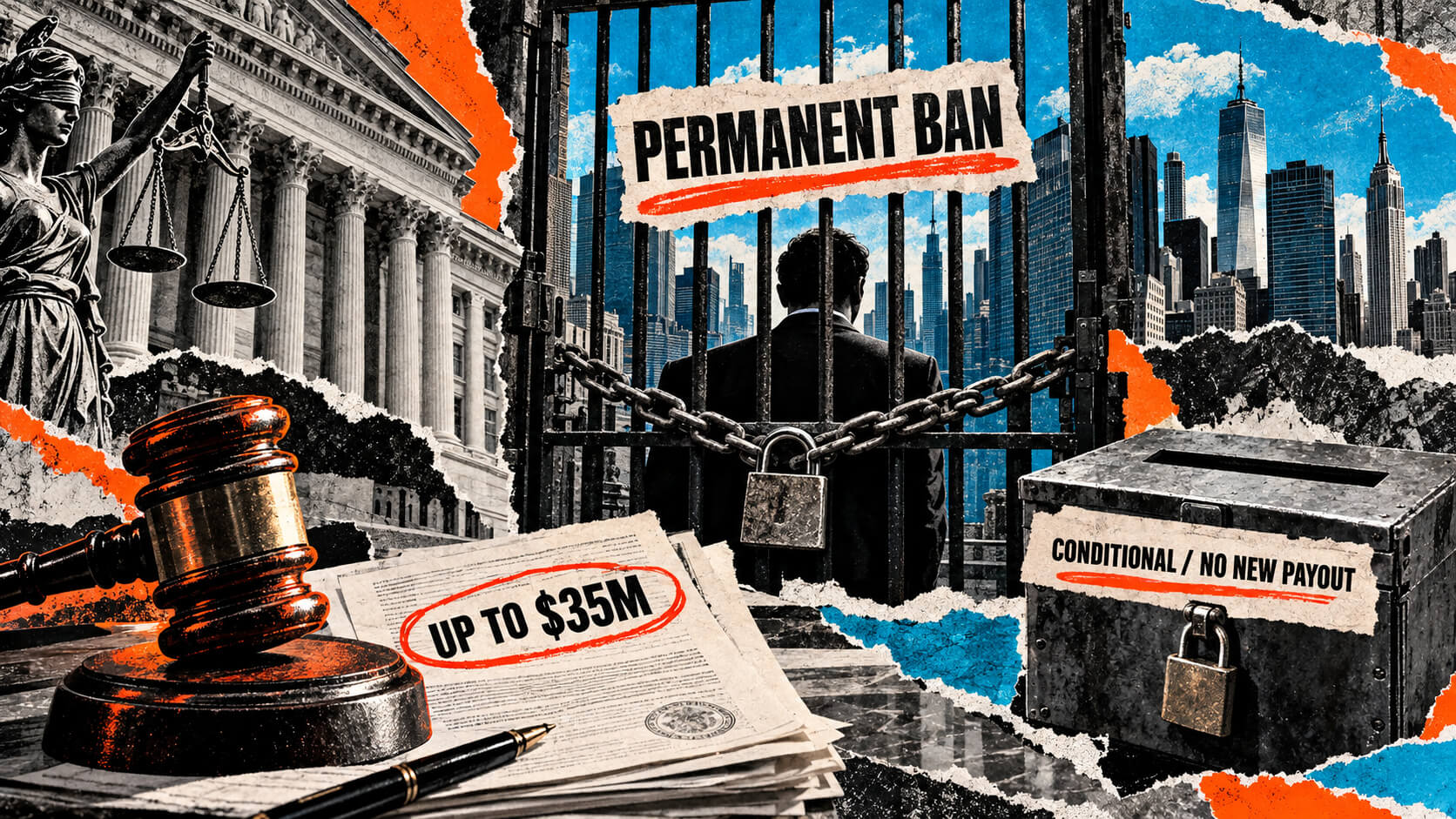
- Mashinsky faces a permanent ban from securities, commodities, and crypto businesses under a New York settlement announced October 9, 2026.
- Up to $35 million in conditional obligations: $25 million in damages satisfied by a qualifying $10 million DOJ forfeiture payment, plus a separate $10 million judgment satisfied by serving his full federal sentence.
- The ban retains an exception allowing Mashinsky’s own personal cryptocurrency purchases and sales, a carve-out that distinguishes personal trading from business operations.
- $35 million in conditional state payment obligations from Mashinsky under the settlement agreement
- $48.4 million federal forfeiture order already entered at sentencing on May 8, 2025
- $3.4 billion distributed to Celsius creditors as of August 2026 in the bankruptcy proceeding
New York Attorney General Letitia James announced on October 9 (Friday) that she has secured a permanent ban and $35 million settlement from Alex Mashinsky, co-founder and former CEO of Celsius Network. The accord resolves a state civil suit filed in January 2023 and operates in parallel to a federal criminal case in which Mashinsky is serving a 12-year prison sentence. Mashinsky deceived hundreds of thousands of investors by misrepresenting Celsius as a safe platform comparable to a bank, when the lending platform routinely deployed deposits into high-risk strategies that resulted in substantial losses he concealed.
Mashinsky’s conditional $35 million obligation splits on forfeiture and prison compliance
The settlement structure ties Mashinsky’s state obligations to his federal case outcomes, creating two separate payment conditions. The first obligation is $25 million in damages to New York, which the consent order deems satisfied by a qualifying $10 million payment to the U.S. Department of Justice under his federal forfeiture order. Payments made after May 20, 2025, may count dollar for dollar toward that threshold; if Mashinsky fails to satisfy the $10 million federal payment, New York is owed the entire $25 million.
The second obligation is a separate $10 million monetary judgment payable to New York, deemed satisfied by completion of his federal prison sentence.
The consent order carves out specific exceptions to this satisfaction clause, including sentence reductions through appellate relief or Section 2255 motions, compassionate release, good-time credits, earned-time credits, and release under the First Step Act. If any of these occur, the $10 million judgment becomes immediately due.
This structure creates an incentive for Mashinsky to serve his full sentence without appeal and to avoid early-release mechanisms, a rare situation where federal clemency or sentence reduction could trigger fresh state liability.
Permanent business ban permits personal trading but prohibits any advisory role
The ban prevents Mashinsky from acting as a broker, investment adviser, manager, officer, or consultant in securities, commodities, or crypto businesses. It also prohibits him from distributing investment advice for compensation or economic benefit.
However, the settlement explicitly permits Mashinsky’s own personal purchases and sales of cryptocurrency, a carve-out that reflects the legal distinction between operating a financial platform and individual asset trading.
This exception is uncommon in major fraud settlements and creates an open question: what constitutes “personal” trading if Mashinsky conducts substantial volumes or uses undisclosed intermediaries.
The settlement records Mashinsky’s admission that he misled investors about Celsius’s regulatory approval and concealed his own sales of Celsius’s CEL token. Federal forfeiture was ordered at $48.4 million at sentencing on May 8, 2025. The Celsius bankruptcy has distributed more than $3.4 billion to creditors as of August 2026.
New York’s compliance mechanisms now rest on monitoring Mashinsky’s federal forfeiture status and prison record, both overseen by separate agencies.
The CCS read. We see that the personal trading carve-out may signal a regulatory willingness to distinguish between platform operators and individual crypto holders in fraud enforcement, but the condition structure, tying state obligations to federal forfeiture and prison compliance, creates execution risk if the Department of Justice payment timeline slips or if Mashinsky’s federal sentence is reduced on appeal. Institutional lenders and platforms should monitor whether other settlements adopt similar bifurcated compliance architecture.
The settlement’s effectiveness depends on federal compliance: DOJ payments made after May 20, 2025 may count toward the $10 million qualifying threshold needed to satisfy his New York damages obligation. Whether the DOJ has received and credited any payment to Mashinsky’s forfeiture account will determine whether the first $25 million condition stands as satisfied or becomes immediately due to the state.
Original reporting: cryptoslate.com