Conduit sues Tether over $2.76 million USDT frozen for over a year without investigation
Conduit’s lawsuit exposes a structural tension in Tether’s enforcement model: the issuer profits from frozen assets while holding them indefinitely, creating financial incentive to preserve freezes even after law enforcement backing has weakened. For institutional users and payments platforms, the case signals that stablecoin custody risk now includes indefinite asset lockup with no contractual recourse.
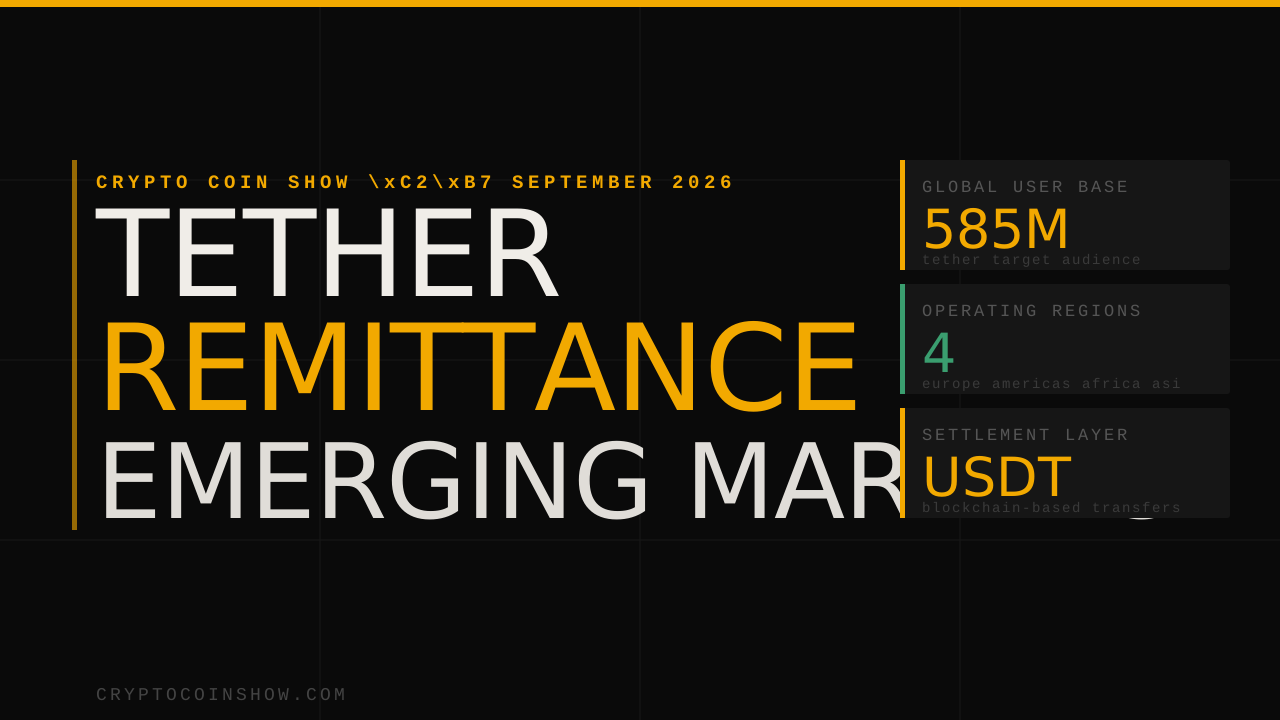
- Conduit claims Tether froze $2.76 million USDT in its operating account for over a year despite no law enforcement investigation into Conduit itself.
- Brazilian court found Conduit was not under investigation; the freeze traces to a referral involving Onix, which stopped using Conduit in April 2025, one month before the frozen wallet was created.
- Tether collects interest on Treasury bonds backing frozen tokens, creating financial incentive to hold assets; plaintiffs seek return of principal plus equivalent damages.
- $2.76M USDT frozen in Conduit operating account since initial freeze over one year ago
- $42.4M USDT frozen across 10 addresses in similar August 2025 lawsuit by Thai businessmen against Tether
- $4.4B total assets Tether says it has frozen linked to suspected crime across all operations
Conduit Technology Inc., a cross-border payments platform operating in more than 100 countries, sued Tether in the U.S. District Court for the Southern District of New York on October 5 (Monday) to recover $2.76 million in USDT that Tether froze and has kept locked for more than a year. The complaint names four Tether entities as defendants: Tether Holdings, Tether International, Tether Operations, and Tether Investments. Conduit argues the frozen wallet served as its treasury and operating bank account, paralyzing its business, and that Tether has offered no explanation for the freeze and refuses to lift it.
Conduit claims Tether froze assets tied to separate Brazilian investigation
The freeze originated from a case referred to Brazil’s Federal Police involving Onix Intermediações, a company that once used Conduit’s platform. Conduit says law enforcement confirmed it never flagged Conduit’s treasury wallet and that a Brazilian court found Conduit was not under investigation in the Onix matter.
Critically, Onix stopped using Conduit’s platform in April 2025, roughly one month before Conduit even created the treasury wallet that Tether later froze, and the wallet never held any of Onix’s money.
Conduit seeks the $2.76 million returned and an additional $2.76 million in damages.
The company also demands compensation for interest Tether earned on the U.S. Treasury bonds backing the frozen tokens. Tether backs its reserves with interest-bearing instruments, mostly Treasuries, meaning that holding frozen assets costs Tether nothing while the issuer continues collecting yield on the underlying collateral.
That financial structure sits at the heart of Conduit’s claim: Tether has an economic incentive to freeze and hold, independent of law enforcement need.
Tether’s enforcement unit defends freezes as crime-fighting while plaintiffs cite structural incentive problem
Tether runs the T3 Financial Crime Unit jointly with TRON. Tether says it cooperates with more than 340 agencies across 65 countries and has helped freeze over $4.4 billion in assets linked to suspected crime, including 4.3 million USDT during Operation Lusocoin, a Brazilian Federal Police investigation.
Yet Conduit’s case joins a pattern: on August 31, Thai businessmen Nutthawat Rukthammachalern and Natthawat Kasamvilas sued Tether over $42.4 million in USDT frozen across 10 Ethereum addresses.
Tether blacklisted those addresses on October 30, 2025, following an informal U.S. law-enforcement request, but a magistrate judge did not sign a seizure warrant until February 19, nearly four months later. Tether dismissed that lawsuit as “a baseless attempt to interfere with Tether’s important work with global law enforcement.”
The structural incentive problem persists regardless of Tether’s enforcement record.
In February, New York Attorney General Letitia James and Manhattan District Attorney Alvin Bragg told Congress that stablecoin issuers can “profit from fraud” by keeping frozen funds and the interest on them rather than returning money to victims.
A Senate subcommittee led by Richard Blumenthal separately requested investigation of Tether’s sanctions and anti-money-laundering compliance after finding that 84 percent of 846 Iran-linked wallets transacted almost entirely in USDT. The compliance questions center on whether Tether’s dual role, as both enforcement officer and profiting beneficiary of frozen assets, creates misaligned incentives to hold assets longer than law enforcement actually requires.
Institutional payments platforms now face indefinite custody risk with no contractual remedy
Conduit’s case exposes a liability that institutional users of USDT did not negotiate when they adopted the stablecoin for cross-border payments. Tether’s terms of service do not specify how long a freeze can last, what cause is required to initiate one, or what recourse a user has if law enforcement interest evaporates.
Unlike a bank freeze, which operates under regulatory frameworks and statutory timelines, a blockchain-based freeze can persist indefinitely at the issuer’s discretion.
Payments platforms and fintech firms that rely on USDT for treasury or operating liquidity now face the possibility of total asset lockup with no remedy except litigation.
This risk appears particularly acute for cross-border payments, where stablecoins substitute for traditional banking infrastructure. Conduit argues that because the frozen wallet was its operating account, the freeze disabled its core business. Tether has not disclosed how many other user wallets remain frozen pending law enforcement follow-up or how long those freezes typically persist.
Institutional investors and fintech firms evaluating USDT as a reserve asset or operational currency must now factor in counterparty risk tied to Tether’s unilateral enforcement authority and the issuer’s financial incentive to maintain freezes.
The CCS read. We see a custody framework that crypto payments platforms never anticipated when stablecoins promised to replace banking rails. USDT’s freeze mechanism was designed for sanctions compliance and crime prevention. But because Tether profits from holding frozen collateral, the system has inverted: users of USDT now bear indefinite lockup risk while Tether captures the yield. Until stablecoin issuers are required to hold frozen collateral in escrow earning zero interest, or to return frozen assets within a statutory deadline absent a court order, Conduit’s case will not be the last of its kind.
Conduit’s lawsuit is scheduled for the Southern District of New York; Tether’s motion to dismiss and the court’s response to it will shape whether institutional users of USDT can pursue damages for indefinite freezes, or whether the issuer’s unilateral authority remains unreviewable. In parallel, the Senate subcommittee’s request for Treasury and DOJ investigation into Tether’s Iran-linked transaction compliance remains pending, and could inform whether Congress imposes statutory limits on freeze duration and issuer profiting from frozen reserves.
Original reporting: cryptopolitan.com