THORWallet adds native Monero support as exchanges delist XMR
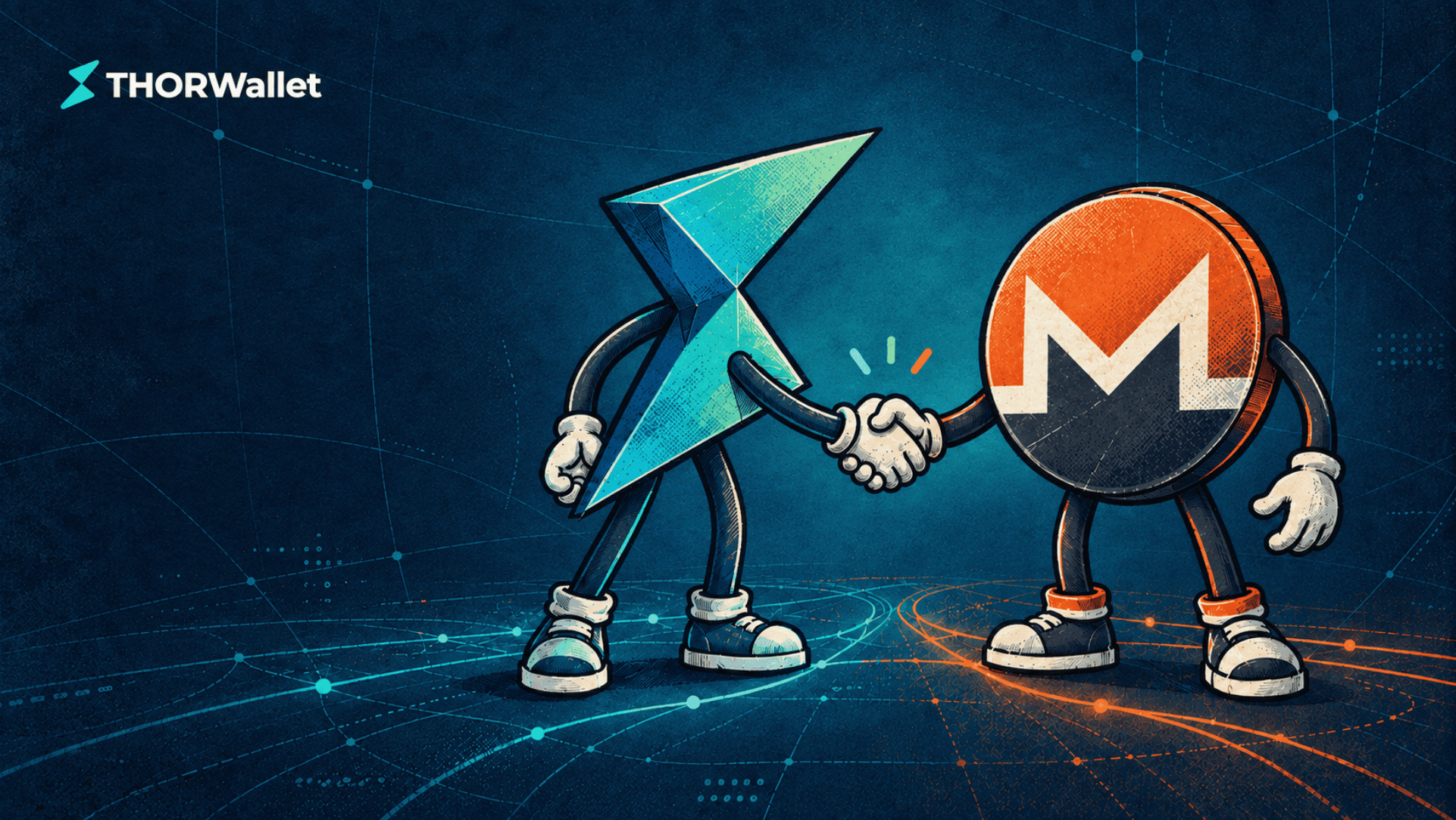
THORWallet has added native support for Monero (XMR), letting users send, receive and manage the privacy-focused cryptocurrency without leaving the app, with on-chain cross-chain swaps between XMR and assets like Bitcoin and Ethereum still pending a security audit. The move extends THORWallet’s multi-chain self-custody model to an asset most exchanges have delisted under regulatory pressure, giving institutional holders a non-custodial channel to Monero through a self-custody wallet interface.
- Users can create multiple Monero accounts from a single wallet seed and route transactions through a custom node.
- Keys, balances and transaction history are computed and stored only on the user’s device under THORWallet’s lightweight client.
- Native cross-chain XMR swaps to BTC, ETH, stablecoins, SOL and ZEC await the completion of THORChain’s ongoing audit.
- 175+ countries where THORWallet’s Mastercard crypto spend card works
THORWallet, a self-custody wallet built on THORChain’s cross-chain exchange network, has integrated Monero, the privacy coin that shields sender, receiver and transaction amounts on its own blockchain. The addition was first detailed in a report from BeInCrypto, which confirmed core send-and-receive functionality is live now, with native swaps still in testing.
THORWallet Keeps Monero Keys On-Device, Not on Servers
The integration goes beyond a basic send-and-receive wallet. Users can generate and manage multiple Monero accounts from the same seed phrase, a structure that lets traders or funds segment activity without creating separate wallets.
THORWallet also lets users point their Monero traffic at a node of their choosing, or default to the wallet’s own node if they prefer not to run infrastructure themselves.
That matters because THORWallet runs what it calls a lightweight implementation. Keys, balances and transaction history are computed and stored locally on the user’s device and never transmitted elsewhere.
For institutional users, the distinction is operational rather than cosmetic. A self-custody Monero client with device-only key storage removes a counterparty risk that has dogged XMR holders since major exchanges, including Binance and Kraken in some jurisdictions, delisted the asset over anti-money-laundering concerns.
THORChain’s Monero Audit Gates Native XMR Swaps
The next phase of the rollout is cross-chain swapping without centralized exchanges. Monero support on THORChain, the decentralized swap protocol underlying THORWallet, is currently being tested and audited before it goes into production.
Once that audit clears, users will be able to swap XMR directly for BTC, ETH, stablecoins, SOL, ZEC and other assets inside the app. THORWallet frames this as removing the need for custodial intermediaries at the exact point, conversion between a private asset and a transparent one, where most Monero holders have historically had to trust a third party.
No completion date for the audit has been disclosed, leaving the timeline for production-ready XMR swaps as the open question hanging over the integration.
THORWallet Positions Monero Inside a Broader Trading Push
THORWallet’s own site describes itself as offering “more cross-chain routes than any wallet in crypto,” built on native settlement across chains rather than bridges or wrapped tokens, according to the wallet’s website. The platform already supports tokenized US equities and ETFs, perpetual futures on BTC, ETH and other markets, and a Mastercard-linked spend card usable in more than 175 countries.
Monero’s addition fits a pattern already visible elsewhere in DeFi, where wallets and lending markets are widening the asset menu beyond blue-chip tokens; Aave’s recent move to accept Coinbase tokenized stocks as collateral reflects the same push toward real-world and niche assets inside a single interface. A future XMR-to-stablecoin swap route would similarly connect privacy-coin liquidity to products like OUSD, the Stripe-linked stablecoin that launched on Solana.
The CCS read. We see this as a liquidity test more than a privacy milestone. THORWallet’s bet is that demand for exchange-free Monero exit routes is strong enough to justify the audit spend on THORChain, and the real signal will be swap volume once that code ships, not the wallet integration announced now.
THORChain has not published a target date for completing its Monero audit, and until that review clears, XMR swaps will remain confined to send-and-receive functionality inside THORWallet rather than full cross-chain settlement.