
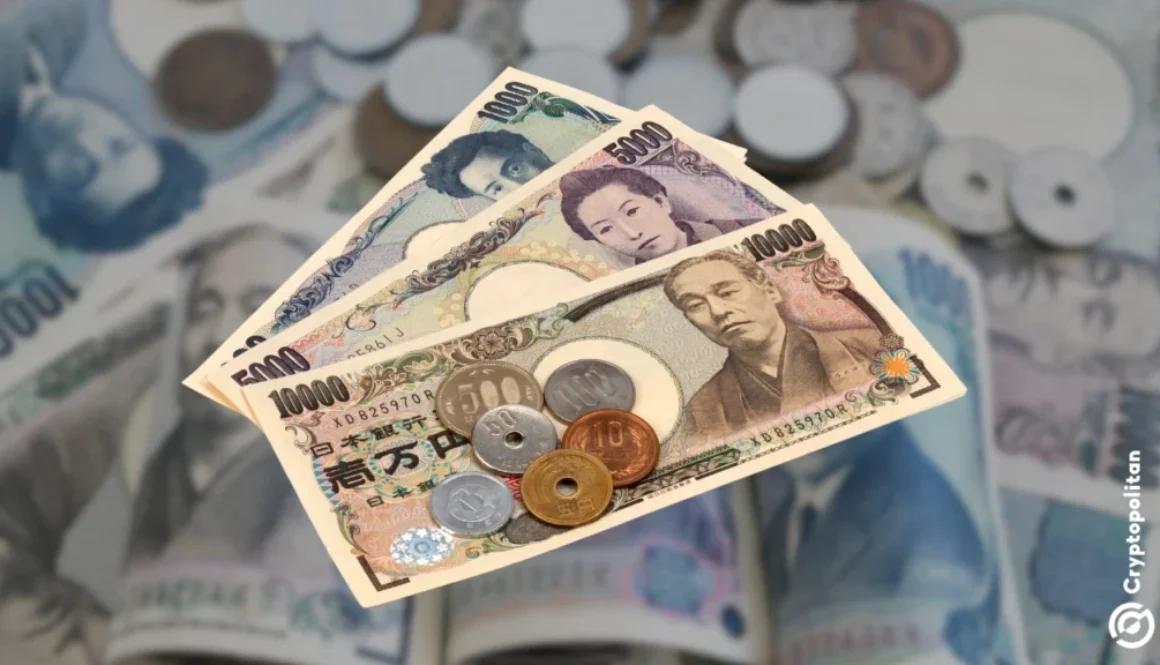
Japan’s Ministry of Finance studies tokenizing government bonds to tap $2 trillion RWA market
Japan’s Ministry of Finance is studying whether to tokenize government bonds on blockchain, a move that could unlock the $2 trillion real-world asset market Standard Chartered projects by end-2028 and position the yen as a 24/7 collateral currency for global finance. The decision hinges on whether blockchain settlement improves efficiency enough to justify fragmentation of the existing bond market.
- Japan’s Ministry of Finance established a study group on September 30, 2026, to examine tokenizing Japanese Government Bonds, with final recommendations due by December 2026 or January 2027.
- Standard Chartered projects tokenized RWAs (excluding stablecoins) could grow to $2 trillion by end-2028, with $750 billion each in money market funds and equities, and $13 billion in tokenized U.S. Treasury bills currently on-chain.
- Japan’s repo market, worth at least ¥250 trillion, could enable 24/7 collateral settlement outside business hours, potentially increasing international yen usage and addressing $16 trillion in global government-bond-backed repos.
- $2T Standard Chartered’s RWA projection by end-2028, up from $45 billion today
- ¥250T Estimated size of Japan’s repo market eligible for blockchain settlement
- $16T Global repos backed by government bonds as of end-2024, per FSB data
Japan’s Ministry of Finance has begun formal study of tokenized government bonds, according to discussions held on October 8 and October 30, 2026. The study group, chaired by the Deputy Director-General of the Financial Bureau, is examining three paths: tokenizing only the rights to JGB assets while keeping the existing book-entry system intact; performing transfers through blockchain within that system; or issuing new bonds based entirely on blockchain technology. The group plans to finalize its analysis by December 2026 or January 2027, according to meeting materials from the Ministry. This timing matters: institutional investors globally are watching whether Japan moves first on government-bond tokenization, a move that could reshape how central banks, money managers and foreign exchange dealers access and trade sovereign collateral outside traditional market hours.
Standard Chartered ties $2 trillion RWA forecast to Japan’s bond-tokenization success
Geoffrey Kendrick, Global Head of Digital Assets Research at Standard Chartered, projected in a note from November 16, 2026, that tokenized real-world assets excluding stablecoins could expand from nearly $45 billion today to $2 trillion by end-2028. The forecast rests on two pillars of $750 billion each: money market funds and equities. Long-dated sovereign bonds represent the largest untapped segment.
As of November 16, Kendrick estimated $13 billion in tokenized U.S. Treasury bills and less than $1 billion in non-U.S. government bonds on-chain. If Japan reduces costs and friction for bond trading through tokenization, Kendrick argued, other developed nations would likely follow, unlocking trillions in dormant institutional capital.
This is Kendrick’s projection, not a government target; Japan has set no specific digitization milestone or asset goal.
Twenty-four-hour repo settlement could make yen a global collateral currency
Progmat’s interim report from October 22, 2026, identified Japan’s repo market, worth at least ¥250 trillion, as the real institutional prize. Bilateral repos currently settle only during Japanese business hours on weekdays. If JGB collateral could move on-chain, settlement could occur around the clock, allowing overseas investors to manage liquidity and credit lines without waiting for Tokyo to open. Michio Saito, a finance ministry official, noted that round-the-clock JGB transfers would expand the yen’s use in international transactions, improving its standing as a reserve and settlement currency.
The Financial Stability Board reported that repos backed by government bonds reached $16 trillion by end-2024, with roughly 10 percent of that volume originating in Japan. About 60 percent of non-Japanese repo volume clears through central counterparties, while the FSB cautioned that on-chain settlement could amplify leverage and liquidity risks if not carefully designed. For institutions managing cross-border collateral portfolios, 24/7 JGB settlement would eliminate overnight funding gaps and free up capital tied up in intraday liquidity.
Market fragmentation and custody risk remain unresolved barriers
Japan faces three material obstacles that the study group has flagged but not yet resolved. First, custody remains fragmented: unlike the U.S., where major custodian banks dominate and can tokenize securities in-house, Japan has no equivalent concentration of infrastructure.
Second, withholding-tax complications arise when foreign investors hold tokenized JGBs directly on-chain rather than through intermediaries. Third, legal uncertainty persists: no Japanese statute explicitly permits bonds to exist and trade entirely on a permissionless blockchain or defines the rights of on-chain bondholders in bankruptcy or civil execution.
The study group noted that if on-chain JGBs trade alongside traditional bonds, the market could fragment, requiring more total liquidity to maintain current trading volumes and potentially destabilizing price discovery.
The U.K. is ahead: HM Treasury’s short-dated DIGIT pilot is expected by Q1 2027, though savings remain unproven and UK gilt market liquidity is already high. A July 10, 2025 Bank for International Settlements study of 60 tokenized bonds worth $8 billion found narrower bid-ask spreads in some cases but similar total issuance costs compared to traditional bonds.
Japan has announced no issuance timetable, leaving the question of whether cost savings will materialize entirely open.
The CCS read. We see the repo case as the institutional story, not retail bond sales. If Japan enables 24/7 yen collateral settlement, it reshapes how global banks manage funding and reserve ratios, a utility play, not a tokenization one. The study group’s December deadline will likely produce a narrow mandate: pilot repos first, broader bond trading second. Market fragmentation risk is real and may push the group toward keeping on-chain JGBs tethered to the existing book-entry system rather than creating a parallel blockchain market.
The study group’s report is due by January 2027 at the latest. If it endorses repo settlement and proposes a pilot framework, expect Japan to announce a live test within Q2 2027 naming specific counterparties and repo volumes. If custody and withholding-tax issues remain unresolved, the pilot will likely be delayed into late 2027 or 2028, allowing the U.K.’s DIGIT program to set the precedent instead.