Wirex deploys Navoka AI agent with its own bank account to boost consumer payment trust
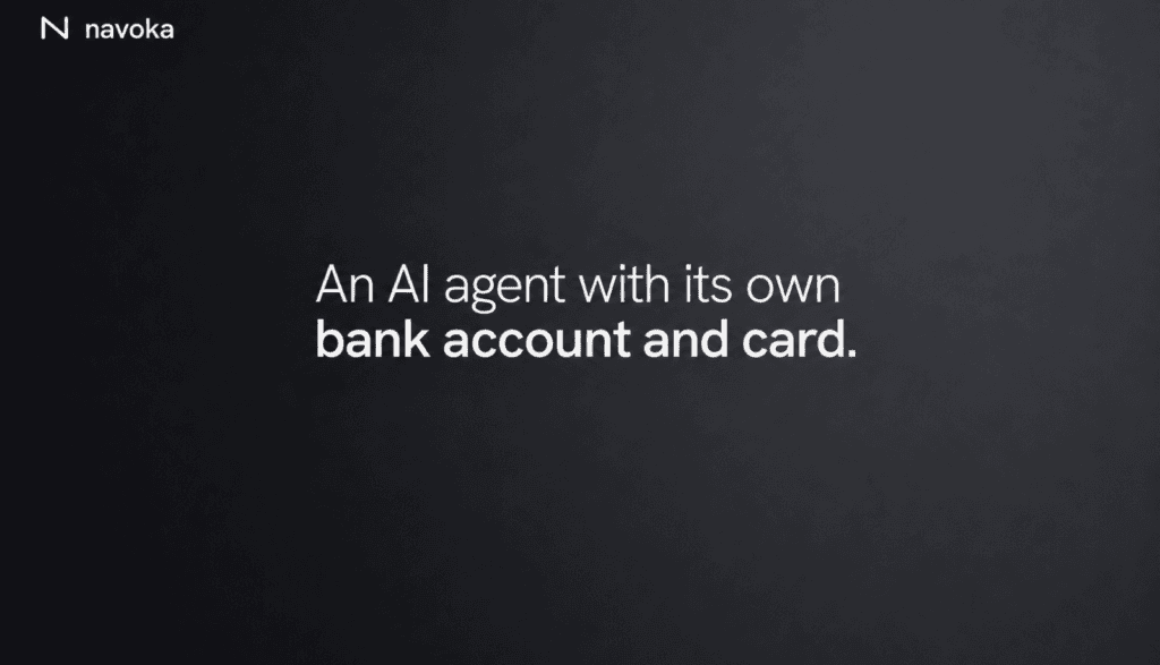
Wirex has deployed Navoka, an AI agent with its own bank account, debit card and stablecoin wallet, designed to let users authorize payments without exposing their personal banking details to autonomous systems. The launch addresses a critical adoption barrier: only 23% of US consumers trust AI to handle payments, even as 1.3 billion people are expected to use agentic commerce by 2031.
- Navoka agent holds separate IBAN, debit card, USDC and EURC wallet isolated from user personal accounts
- Users set spending limits, merchant whitelists, daily caps and country restrictions that agent cannot override
- Platform accessible by invitation only; multi-currency support includes dollar, euro, pound and digital assets
- 23% US consumers who trust AI to handle payment transactions independently
- 1.3B people projected to use agentic commerce by 2031, per Juniper Research
- $1B annualized card spend Wirex reached, fastest in crypto-card history
Wirex, a stablecoin banking infrastructure platform, has launched Navoka, an AI payment agent with its own federated banking layer, as first reported by BeInCrypto. Unlike existing AI payment tools that draw from a user’s personal crypto wallet or bank account, Navoka operates under a custody model where each agent receives a dedicated IBAN, Visa or Mastercard debit card, and segregated wallets holding USDC and EURC stablecoins. The announcement came at Full Stack London, a Wirex-hosted infrastructure event, with access currently limited to invited users.
The structural separation addresses a documented trust deficit in autonomous finance. Visa’s Trust Index found that only 23% of US consumers trust generative AI to handle payment transactions on their behalf, a stark mismatch against Juniper Research projections of 1.3 billion agentic commerce users by 2031. Navoka’s model closes that gap by keeping agent accounts walled off from personal finance, with every transaction validated against user-defined rules before settlement.
Navoka’s account structure isolates agent spending from user bank details
Each Navoka agent receives its own IBAN and debit card, paired with stablecoin wallets denominated in USDC (US dollar) and EURC (euro). Funds flow instantly between the user’s main account and the agent’s segregated account, but the agent itself never accesses the user’s card number, bank details or personal financial credentials.
This architecture means users can authorize an AI system to transact without granting it access to their underlying banking infrastructure.
Users interact with Navoka through messaging platforms, Telegram is live, with WhatsApp and iMessage roadmapped, or by connecting it to ChatGPT, Claude or Grok. The agent can execute payments, invoices, transfers and subscriptions within guardrails set at authorization time. A “kill switch” lets users instantly freeze the card, suspend rules or disconnect linked AI assistants.
Every transaction records which rule authorized it, who approved any exceptions, and the reason for the payment, creating an immutable audit trail.
User-defined controls lock spending limits that agents cannot modify
Users define allowed merchants, daily spending caps, country whitelists and asset lists before delegating any payment authority to the agent.
Navoka enforces these restrictions at card authorization time, meaning transactions that violate the limits are declined outright rather than queued for later review. The agent cannot request higher limits or shift rules; any attempted transaction outside the bounds requires explicit human approval.
This contrasts with traditional AI payment systems where spending authority flows from the user’s primary account and relies on post-transaction monitoring or soft limits.
Multi-currency functionality extends to recurring investments: users can set up automatic purchases of stocks and tokenized equities within monthly caps and an approved asset list, again without the agent being able to alter those parameters.
Wirex positions this as payment infrastructure for individuals making purchases, businesses paying contractors and suppliers, and developers building payments into their own agents. Navoka is powered by Wirex’s stablecoin infrastructure, which operates in 136 markets and reached $1 billion in annualized card spend, the fastest milestone in crypto-card history.
Privacy layer shields transaction visibility while maintaining regulatory compliance
Navoka runs each agent on its own isolated machine, cryptographically wiped if the user revokes access. The platform integrates with Arc’s privacy layer to shield balances and transactions from public onchain visibility while retaining the compliance audit trail required by financial regulators.
This means user account activity stays private while Wirex retains the records needed to satisfy AML, KYC and transaction reporting obligations.
The distinction matters for institutional adoption: banks and fintechs can issue agent accounts without exposing customer payment flows to the public blockchain or to competing payment networks.
Wirex operates as a Visa and Mastercard principal member with its own BIN, meaning it settles card transactions directly with the schemes on a 24/7 basis, including weekends and bank holidays.
This stablecoin settlement capability, moving USDC or EURC into local currency rails like SEPA, FPS, ACH and PIX, underpins Navoka’s payment guarantees and makes the agent’s spending real-time rather than asynchronous.
The CCS read. We see no technical barrier to institutional payment infrastructure delegating spending to agents, provided custody remains segregated and rules remain immutable. The open question is whether regulators in key jurisdictions, EU, UK, US, will accept an AI agent holding its own IBAN and card as a non-custodial financial product or demand full human oversight of each transaction. Wirex’s invitation-only rollout suggests it is testing regulatory reaction before scale.
Navoka’s public availability and regulatory status across its 136 operating markets will determine whether this model becomes the custody standard for agentic payments or remains a premium offering for institutional clients. Watch for: formal announcement of general availability beyond invite-only access, any regulatory filing or guidance from the Financial Conduct Authority (UK) or equivalent bodies regarding AI agent IBAN holders, and whether competing payment platforms adopt the segregated account model or defend direct-access designs.