David Schwartz says XRP Ledger cannot force Ripple to burn 31.1 billion escrowed tokens
Ripple’s escrowed XRP holdings face no technical constraint forcing a burn, even with supermajority validator support, according to XRP Ledger architect David Schwartz, but the escrow governance debate exposes institutional XRP investors to supply shock risk as release schedules remain entirely under Ripple’s control.
 By Crypto Coin Show News TeamEdited by Ashton Addison

- Ripple holds 31.1 billion XRP in time-locked escrow, 31% of all XRP ever created, releasing 1 billion monthly since December 2017
- A group called Make XRP Great Again demanded Ripple burn all 31.1 billion escrowed tokens by March 31, 2027, gaining traction on social media
- XRP Ledger validators cannot force a burn; even 80%+ supermajority support cannot override Ripple’s control of its own escrow accounts
- 31.1B XRP in Ripple escrow as percentage of total supply
- 1B XRP released monthly since December 2017, with 70% typically re-locked
- 80% supermajority validator threshold required to amend XRP Ledger rules
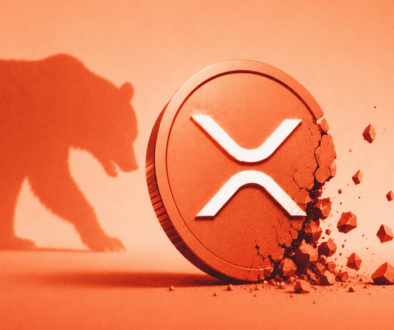
An activist campaign by XRP holders has demanded that Ripple destroy its entire escrowed token holdings, but the company’s core technology architect has clarified that no governance mechanism on the XRP Ledger can compel such an action. David Schwartz, CTO Emeritus at Ripple, stated on November 27, 2026 that the ledger contains no coercive mechanism at all, meaning even validators representing more than 80 percent of the network cannot force token destruction. The escrow in question represents 31.1 billion XRP, locked in time-delayed accounts that release 1 billion tokens on the first day of each month. According to reporting, the activist group Make XRP Great Again sent an open letter to Ripple CEO Brad Garlinghouse on November 16, demanding the company burn all 31.1 billion escrowed tokens by March 31, 2027, citing supply pressure on the asset’s price.
Ripple re-escrows 70% of monthly unlocks, keeping total supply in reserve
The escrow structure itself has proved durable since Ripple locked the tokens in December 2017. On-chain data shows that over the last 12 monthly releases, Ripple freed 12 billion XRP but re-escrowed 8.4 billion of it into new contracts dated roughly two and a half years forward, allowing only 3.6 billion to leave escrow on net. This recycling pattern means the final escrow unlock date has repeatedly extended beyond its original 55-month timeline, and total locked supply remains near its historical level despite years of monthly releases.
The next release occurs Tuesday, December 1, 2026 at 00:00 UTC, when 1 billion XRP becomes releasable from accounts owned by Ripple.
Schwartz acknowledged that Ripple itself could simulate a burn by sending escrowed tokens to a black-holed account that no one controls, but such a decision rests entirely with the company and cannot be forced by network governance. XRP trades near $0.95, down nearly 30 percent over the past month, and the escrow remains firmly within Ripple’s control under its current on-chain architecture.
Validators can change their own rules but cannot seize Ripple’s holdings
The XRP Ledger’s governance model operates symmetrically: a supermajority can modify the network’s protocols for all participants, but it cannot override the rights of those who disagree. Amendments require 29 of 35 validator votes, more than 80 percent, and must maintain that threshold for two weeks before activation.
Validators pushing a burn amendment would, in Schwartz’s formulation, isolate themselves by forking away from the broader ledger if Ripple refused to comply.
The same constraint applies to minorities: no group can impose its preference on others, nor can anyone force Ripple to surrender discretion over assets it owns outright.
This design reflects the XRP Ledger’s architecture as a permissioned-validator network rather than a purely decentralized system in which mining or staking provides enforcement.
Ripple operates multiple validator nodes and has historically retained majority influence over network upgrades, but the absence of on-chain seizure mechanics means that ownership and control over escrowed tokens cannot be overridden by supermajority vote alone, regardless of support levels.
No path forward for forced burn without Ripple consent or hard fork
The activist campaign faces a structural impasse.
Holders demanding a burn have no mechanism to enforce it through the ledger itself; Ripple has shown no appetite for voluntarily destroying 31.1 billion tokens that represent future optionality and treasury assets; and validators cannot fork the network to unilaterally seize the escrow without splintering XRP liquidity and undermining the asset’s utility.
The debate does illustrate a persistent tension for institutional XRP investors. Unlike many blockchain assets where token supply is algorithmically fixed or where governance is distributed across thousands of independent miners, XRP supply remains subject to Ripple’s monthly release decisions and re-escrow timing.
That flexibility has historically allowed Ripple to manage token dilution, but it also means supply surprises remain possible if the company alters its re-escrow ratio or accelerates releases to fund operations or M&A activity.
The CCS read. We see no path for forced burn, but the escrow governance vacuum actually amplifies risk for XRP holders. Ripple’s unilateral control over monthly releases and re-escrow ratios means supply shocks depend entirely on corporate decision-making, not ledger consensus. Any material change to that 70% re-escrow rate, whether to fund operations or as a strategic capital raise, could move supply expectations overnight without validator input.
Watch whether Ripple formally responds to the Make XRP Great Again letter before the March 31, 2027 deadline. Any public commitment to maintain or extend the current re-escrow schedule, or conversely any hint of acceleration, will signal to institutional investors how much discretionary supply pressure remains unaddressed by ledger governance.