Kalshi ends Trump Jr. advisory role over 1789 Capital’s Polymarket investment
Kalshi has terminated its advisory relationship with Donald Trump Jr. over conflict-of-interest concerns as his venture firm deepens investment in rival prediction market Polymarket. The move signals how competitive pressure and regulatory risk are reshaping ties between crypto platforms and political figures.
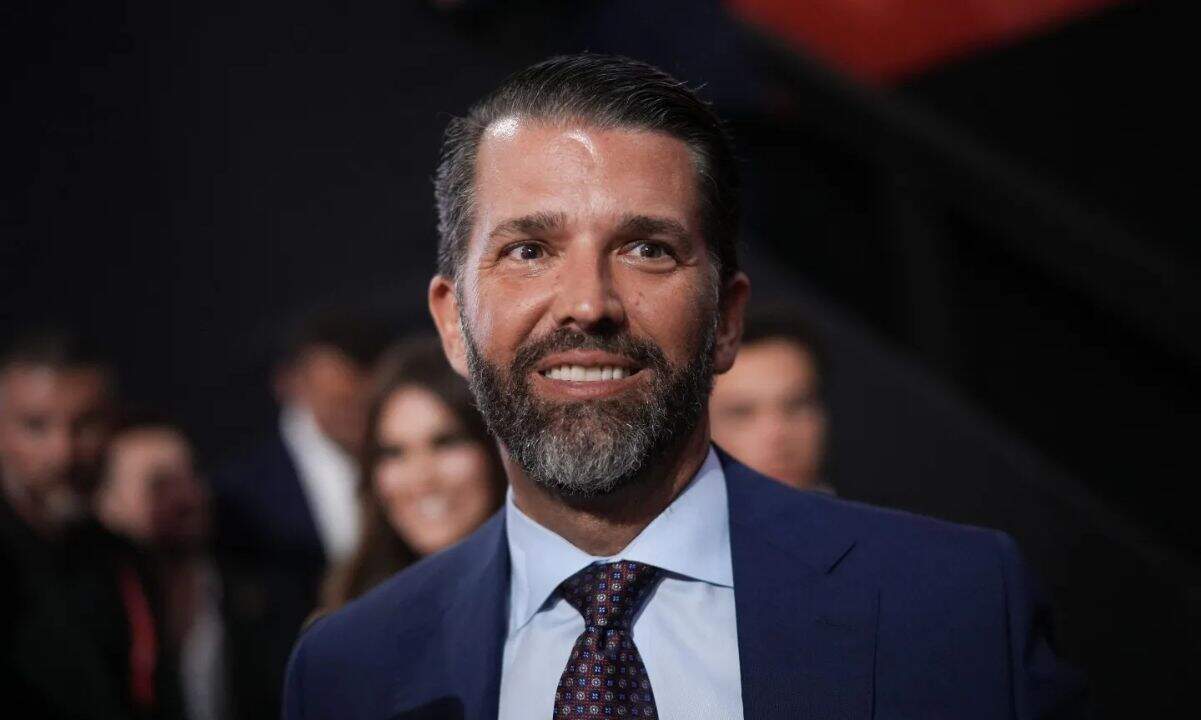
- Trump Jr. received equity worth roughly $300,000 when joining Kalshi as strategic adviser in January 2025
- 1789 Capital, Trump Jr.’s venture firm, significantly increased investment in competing platform Polymarket in August 2026
- Kalshi cited conflict of interest as the reason; the company denied political pressure from Democrats controlling Congress played any role
- $300,000 approximate value of Trump Jr.’s Kalshi equity stake at adviser appointment
- August 2026 when 1789 Capital’s Polymarket investment deal surfaced publicly
- January 2025 month Trump Jr. joined Kalshi as strategic adviser
Kalshi, a CFTC-regulated prediction market platform that allows users to trade contracts on election outcomes and other events, has cut ties with Donald Trump Jr. over a direct clash of financial interests. Trump Jr.’s venture capital firm, 1789 Capital, significantly expanded its stake in Polymarket, Kalshi’s main competitor in the U.S. prediction market space, prompting the company to end his advisory role. According to first reporting on the matter, the conflict emerged after news of 1789 Capital’s latest Polymarket investment surfaced in August 2026, and Kalshi management raised the issue with Trump Jr. during the fall.
Trump Jr. Joined Kalshi to Reach Conservative Voters, Then His Firm Backed the Rival
Trump Jr. was brought onto Kalshi’s advisory board in January 2025 as part of a strategic effort to reach conservative voters and the MAGA movement. He received an equity package worth approximately $300,000 at the time, compensated for his role in connecting the platform with that audience.
The arrangement appeared to make sense for Kalshi: prediction markets had just gained mainstream attention during the 2024 presidential election, when Kalshi and other platforms like Polymarket published forecasts favoring a Trump victory, a call that proved more accurate than traditional polling and became a selling point against mainstream media.
But 1789 Capital’s growing financial commitment to Polymarket fundamentally changed the equation. When the investment details became public in August 2026, Kalshi’s internal team flagged the incompatibility. A representative of Kalshi confirmed to Reuters that the company raised the matter with Trump Jr. during the fall, and the arrangement was subsequently terminated. Kalshi’s official statement attributed the decision solely to the conflict of interest created by Trump Jr. having an equity stake in Kalshi while his firm invested substantially in its primary competitor.
Political Pressure Claim Rejected as Scrutiny Intensifies on Prediction Markets
Kalshi explicitly denied that political considerations drove the decision, with a company spokesperson stating that neither political implications nor Democratic control of Congress played any role in ending the advisory relationship.
Some employees and observers had raised a secondary concern: with Democrats now holding majorities in both chambers following the 2024 midterms, having the president’s son on the advisory board could invite unwanted regulatory or legislative attention. That worry was not unfounded.
Senator Elizabeth Warren has already called for stricter enforcement against insider trading on prediction markets, a direct threat to platforms that operate with minimal historical oversight.
Additionally, the CFTC is investigating whether Kalshi failed to notify regulators before launching dozens of new contracts, a procedural matter the company has downplayed as involving only a handful of contracts, some never actually deployed.
Polymarket itself remains the subject of separate regulatory scrutiny, though both major platforms have contributed to political campaigns from both parties this election cycle.
The timing of Kalshi’s move to sever ties with Trump Jr. reflects the industry’s broader calculation that high-profile political connections, while potentially useful for growth, now carry regulatory liabilities that outweigh their marketing value.
The CCS read. We see institutional risk management at work: Kalshi prioritized compliance and competitive positioning over maintaining access to a Trump-aligned figure. This signals that crypto platforms are making harder choices about political entanglement as regulatory scrutiny accelerates. The decision protects Kalshi’s license but also demonstrates that neither the industry nor its key players are willing to take concentrated regulatory risk for relationship capital alone.
Watch whether the CFTC follows through on enforcement action against Kalshi over unreported contracts and whether Senator Warren or other lawmakers introduce formal legislation curbing prediction market operations, either outcome could reshape how platforms manage advisory board composition and political ties going forward.