
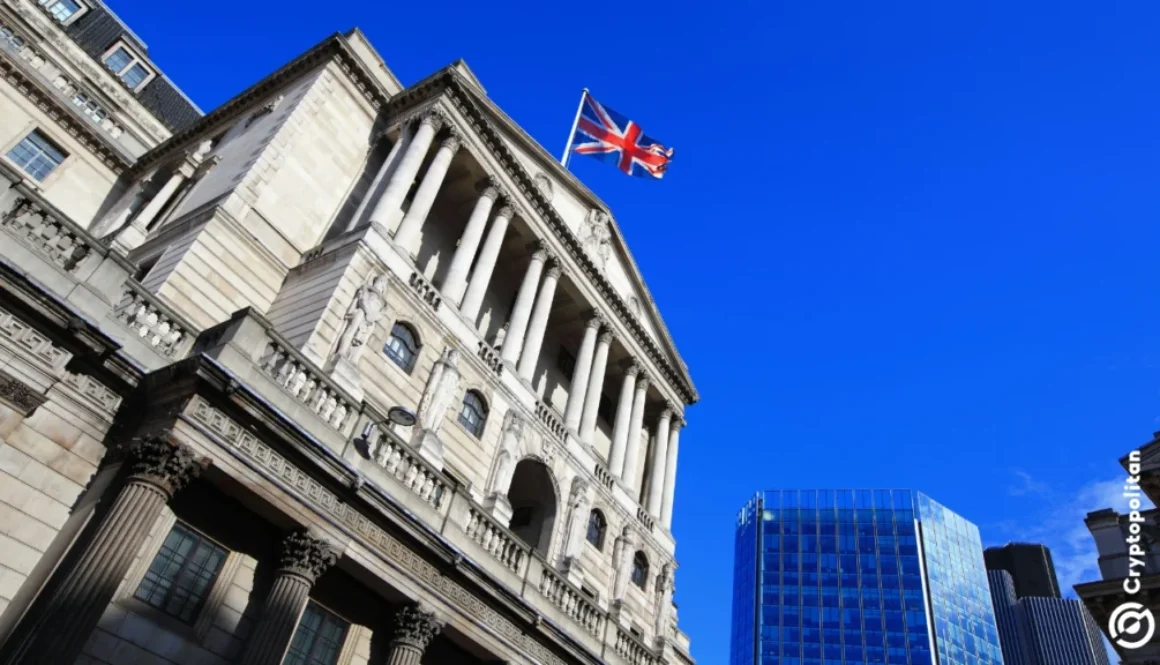
Bank of England deprioritizes digital pound as sterling stablecoins lag $308 billion market
The Bank of England signaled it sees no urgency to launch a central bank digital currency, weeks before its year-end deadline to decide whether to proceed with a digital pound. The timing suggests the central bank may favor privately issued stablecoins over a state-backed digital asset, reshaping how UK institutions approach sterling-denominated payments infrastructure.
- Deputy Governor Sarah Breeden stated commercial stablecoins and tokenized bank deposits can address payment gaps without a central bank digital currency.
- Sterling stablecoins represent less than $6 million of a $308 billion stablecoin market, leaving room for growth before a digital pound becomes necessary.
- The Bank released binding stablecoin rules on 22 June 2026 with a £40 billion issuance cap per coin, moving faster than the digital pound decision timeline.
- 2026 Year the Bank and HM Treasury will announce whether to proceed with digital pound.
- £40 billion Temporary issuance guardrail per systemic sterling stablecoin, replaced earlier holding caps.
- $6 million Total sterling stablecoin market value versus $308 billion dollar-pegged stablecoin dominance.
The Bank of England will decide by year-end whether to build a digital pound, but Deputy Governor Sarah Breeden’s recent remarks suggest the central bank is in no hurry. According to the Bank’s latest update, the design phase continues through 2026, with a decision expected alongside publication of a detailed blueprint and joint assessment by the Bank and HM Treasury. Breeden made the point that rapid innovation in private digital payments, particularly commercial stablecoins and tokenized bank deposits, has removed the urgency for a state-issued alternative. This pivot signals that the Bank may prioritize a private-sector payments ecosystem over a central bank digital currency, a material shift in UK payments strategy.
Breeden backs stablecoins over a digital pound for UK payments
Breeden’s position reflects growing confidence in privately issued digital money. She argued that commercial stablecoins and tokenized deposits from banks can close gaps that a digital pound was originally meant to solve, removing the immediate policy case for a government-backed asset.
This stance carries institutional weight: the Bank has begun regulating sterling-denominated stablecoins as a priority, setting binding rules before committing to its own digital currency.
Sterling stablecoins remain underdeveloped relative to dollar-pegged alternatives. At less than $6 million in circulation against a $308 billion stablecoin market, sterling tokens occupy less than 0.002% of the total.
The Bank’s concern is that without competitive sterling options, UK households and businesses may default to dollar stablecoins for new payment services, ceding control of monetary infrastructure to foreign-issued assets. By backing private sterling stablecoins, the central bank aims to build domestic capacity before deciding whether its own digital currency is necessary.
Bank releases binding stablecoin rulebook months ahead of digital pound decision
On 22 June 2026, the Bank published a policy statement and draft Code of Practice for systemic sterling stablecoin issuers. The rules replaced earlier holding-cap proposals with a temporary issuance guardrail of £40 billion per coin, effectively establishing a binding ceiling on the size any single sterling stablecoin can reach during its regulatory transition. Issuers may now hold up to 70% of backing assets in short-term UK government debt, an increase from a previously proposed 60%, with the remainder held as unremunerated deposits at the Bank of England. Redemptions must clear within 24 hours, and paying interest on stablecoin holdings is prohibited.
This regulatory framework represents a material shift in the sequencing of UK payments infrastructure.
For institutional crypto participants, the rulebook establishes the first binding constraints on sterling stablecoin issuance outside the digital pound itself.
The 70% government debt threshold creates a de facto yield constraint: issuers must accept negative real returns on most of their reserves, making sterling stablecoins less attractive to high-volume treasury operations than dollar alternatives unless they capture sufficiently large payment flows to amortize compliance costs.
The 24-hour redemption window is tighter than most institutional stablecoin operators have historically offered, raising operational friction for cross-border settlement. The guardrail structure leaves open the critical question of whether £40 billion per coin will bind meaningfully; if multiple issuers emerge, the aggregate sterling stablecoin market could fragment.
Digital Pound Lab tests cross-border settlement alongside stablecoins
The Bank’s Digital Pound Lab continues to run experiments testing whether stablecoins and a simulated digital pound can settle different legs of the same trade. Working with Polygon Labs, NOBO Finance, and data provider Dun & Bradstreet, the Lab aims to reduce settlement delays for small exporters and importers who wait days after shipping to receive payment. Applications for Phase 2 of the Lab closed at the end of March 2026, with findings expected to inform the final blueprint.
The Lab is running experiments with simulated currency, not real money or customer accounts, and the Bank has emphasized that testing does not imply a decision to issue a digital pound.
The experiments remain confined to proof-of-concept scope, but their design illuminates what the Bank sees as the digital pound’s core potential use case: reducing settlement latency in trade finance, where stablecoins alone may prove sufficient.
If the Lab’s results show that stablecoin-only solutions meet the policy objectives, the business case for a parallel central bank digital currency weakens further. The open question is whether the Bank will publish findings from Phase 2 results before or after announcing its final decision in 2026, and whether negative results would accelerate or delay the decision timeline.
The CCS read. We see the stablecoin rulebook as a hedge against the digital pound. The Bank is establishing regulatory floor standards for private sterling assets while leaving room for multiple issuers to compete. If sterling stablecoins grow to fill the payment gaps the digital pound was meant to solve, the Bank can justify shelving the CBDC as unnecessary regulation rather than policy failure. Institutional investors should track whether applications for systemic stablecoin licenses materialize in the second half of 2026.
The Bank and HM Treasury will announce their decision on whether to proceed with a digital pound in 2026, alongside the digital blueprint and joint assessment. That decision will clarify whether the regulatory framework for stablecoins represents a permanent alternative to a CBDC or a transition mechanism while a digital pound prototype develops. Breeden’s messaging suggests the Bank is signaling a decision well before the formal announcement, watch whether any sterling stablecoin issuers announce plans between now and September 2026, which would indicate market confidence that the digital pound will be deferred or abandoned.