
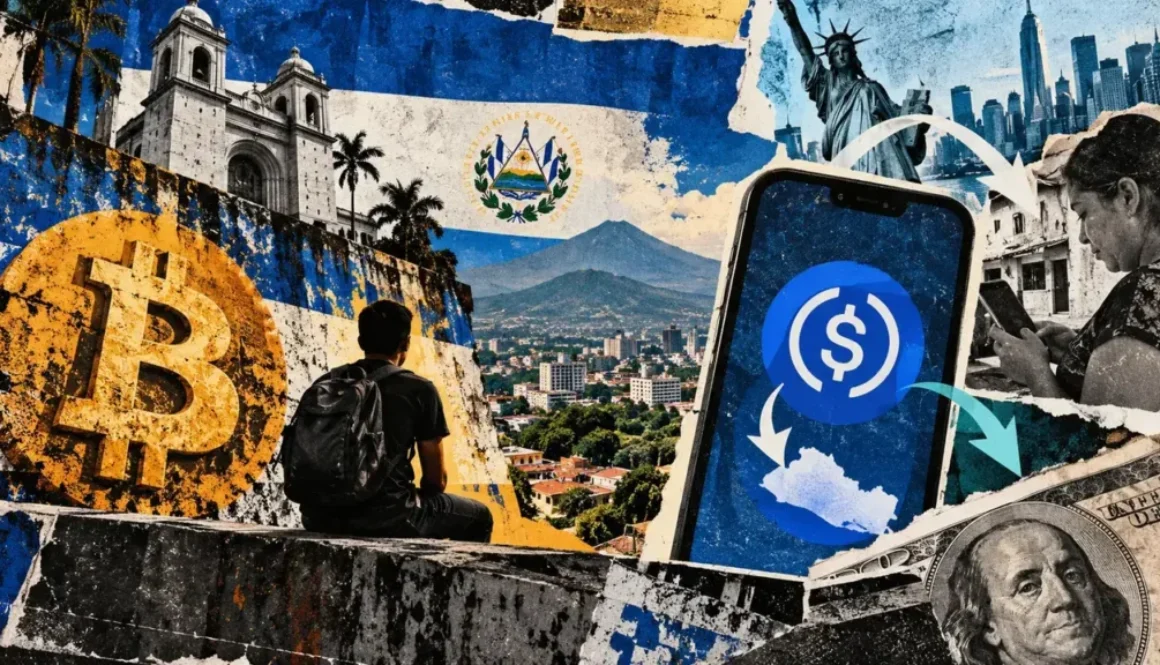
El Salvador chooses stablecoins over Bitcoin for $9 billion remittance flows
El Salvador is deploying stablecoins rather than Bitcoin for remittances, signaling a pivot away from the volatile-asset infrastructure the country pioneered in 2021. This matters to institutional investors watching whether blockchain infrastructure can capture emerging-market payment flows, and which asset class will power them.
- Sivar, a new El Salvador payments app, will settle remittances in stablecoins on Coinbase’s Base network with a flat $2 fee per transfer.
- El Salvador received $9 billion in remittances in 2025, with 92% originating in the US and 1.6 million people depending on those inflows.
- MoneyGram and Tether have already launched stablecoin payment products in the country, fragmenting the infrastructure for dollar settlement.
- $9 billion Annual remittance inflows to El Salvador in 2025
- $2 Flat Sivar transfer fee per transaction, regardless of amount or corridor size
- 7,789 BTC El Salvador’s Strategic Bitcoin Reserve as of late September 2025
El Salvador is turning to dollar-backed stablecoins for remittances rather than Bitcoin, according to reporting by CryptoSlate. Sivar, a new national community and payments app developed by Modveon, will settle transfers in stablecoins on Coinbase’s Base network, with US-based users able to fund transfers via debit card and recipients in El Salvador receiving balances through embedded wallets. The app abstracts away blockchain complexity, allowing users unfamiliar with digital assets to send and receive money without directly managing blockchain transactions. More than 25,000 Salvadorans had signed up before launch.
Sivar targets $9 billion remittance corridor with $2 flat fee
The opportunity for stablecoin-based remittances in El Salvador is substantial. About $9 billion flowed into the country through remittances in 2025, with roughly 92% originating in the US, according to Coinbase. An estimated 1.6 million Salvadorans depend on those payments for household income.
Sivar will charge a flat $2 per transfer regardless of size, a pricing model designed to compete in a market where conventional remittance fees can consume a significant portion of smaller payments.
Each user receives a non-custodial wallet while Coinbase provides the onramp, transfer APIs and settlement infrastructure. Recipients can convert their stablecoin balances to cash at more than 1,000 locations across El Salvador.
This structure differs fundamentally from the country’s original Bitcoin push, which required consumers to interact directly with a volatile asset whose dollar value could fluctuate between receipt and spending.
Stablecoins preserve the dollar denomination Salvadorans already use while enabling settlement over blockchain networks, removing friction that complicated Bitcoin adoption as everyday money.
MoneyGram and Tether fragment stablecoin payment infrastructure
Sivar is entering a market already being reshaped by competing stablecoin services. MoneyGram expanded its USDC-based stablecoin balance into El Salvador in April through a partnership with the Stellar Development Foundation, Crossmint and Circle. The service allows customers to receive money into a dollar-denominated digital balance, hold it and later withdraw cash through MoneyGram locations across nearly 500,000 retail outlets in more than 200 countries and territories.
Tether relocated its headquarters to El Salvador in 2025 after securing authorization as both a stablecoin issuer and digital-asset service provider. The company said the move would establish a base to develop products for emerging markets and work with local businesses and government institutions.
Tether has also integrated USDT with Bitcoin’s Lightning Network, attempting to combine dollar-denominated payments with Bitcoin-based settlement infrastructure.
Bitcoin’s role narrowed by IMF concessions on public reserves
El Salvador remains committed to Bitcoin at the policy level but has surrendered the ability to accumulate it with public resources. The country’s Bitcoin Office marked the fifth anniversary of Bitcoin’s adoption this month, highlighting its Strategic Bitcoin Reserve (currently holding about 7,789 BTC), Bitcoin education in public schools and training for 80,000 civil servants.
However, the International Monetary Fund said this month that El Salvador has used no public resources to accumulate Bitcoin since its first program review, with subsequent increases documented as coming from private donations.
Those constraints reflect concessions made under El Salvador’s $1.4 billion IMF program. Legal changes removed Bitcoin’s mandatory legal-tender status, made private-sector acceptance voluntary and required taxes to be paid in US dollars. The government also agreed to wind down its participation in the Chivo wallet, transferring majority ownership and operations to a private operator.
The result leaves El Salvador’s crypto experiment fractured: Bitcoin embedded in reserve strategy, education and national branding but starved of public capital, while stablecoins emerge as the practical rails for moving dollars across borders.
The CCS read. We see institutional players, Coinbase, Stellar, MoneyGram, Tether, building redundant payment rails in a single small market. Each is pricing stablecoins as the default for remittances while Bitcoin’s role shrinks to asset storage. This suggests the $9 billion El Salvador remittance corridor will validate stablecoins for emerging-market payment infrastructure, but the fragmentation across competing platforms raises settlement risk if regulatory enforcement later targets one network.
Watch whether Sivar gains meaningful adoption against MoneyGram’s entrenched retail footprint over the next 12 months, and whether the IMF program’s restrictions on public Bitcoin accumulation will be lifted after the current facility expires or is renewed.