
Trump Will Sign the CLARITY Act ‘Immediately’ But There’s a Catch
President Trump pledged to sign the Digital Asset Market Clarity Act immediately upon passage, but the bill remains stalled in the Senate Banking Committee nearly nine months after House approval, with fundamental disagreements over stablecoin regulation blocking forward momentum. For institutional investors, the delay extends a critical period of regulatory uncertainty that has already reshaped trading strategy and compliance planning across the sector.
- Trump committed to signing the CLARITY Act immediately, but the bill has stalled in Senate Banking Committee for nine months post-House passage.
- The act splits digital asset regulation between CFTC (commodities) and SEC (securities), while establishing centralized intermediary oversight instead of protocol regulation.
- Stablecoin regulation remains the primary blocking point, with industry and regulatory factions at odds over yield frameworks and issuer requirements.
- 9 months Time elapsed since House passage with no Senate Banking Committee resolution.
- 2 Regulators (CFTC and SEC) whose jurisdictional split the bill formalizes.
- June 2024 Introduction date of the Digital Asset Market Clarity Act framework.
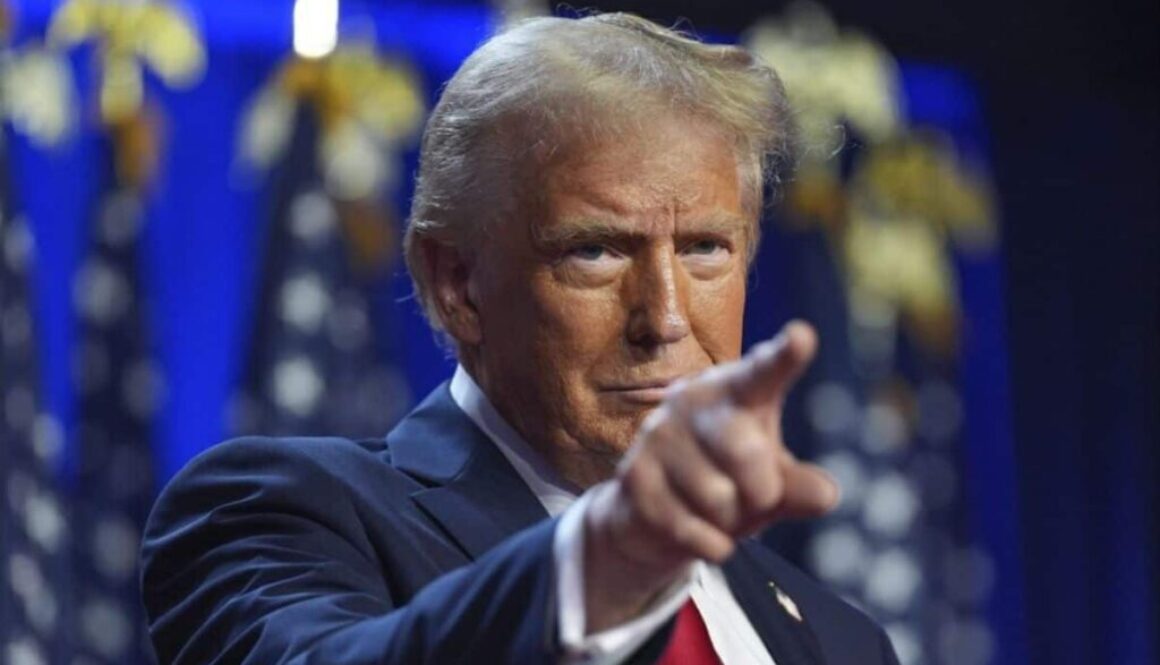
President Donald Trump delivered a 45-minute speech at a Mar-a-Lago cryptocurrency event where he publicly committed to signing the Digital Asset Market Clarity Act of 2025 “immediately” upon its arrival at his desk. The declaration came as the bill languishes in the Senate Banking Committee, blocked by unresolved disputes over stablecoin regulation despite winning House passage months earlier.
Trump’s pledge signals administration pressure to move the legislation, yet the continued stalemate reflects deeper structural disagreements among lawmakers, regulators, and industry stakeholders that executive intent alone cannot resolve.
House Passes Jurisdictional Framework, but Stablecoins Become Dealbreaker in Senate
The CLARITY Act, introduced jointly by the House Committees on Financial Services and Agriculture in June 2024, establishes a bifurcated regulatory model dividing digital asset oversight between two agencies.
The Commodity Futures Trading Commission would regulate tokens classified as digital commodities, while the Securities and Exchange Commission would govern assets sold as investment contracts through securities offerings.
This jurisdictional split aims to end the regulatory ambiguity that has defined the sector for nearly a decade, creating clear on-ramps for compliance-focused firms and removing the threat of retroactive enforcement actions.
The bill’s approach to decentralized finance diverges sharply from earlier regulatory proposals by targeting centralized intermediaries rather than software developers or decentralized protocols themselves. This distinction proved attractive to core developer communities and many DeFi platforms, which had feared direct regulatory exposure to underlying code.
However, the most contentious provision covers stablecoin issuance and yield generation, where fundamental disagreements about who may issue tokens, what capital requirements should apply, and how yield mechanisms should be treated have deadlocked negotiations.
Industry participants have split sharply on the stablecoin language. Some institutional crypto firms and exchanges have criticized the framework as overly restrictive, potentially limiting the utility and competitiveness of U.S.-based stablecoin projects.
Others, including traditional finance stakeholders, have pushed back against provisions they view as insufficiently protective of consumer deposits and payment system stability. These competing visions have prevented Senate Banking Committee consensus, keeping the bill in limbo despite Trump’s explicit backing.
Trump Administration Pressure Clashes with Nine-Month Legislative Stall
Trump has signaled that digital asset regulation ranks among his administration’s legislative priorities, stating previously that the CLARITY Act “has to pass as soon as possible” and criticizing parties he believed were blocking its progress.
His Mar-a-Lago pledge to sign immediately represents an unusually direct executive commitment to a specific legislative text, effectively foreclosing the possibility of major presidential amendments or conditions that might otherwise delay implementation.
Yet administrative enthusiasm has failed to break the legislative bottleneck. Since House passage months ago, the Senate Banking Committee has issued multiple deadline extensions without advancing the bill to a committee vote.
The repeated delays suggest that pressure from Trump’s office, while politically significant, does not override the substantive policy disagreements that committee members and their staffs have flagged.
With midterm elections approaching and Democrats expected to gain seats, the political calculus for Senate Republicans may shift toward protecting certain amendments or negotiating leverage that could slip away in a new Congress.
Institutional investors monitoring regulatory risk have increasingly based trading and hedging decisions on the assumption that comprehensive CLARITY Act passage may not occur in the current Congressional session.
Stablecoin Yield Rules and Capital Requirements Divide Lawmakers and Issuers
The stablecoin dispute centers on three interconnected issues: who holds the authority to issue U.S. dollar-backed tokens, what minimum capital and reserve requirements should apply, and whether protocols can offer yield without triggering securities law.
Lawmakers from states with significant financial centers have advocated for provisions that preserve state banking charters, while others prefer a federal-only licensing regime.
Industry figures representing different market segments have lobbied intensely in conflicting directions, with some exchange operators and asset managers seeking permissive yield frameworks and others backing stricter protocols to minimize moral hazard.
These disagreements carry practical consequences for the competitive positioning of major stablecoin issuers and for the infrastructure firms that integrate stablecoins into payment rails and trading systems.
A restrictive final bill could favor existing incumbents such as USDC and Tether by making new entrants prohibitively expensive to launch, while a permissive framework could unlock innovation but potentially expose retail and institutional counterparties to issuer risk if capital requirements remain loose.
The Senate Banking Committee’s hesitation suggests members are waiting for technical analysis and stakeholder input to crystallize around a specific compromise, rather than rushing to a vote that satisfies no major faction.
Regulatory Clarity Remains Hostage to Year-End Congressional Schedule
The timeline for CLARITY Act passage has compressed sharply as the calendar advances. Senate Banking Committee members have historically balked at advancing digital asset legislation during periods of market volatility, citing a need to monitor real-world outcomes before codifying new frameworks.
The committee’s deliberative pace, while frustrating to industry participants, reflects institutional caution about embedding rules into statute law that may require amendment if market structure or threat vectors evolve.
Trump’s “immediately sign” pledge constrains future presidential flexibility but does not alter the fundamental Senate arithmetic.
For the bill to reach his desk before the current Congress adjourns, the Banking Committee must vote, floor consideration must proceed, and reconciliation with any House amendments must conclude, a sequence that typically requires six to twelve weeks at minimum, and which cannot begin until internal committee disputes resolve.
Sources close to negotiations have indicated that staff-level talks continue, but no breakthrough date has been publicly announced.
Institutional investors should monitor the Senate Banking Committee calendar for any scheduled markup session on the CLARITY Act as the proximate catalyst; absent a formal markup announcement within the next two weeks, the probability of passage before adjournment falls materially, potentially deferring the bill to a new Congress where Trump’s commitment to immediate signature will carry less legislative force.