
Mayor Caught on Camera Saying the Only Voters Who Oppose Data Centers Are Disgusting Poor People
Indiana’s mayor has become the public face of a widening divide between local officials championing data center development and working-class residents opposing them on environmental and economic grounds. The incident underscores how political support for AI infrastructure is fracturing along class lines, with institutional investors now watching whether grassroots opposition will materially slow buildouts across the Midwest.
- Shelbyville mayor Scott Furgeson dismissed data center opponents as residents of “sh*tty houses” on video, sparking backlash and calls for accountability.
- Over 2,000 Shelbyville residents signed a petition opposing Prologis’s 11-building data center facility, yet the city council approved it anyway in April.
- Seven in ten Americans now oppose data centers near their homes, according to new survey data, signaling sustained public resistance to infrastructure buildouts.
- 2,000+ Shelbyville residents who signed petition against data center in town of 20,000
- 70% of Americans now opposed to data center construction near their home
- 30 Amazon data centers planned in Indiana consuming 2.2 gigawatts annually
On a recently circulated video recorded without his knowledge, Shelbyville, Indiana Mayor Scott Furgeson captured a candid moment that has become emblematic of a broader institutional problem.
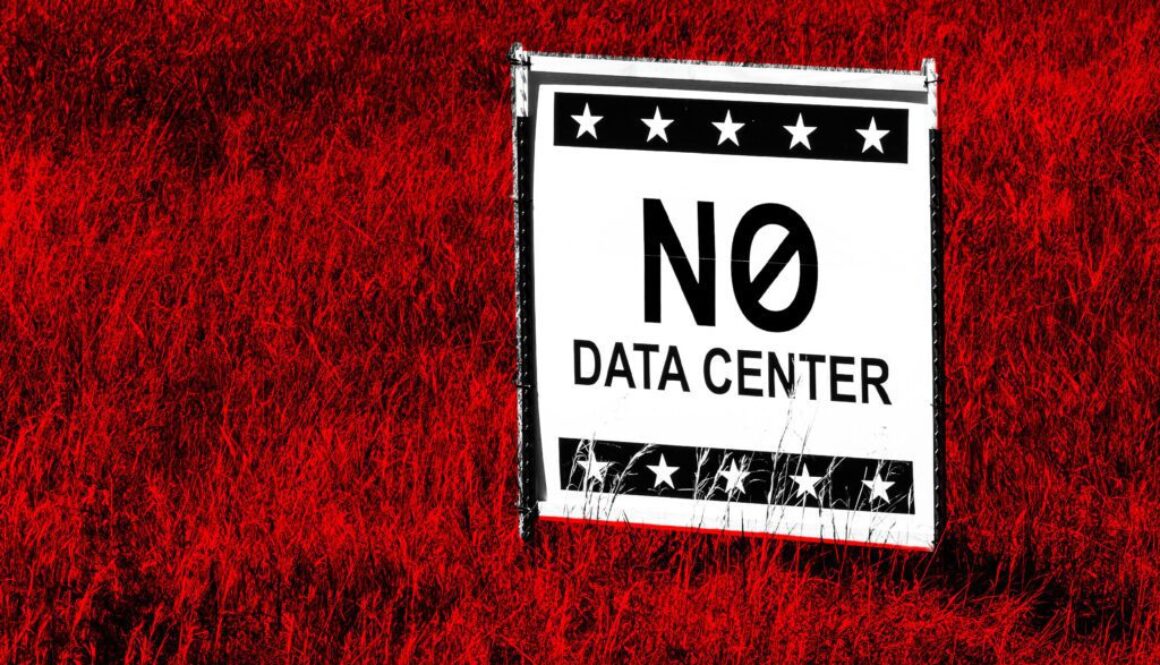
While discussing the proliferation of “No Data Centers” signs throughout the town, the Republican mayor made disparaging remarks about the residents displaying them, characterizing their properties as poorly maintained and suggesting that rental properties somehow made opposition less legitimate.
When corrected by women in the conversation who emphasized that these were working-class homes and families, Furgeson doubled down, dismissing the distinction as immaterial to his assessment of their “unkempt” condition.
His office later issued a non-apology statement claiming the remarks were about “property maintenance,” a framing that rang hollow to a public already skeptical of data center development.
Furgeson’s remarks expose class rift in data center approval debates
The Shelbyville controversy arrives as Indiana emerges as a critical Midwest hub for data center construction, with Amazon alone planning to build 30 facilities across a sprawling stretch of farmland that will collectively consume 2.2 gigawatts of electricity annually.
In Shelbyville specifically, the developer Prologis has proposed a 11-building data center complex that would convert hundreds of acres of farmland into server infrastructure.
The scale of such projects has institutional investors watching closely, as they represent the physical backbone of the AI economy that financial markets have priced into valuations across cloud infrastructure stocks and technology holdings.
Yet the political machinery moving these projects forward has largely operated deaf to constituent objections. In Shelbyville, over 2,000 residents signed a formal petition against the Prologis facility in a town of approximately 20,000 people, according to FOX59, a petition rate of more than one in ten residents.
The city council nonetheless voted to approve the project in April, treating local opposition as background noise rather than a signal worth heeding. Furgeson’s recorded comments suggest that opposition was interpreted not as legitimate environmental or economic concern, but as aesthetic or cultural inadequacy on the part of working-class homeowners.
This framing matters because it reveals the actual basis on which political support for data centers is being organized at the local level. Furgeson was not defending the project’s economic benefits to Shelbyville or addressing specific technical objections to it. He was delegitimizing the people raising objections by their perceived social standing.
Public opposition to data centers now reaches 70 percent across United States
Furgeson’s contempt for his constituents arrives at a moment when data center opposition has hardened into majority consensus among the broader American public.
A recent survey indicates that at least seven in ten Americans now oppose the construction of a data center near their home, a figure that dwarfs support for the infrastructure and signals that local-level conflicts like Shelbyville’s are likely to intensify rather than resolve.
This is not fringe sentiment; it reflects a fundamental shift in how ordinary people perceive the infrastructure buildout required to power artificial intelligence deployment at scale.
The core objections center on tangible local impacts: water consumption, electricity grid strain and rising energy prices, and long-term environmental effects. In Shelbyville and across the Midwest, residents have specifically cited concerns about water scarcity in communities where data centers are being proposed at an accelerating pace.
These are not complaints about aesthetics or property values in the abstract; they reflect reasonable anxiety about whether local utilities can support such facilities while maintaining service to existing residents, and whether communities will bear the cost of that infrastructure expansion while distant investors capture the returns.
For institutional investors, the 70 percent opposition figure is significant because it suggests that data center development in the United States is beginning to encounter real political friction at the municipal level.
City councils may continue approving projects when developers and state-level officials push hard enough, as happened in Shelbyville, but the gap between official approval and public consent is widening, and that gap creates risk. Legal challenges, permitting delays, and political turnover can all slow projects that lack community support.
Indiana data center surge facing organized resistance despite political backing
Indiana’s emergence as a data center destination reflects the state’s combination of lower electricity costs, available land, and proximity to major metropolitan markets. The 30 Amazon projects represent a signal bet that the state offers favorable conditions for large-scale deployment.
Yet the story playing out in Shelbyville is replicating across Indiana’s smaller communities, where the concentration of data center proposals has begun to trigger organized opposition movements. Unlike earlier waves of infrastructure development, which faced opposition from smaller, dispersed groups, data center pushback is now coordinated and vocal.
What distinguishes the current moment from earlier regional development conflicts is the absence of shared narrative between local leadership and constituents. Historically, infrastructure projects have succeeded when local officials could credibly claim that jobs and tax revenue would flow to the community.
Data centers generate minimal permanent employment relative to their size and capital investment, and the tax benefits are often heavily negotiated downward through incentive packages. This economic math is increasingly difficult for mayors to sell, which may explain why Furgeson resorted to delegitimizing his opponents rather than engaging their concerns on the merits.
The Shelbyville approval despite overwhelming petition opposition suggests that political and financial interests aligned behind data center development may be willing to accept legitimacy costs in exchange for project approval.
Yet that calculation assumes that public opposition remains geographically fragmented and politically powerless, an assumption that 70 percent national opposition figures begin to call into question. If opposition hardens further, or if local elections turn on data center issues, the politics could shift rapidly.
Watch whether the Indiana Legislature or Governor’s office issues any response to Furgeson’s remarks, and whether the Shelbyville case becomes a catalyst for organizing opposition in other Midwest communities facing similar proposals. The next critical date is whether Prologis proceeds with construction on its approved Shelbyville facility without encountering legal challenges or permitting delays sparked by the political fallout. If the project advances unimpeded despite the controversy, it will signal that local opposition and reputational damage to city leadership carry limited practical weight in the data center approval process, a signal that could either suppress future resistance or intensify it.