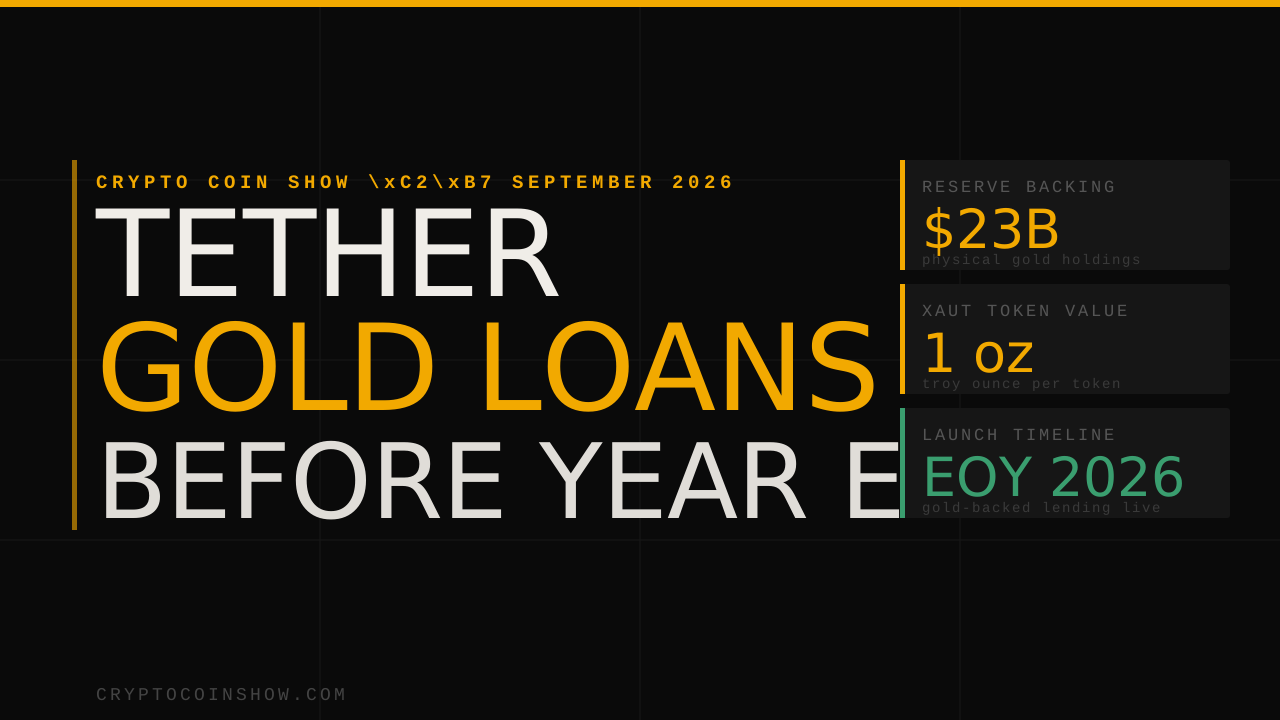
Tether plans Gold-backed loans with Ledn using XAUT
Tether and lending platform Ledn are launching gold-backed loans using XAUT tokens before year-end 2026, giving institutional investors a new on-chain mechanism to access liquidity against physical gold holdings without forced asset sales. The move taps Tether’s $23 billion physical gold reserve and mirrors established practices in traditional finance, signaling institutional-grade collateral infrastructure entering crypto lending markets.
- Tether and Ledn will launch XAUT lending by end of 2026, allowing tokenized gold holders to borrow against positions
- Each XAUT token represents one troy ounce of physical gold stored in Swiss vaults, underpinned by Tether’s $23 billion reserve
- Client collateral held on 1:1 basis and not lent out or used for yield generation, mirroring Ledn’s existing Bitcoin lending model
- $23B Tether’s physical gold reserve backing XAUT token issuance and lending
- $4,070.34 Per-token XAUT trading price at announcement, reflecting spot gold value
- End 2026 Expected launch date for gold-backed lending product on Ledn platform
Tether and crypto lending platform Ledn announced a partnership to introduce gold-backed loans using Tether Gold (XAUT) tokens, expected to launch before the end of 2026. The product will allow XAUT holders to borrow against their tokenized gold positions without liquidating assets, accessing liquidity while maintaining long-term gold exposure.
Each XAUT token represents one troy ounce of physical gold stored in Swiss vaults, creating a direct on-chain link to hard assets held in custody.
Tether Brings Institutional Gold Lending On-Chain Via $23 Billion Reserve
Tether’s entry into on-chain gold lending represents a structural shift in how precious metals collateral moves through crypto infrastructure.
The stablecoin issuer, which maintains a $23 billion physical gold reserve, is leveraging that backing to create a lending facility that mirrors traditional gold financing available only through central banks, large financial institutions, and bullion dealers.
By tokenizing this existing reserve via XAUT and opening lending access through Ledn, Tether is translating a centuries-old practice into blockchain-native capital markets.
The partnership specifically targets institutional investors and high-net-worth participants who hold gold as a long-term store of value but need periodic access to liquidity. Traditional gold lending typically requires depositing physical bullion with a bank or dealer and navigating complex loan agreements.
The tokenized version removes geographic friction: XAUT holders can access loans directly through Ledn’s platform without shipping physical metal or settling through multiple intermediaries. Collateral is held on a 1:1 basis, meaning borrowed funds are matched exactly to XUAT backing, with no rehypothecation or yield generation against client holdings.
This structure directly parallels Ledn’s existing Bitcoin lending operations, which have operated since the firm’s founding by segregating client collateral and preventing secondary use. That operational discipline matters to institutional risk officers evaluating on-chain lending providers.
Ledn’s track record in preserving collateral integrity without yield extraction signals that gold-backed loans will operate under comparable safeguards.
Ledn Expands Collateral Options as Gold-Backed Loans Reshape Lending Markets
Ledn’s addition of XAUT joins a strategic platform expansion that now encompasses Bitcoin, USDT, and the incoming gold product. This progression reveals how crypto lending is segmenting by collateral type and use case rather than treating all digital assets identically.
Bitcoin borrowing historically served traders seeking leverage or short-term liquidity; stablecoin collateral serves participants already embedded in yield-farming ecosystems. Gold-backed lending targets a different constituency: wealth managers, family offices, and institutions seeking non-correlated collateral and traditional asset preservation in digital form.
The timing of Ledn’s expansion reflects broader institutional appetite for collateral diversification. As Bitcoin and Ethereum volatility persist, precious metals collateral introduces a new asset class with lower correlation to broader crypto markets.
A borrower using XAUT as collateral faces different liquidation risk than a Bitcoin collateral provider, since gold prices and crypto prices diverge. This diversification appeals to institutional treasurers balancing yield generation with collateral stability.
Ledn’s platform architecture is critical to execution. The firm must integrate spot price feeds for XAUT, establish loan-to-value ratios appropriate for gold collateral (typically more conservative than Bitcoin lending due to lower volatility), and coordinate with Tether’s custody operations to confirm real-time backing.
Unlike USDT loans secured by liquid stablecoins, gold lending requires active monitoring of physical reserve attestation and Swiss vault custody procedures.
Tether’s Capital Expansion Beyond USDT Fuels Diversification Into Physical Assets
This lending initiative illustrates Tether’s strategic pivot from stablecoin issuance into a multi-asset financial infrastructure firm. The company has deployed capital from USDT revenues into precious metals (Gold.com investment), Bitcoin mining operations, renewable energy projects, and AI infrastructure via Northern Data backing.
Gold-backed lending represents the confluence of these bets: monetizing the physical gold reserve while expanding XAUT utility and ecosystem reach.
Tether CEO Paolo Ardoino framed the partnership in institutional terms, emphasizing the demand for solutions that combine long-term ownership with financial flexibility. This language signals that Tether views gold lending not as a speculative product but as foundational infrastructure for wealth preservation in digital markets.
As digital assets become an increasingly important part of the global economy, demand is growing for solutions that combine long-term ownership with financial flexibility.
Paolo Ardoino, Tether CEO
The company’s prior lending partnerships reinforce this trajectory. Tether’s collaboration with Antalpha on XAUT lending and physical redemption, announced earlier, suggests multiple paths for gold monetization. Antalpha handles bespoke structured products; Ledn operates a standardized lending platform.
Both channels serve different institutional segments while consuming XAUT supply and deepening on-chain gold financialization.
Institutional Custody and Regulatory Clarity Remain Open Questions Before 2026 Launch
The success of gold-backed lending hinges on institutional acceptance of Swiss vault custody as sufficient collateral backing for on-chain lending. Traditional gold lending operates within established regulatory frameworks in London, New York, and Zurich; blockchain-native gold lending lacks comparable regulatory precedent.
Ledn and Tether will need explicit alignment with financial regulators and banking partners before deploying at scale, particularly regarding loan origination licenses, custody oversight, and anti-money laundering controls.
A second structural question involves price discovery and liquidation mechanics. XAUT trades at spot gold prices plus a small premium or discount reflecting issuance costs and redemption procedures.
Ledn will need to establish how liquidations occur if a borrower defaults: does collateral convert to XUAT and sell on secondary markets, or does Tether facilitate direct redemption to fiat or BTC? If liquidation requires moving collateral through crypto exchanges, slippage and timing risks emerge that traditional gold lenders avoid.
Watch for Ledn’s formal loan terms announcement, specifically loan-to-value ratios, interest rates, and minimum collateral amounts, likely to come within the next two quarters as the platform engineers technical integrations. Regulatory filings or public guidance from either firm on custody arrangements and bankruptcy treatment of gold collateral will signal how seriously traditional financial institutions view this product as institutional-grade infrastructure.