South Korea’s licensed exchanges lose 35% of won deposits as traders shift to offshore leverage platforms
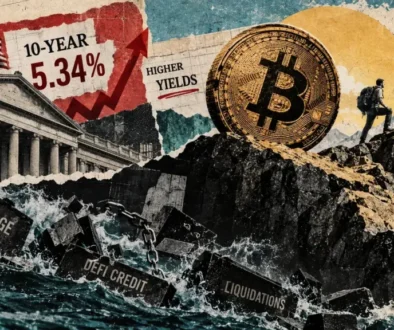
South Korea’s licensed crypto exchanges shed 35% of won deposits in the first half of 2026 as traders migrated to offshore platforms offering leverage products banned domestically. The collapse signals a structural crisis in local market share, driven not by price alone but by regulatory arbitrage that favors unregulated foreign venues.

- Won-denominated deposits fell 2.9 trillion won (35%) to 5.2 trillion won by June 30, 2026, while market capitalization dropped 28.3 trillion won (33%).
- Average daily trading volume collapsed 44% to 3.1 trillion won; operating income fell 78% to 81.6 billion won in the first half versus 374.8 billion won a year prior.
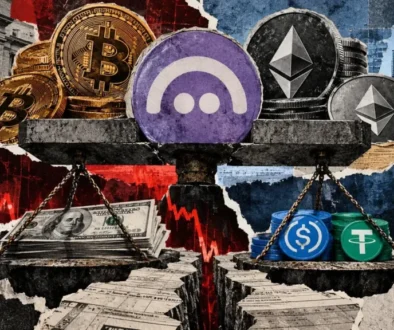
- Offshore platforms including Binance, Bybit, OKX and KuCoin launched leveraged products on Korean assets and indices that domestic law prohibits, attracting traders via Tether transfers.
- 35% decline in won-denominated deposits on licensed Korean exchanges in H1 2026
- 78% drop in operating income for domestic exchanges compared with same period one year prior
- $530B cumulative outflows traced to Korea-linked wallets from 2021 to mid-2026
The Korea Financial Intelligence Unit and Financial Supervisory Service, in a survey of 26 registered virtual asset service providers, documented a domestic market in sharp retreat. Won-denominated customer deposits fell to 5.2 trillion won from 8.1 trillion at year-end 2025, while combined exchange market capitalization shrank to 58.9 trillion won (roughly $42 billion) from 87.2 trillion. The decline accelerated through the period as Bitcoin fell 33% to $58,559 by June 30, but regulators and market analysts attribute the outflow to a more structural problem: South Korea’s regulatory framework permits only spot trading on domestic exchanges, while offshore venues offer perpetual futures, leveraged products and around-the-clock trading on Korean equities and indices.
Binance launched 150x-leverage KORU contracts on Korean retail traders with no domestic safeguards
Beginning in June 2026, offshore exchanges began marketing exotic leverage products tied to Korean assets. Binance launched a perpetual futures contract on KORU, a U.S.-listed exchange-traded fund that tracks three times the daily move of South Korea’s KOSPI index, with 20x leverage on June 22, then raised the maximum to 50x four days later.
Because KORU itself compounds daily moves at a 3x multiplier, traders could end up exposed to as much as 150 times the underlying index’s daily loss or gain. The product bore no resemblance to offerings available on licensed Korean exchanges.
The risk crystallized immediately. On June 23, KORU fell 35.7% in a single session to $700.01 when the KOSPI dropped 9.99%. Bybit, OKX and KuCoin quickly launched their own KORU contracts, while all three platforms also began offering 20x leverage on individual Korean blue-chip stocks, Samsung Electronics, SK Hynix and Hyundai Motor, that Korean retail traders could not access with leverage domestically. These platforms operate outside the reach of South Korea’s investor protections, with traders moving money offshore by purchasing Tether on licensed local exchanges and then transferring the stablecoin to unregulated venues.
Tiger Research traced $530 billion in cumulative outflows over five years, with $120 billion leaving in 2025 alone
Tiger Research, working with blockchain analytics firm Chainalysis, tracked approximately 120,000 Korea-linked wallets and estimated that 700 trillion won ($530 billion) left domestic exchanges between 2021 and mid-2026. Outflows accelerated sharply: around $120 billion left in 2025, and the firm projected roughly $52 billion would depart in 2026.
The scale exceeds the total value of assets remaining on licensed domestic exchanges.
In July alone, approximately 1,200 Korea-linked wallets traded $4.97 billion in notional volume on Hyperliquid, a decentralized derivatives platform. Between January 2024 and July 2026, Korean wallets deposited $1.64 billion across three decentralized derivatives platforms, Hyperliquid, Lighter and Variational, with no regulatory oversight or custody safeguards.
Shinhan Securities analyst Park Sung-jae attributed the exodus to policy rather than market conditions.
In July, when domestic crypto trading had fallen to 1.6% of KOSPI turnover, he noted that South Korea’s “only de facto trading option” is spot trading, whereas foreign exchanges offer perpetual futures and leverage products across dozens of asset classes including crude oil and non-trading-hours access. The regulatory gap has become the mechanism of market exit.
Proposed 22% tax starting January 2027 threatens to accelerate outflows further
The Financial Supervisory Service has signaled plans to impose a 22% levy on annual crypto gains above a 2.5 million won ($1,900) deduction, with the first returns due in May 2028. The rule drew immediate resistance from traders, who gathered more than the 50,000 signatures needed to force a National Assembly review, warning that it would push more investors offshore.
Finance Minister Lee Hyoung-il has publicly backed the tax, arguing that 85% of domestic holders own crypto worth less than 5 million won and would not be materially affected after the deduction.
Lawmakers from both ruling and opposition parties have proposed delays ranging to 2030, but no consensus exists on postponement. The tax’s implementation coincides with the platform exodus, not preceding it, leaving open whether rate-setting or product prohibition is the primary driver of capital flight.
The CCS read. We see a regulatory framework collapsing not from price volatility but from arbitrage. South Korea licensed spot-only exchanges while offshore venues competed directly on leverage and trading hours, making domestic platforms a liquidity desert by design. The tax debate misses the structural point: traders are leaving because they can access products that do not exist at home, not because they fear taxation. Postponing the levy treats a symptom.
The Financial Supervisory Service must decide by year-end whether to proceed with the 22% tax on January 1, 2027. That date will clarify whether Seoul intends to compete for offshore capital or accept further market concentration on unregulated platforms.
Original reporting: cryptopolitan.com