Luke Davis / Bull Market Blueprint

Luke Davis on why stocks, gold and bitcoin beat bonds in 2026

InterviewOctober 9, 202640:00

In this episode

Luke Davis argues that tech and the hyperscalers have carried the whole index in 2026 while most other sectors stalled, and that the fourth quarter of a midterm year has historically been the strongest stretch of the four-year cycle. He also explains why he sees OpenAI and Anthropic priced like hyper-growth companies, and why he would rather own the chip, memory and hyperscaler names they spend their money with.

Key takeaways
  • Tech and hyperscalers have driven index performance in 2026 while most other sectors stagnated, creating a narrow market rally.
  • Q4 of midterm election years historically represents the strongest quarter of the four-year presidential cycle, known as the midterm miracle.
  • Long-term investing based on fundamentals and conviction outperforms emotional trading driven by news cycles and short-term narratives.
  • OpenAI and Anthropic are priced as hyper-growth companies, but chip manufacturers and hyperscalers that supply them may offer better value.
  • Self-managed portfolio success requires formal market education and strategy rather than chasing headlines and making emotion-driven buy and sell decisions.

Chapters

Read the interview

Luke Davis: Swap bonds for 'businesses, bars and Bitcoin' in the 2020s

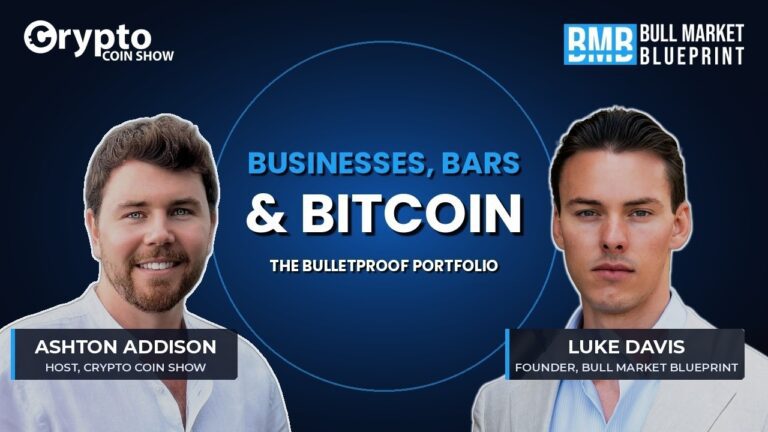
Luke Davis, founder and chief market strategist of Bull Market Blueprint, spoke with Ashton Addison in October 2026. They cover a choppy year for investors, his bond-free portfolio framework, how he treats altcoins and crypto treasury companies, and why he says AI is the market. His views on markets and valuations are as stated at the time of recording.

A year of head fakes

Ashton: How has 2026 played out for investors, and does Q4 matter this year? 01:29

Luke Davis: 2026 has been a challenging year for most investors. Early on the market broadened out: international stocks outperformed US stocks, and cyclicals and real-economy companies did better. That's typical in a midterm year, when institutions prepare for volatility. Then the Iran-US war situation pushed markets lower in March and April, with a lot of de-risking on both the institutional and retail side. When markets bottomed in late March and early April and resumed to the highs, it was all tech, and tech left everything behind. That threw a lot of investors off guard. Midterm years are usually choppy, but the fourth quarter of a midterm year is arguably the best quarter of the presidential cycle. They call it the midterm miracle: Q4 of the midterm year and the first two quarters of the following year. Crypto-native investors love Q4 too. That gives crypto a good reason to move higher, even though the macro environment, with yields and the dollar surging, isn't that supportive. All of 2026 has been a series of head fakes for people with a traditional set of rules. But if you own crypto, AI-related companies and quality, and you've just held them, you've done pretty well.

Ashton: How do you run a self-managed portfolio without getting caught up in short-term narratives? 04:44

Luke Davis: It starts with thinking long term. A bank or financial planner will usually set you up with a long-term strategy, because that really is the best way to be invested in markets. Since the 2020-2021 era of people getting on Robinhood, there's an environment where people think they should be jumping in and out all the time and chasing the hottest narrative. Look at the most successful investors of our time, your Stanley Druckenmillers, Warren Buffetts and Bill Ackmans. Their long-term performance is what made them and their investors wealthy. Retail loves to jump on narratives, and the news cycle keeps getting more volatile and opinionated. People haven't been through any formal education on how markets work. They see headlines, and their emotions tell them it's time to buy or time to sell in fear. That's where most people managing their own money make big mistakes. They have no strategy and no sense of fundamentals, and often they don't know what they own. You lose conviction when you don't understand what you're buying. And buying and selling is trading, not investing. They're two very different things.

Read the full interview →

Clips from this interview

Related coverage
More interviews

Browse all 1,089 interviews

Get new interviews firstCCS Insider, the free newsletter from Ashton Addison. Twice a week.