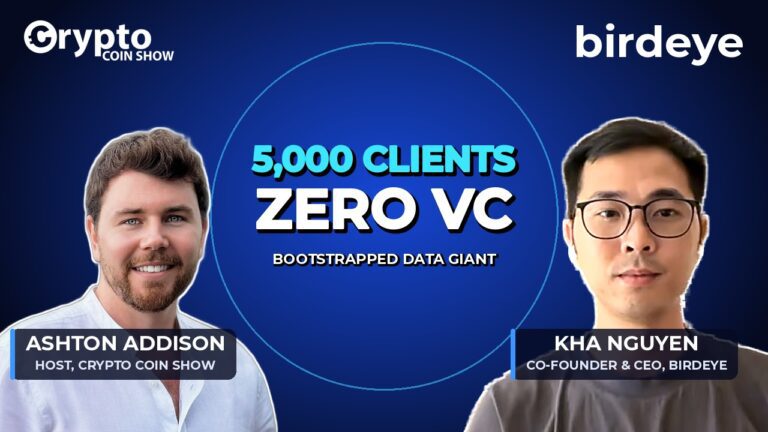
Kha Nguyen / Birdeye
How Birdeye bootstrapped to 5,000 enterprise clients
GuestKha NguyenCompanyBirdeyeTopicDePIN & InfrastructureTopicRWA & TokenizationTopicTrading & Markets
In this episode
Crypto data is only useful if it is complete, fast and right, and Birdeye covers thousands of data sources across the world's chains with no venture funding behind it. The company started as a website for tracking token price, volume and trading venues, then grew into data infrastructure that now serves over 5,000 enterprise clients, including wallets, decentralized exchanges and analysts.
birdeye.so · @birdeye_so on X · @birdeye_data on X
Key takeaways
- Birdeye aggregates data from 4,500 sources across 20+ blockchain chains to power over 5,000 enterprise clients including wallets and decentralized exchanges.
- The company bootstrapped without venture funding after failed fundraising attempts during market downturns like FTX and Luna collapses forced monetization.
- Data synchronization across hundreds of exchanges presents the core technical challenge, requiring anomaly detection to filter manipulated prices from smaller venues.
- Birdeye delivers market data with 2-3 second latency from trade execution to client display, with engineering efforts underway to achieve subsecond speeds.
- The company prioritizes building infrastructure independent of market trends rather than chasing short-term narratives like memecoins or tokenization waves.
Chapters
Clips from this interview
Related coverage
 Birdeye launches Peak terminal to filter bot-dominated trading data for institutionsOct 21, 2026
 Birdeye: the bootstrapped data company behind crypto’s price screensOct 7, 2026
More interviews
 0G Labs' Michael Heinrich on cheaper open AI modelsNov 19, 2026
 Why Wall Street is moving toward 24/7 trading in 2026Nov 13, 2026
 How Wallet V is letting AI agents trade while keeping your keysNov 10, 2026
 How Silent Payments Keep Your Bitcoin PrivateNov 9, 2026
 How XYO is building proof in a world of AI fakesNov 5, 2026
 How Cap financed a Hollywood film with onchain creditNov 4, 2026
Get new interviews firstCCS Insider, the free newsletter from Ashton Addison. Twice a week.