
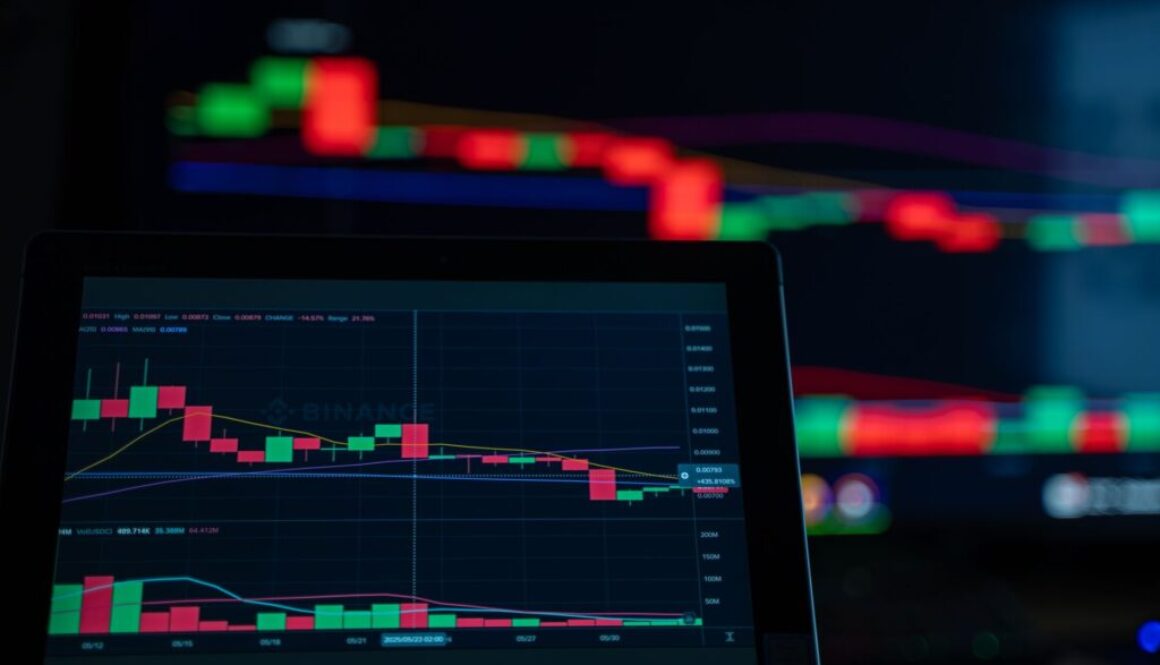
RWA perpetual futures surge to $18.8B weekly volume, displacing altcoin trading
Perpetual futures tied to stocks, commodities and indices have jumped from under $1 billion in daily volume to $18.8 billion in a single week, pulling trading activity away from altcoins on the same exchanges that built their businesses on crypto leverage.
- RWA perpetual futures volume rose from under $1 billion in January to $18.8 billion during September 3-9, per Talos data.
- DefiLlama found RWA-first wallets generated 31.5% of new-user trading volume on Hyperliquid but only 8.3% of new-user fees.
- CryptoRank counted 351 new exchange listings across 10 major venues in the second quarter, the fewest since the third quarter of 2023.
- $18.8B weekly RWA perp volume versus under $1B in January
- 8.3% share of new-user fees from wallets generating 31.5% of volume
- 351 new CEX listings in Q2, fewest since Q3 2023
Daily volume in real-world-asset perpetual futures across the venues Talos tracked climbed from under $1 billion in January to $18.8 billion during the week of September 3-9, 2026, according to a report by CryptoSlate. That figure represented 18.5% of total futures volume across those exchanges, a category that barely existed eight months earlier. Crypto-perpetual volume declined over the same comparison period while total futures activity in the sample stayed roughly flat, meaning traditional-asset contracts filled the gap left by weaker crypto-only trading.
Talos Data Show Hyperliquid and Binance Each Route Roughly a Quarter of Futures Volume to RWAs
Traditional-asset perpetuals made up 28% of futures volume on Hyperliquid and 24.8% on Binance in the Talos sample, putting both exchanges well above the 18.5% market-wide average. Oil led the weekly gain as Brent crossed $100 a barrel, a move unrelated to crypto that traders could still access without leaving their existing exchange app or collateral pool.
The mechanism matters more than the headline number. Crypto exchanges perfected the perpetual contract for tokens; now the same wrapper delivers leverage on oil, gold, equities and pre-IPO companies.
CoinDesk Research separately reported that centralized-exchange volume rose 12.7% month over month to $4.29 trillion in August, with spot up 18.7% and derivatives up 11.3%. Traditional-asset perpetual volume within that total grew a smaller 2.37% to $602 billion, a slower pace than the overall derivatives growth for the month, showing the two categories can expand together rather than strictly at each other’s expense.
DefiLlama Finds Most New Traders Never Cross Between RWA and Crypto Markets
DefiLlama classified 169,514 new Hyperliquid wallets as RWA-first, meaning their debut trade landed in a stock, commodity or index market, covering January 1 through June 30, 2026. That group made up 31.7% of new wallets and generated $111.6 billion, or 31.5%, of new-user trading volume. Their economics told a different story: RWA-first wallets produced just 8.3% of the main trading fees paid by new users, a mismatch that suggests thinner margins or heavier fee subsidies in the products drawing them in.
RWA-first wallets kept 83.6% of their volume inside RWA markets. Other-first wallets, whose debut trade was crypto or another non-RWA product, sent only 22.8% of their volume into RWA markets yet still accounted for roughly 40% of all RWA-market volume, meaning existing crypto traders supply a larger share of that flow than newcomers do.
A DefiLlama follow-up sharpened the picture: 80.9% of RWA-first wallets never touched the other market category, and 82% of Other-first wallets never crossed into RWA products. Three groups emerge rather than one migrating mass, an RWA-only cohort, a crypto-only cohort, and a smaller high-frequency core that trades both. That segmentation complicates any simple claim that altcoin capital is exiting wholesale for tokenized stocks, a nuance CCS covered when examining how tokenized equities entered DeFi lending in its report on Chainlink’s bank payment and tokenized-stock integrations.
Hyperliquid’s Gross Fees Rise to $419.3 Million While Core Revenue Falls to $305.3 Million
CryptoRank counted 351 new listings across 10 major centralized exchanges in the second quarter of 2026, the fewest since the third quarter of 2023, with tokenized assets contributing 42 of those additions. Gate accounted for 573 removals, nearly 60% of first-half delistings, while MEXC rarely reported removals and was effectively excluded from the comparison, limiting how much the listing data can say about altcoins broadly.
Hyperliquid’s HIP-3 framework lets outside builders deploy their own perpetual markets, including stock and commodity contracts, and its fee documentation permits deployers to retain up to 50% of the trading fees their markets generate. Fees routed to Hyperliquid’s Assistance Fund convert automatically into HYPE and get burned, but only a slice of builder-market activity reaches that mechanism.
The split shows up in the numbers. 21Shares estimated Hyperliquid’s gross fees rose from $320 million in the first half of 2025 to $419.3 million in the first half of 2026, a 31% increase, while its core protocol revenue, the share flowing to the platform treasury, fell from $317.5 million to $305.3 million over the same period. Crypto perpetuals still drove the next leg of growth: Hyperliquid’s total open interest climbed from $6.6 billion to $8.8 billion in September 2026, even as HIP-3’s share of that activity slipped from 34% to 25%, a shift echoed in how onchain lending capital has scaled elsewhere, as CCS detailed in its coverage of Cap’s growth in underwriter capital.
The CCS read. The revenue gap matters more than the volume headline. Builder-deployed markets are pulling activity onto Hyperliquid without funneling proportional fees back to HYPE holders or the treasury, which means token-linked burn mechanisms may lag actual platform growth. Investors tracking Hyperliquid as a proxy for RWA-perp adoption should watch core revenue, not gross fees, as the cleaner signal of whether this shift benefits the protocol’s own token economics.
Whether traditional-asset perpetuals ultimately substitute for altcoin trading or simply add a new revenue line depends on data not yet available: full third-quarter figures on wallet crossover rates, HIP-3’s fee share, and whether CryptoRank’s listing count recovers from its lowest level since the third quarter of 2023.