Key takeaways
- NEAR Protocol addresses the same scalability challenge as other layer ones through parallelization, aiming to make blockchain faster, cheaper, and more accessible globally.
- NEAR's education strategy focuses on onboarding developers with clean abstractions, well-documented APIs, and programs like the NEAR Certified Developer that enable rapid skill acquisition.
- The protocol launched a thousand teachers initiative targeting educators across disciplines beyond software development to inspire broader thinking about blockchain's societal impact.
- NEAR emphasizes meeting users and developers where they are with familiar interfaces and seamless onboarding rather than requiring them to adopt entirely new mental models.
- The NEAR Certified Developer program demonstrates rapid developer onboarding, with participants learning fundamentals on Thursday and starting paid fellowship work by Monday.
One problem, many layer ones
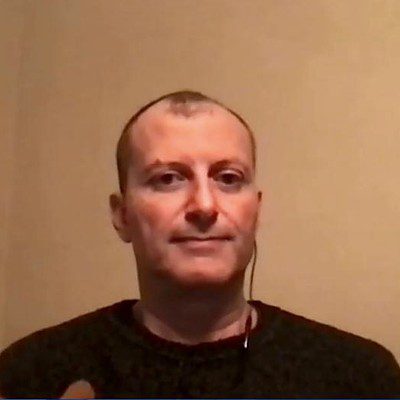
Ashton Addison: Can you give us an overview of NEAR Protocol and its education work?▶ 00:22
Sherif Abushadi: Bitcoin invented the clock that ticks in blocks and captures data in a cryptographically unassailable history. Ethereum put a computer on top of that clock. The layer ones that have emerged in the last couple of years are making that faster, cheaper and more scalable. Solana timestamps and does work in parallel, and Avalanche has specialized chains. We're all working on the same challenging problem, which is maintaining a forever history that's economically incentivized truth. At NEAR, after 25 years in the industry, I can say without hesitation that this is one of the strongest teams I've ever worked with, if not the strongest. It's all open source, so you can take a look. As an educator, I try to keep up and hold a high bar of technical accuracy while making things accessible. That means people just out of coding boot camps, and also veterans with 10 or 15 years in web 2 who are moving into web 3.
Ashton: With so many layer ones coming up, do you see NEAR as one of those leading blockchain innovation?▶ 03:48
Sherif: That's a really big idea, and it's not something you can plan. What we've seen in DeFi over the last 24 months is something you could hardly have imagined. Looking forward is even harder, because things keep getting faster. From our perspective, it's about partnerships, outreach and education. It's about meeting consumers where they are today instead of trying to convince them to switch to a new way of thinking. That means seamless onboarding and interfaces that look and feel familiar. It's also about meeting developers where it's easy to think about building an application on a blockchain. For them, it's just a slow, expensive database that's actually good enough for your first year. The trade-off for slow and expensive is that you get a database that doesn't lie.
Coding is becoming commoditized, but thinking is where the value is.
A thousand teachers and the case for non-coders
Ashton: What is NEAR doing to attract new people to the ecosystem?▶ 06:07
Sherif: We're inviting developers, researchers and designers to join our fellows program, and you can check it out at near.university. This week we also launched a program to attract a thousand teachers. I don't just mean software development teachers. I'm thinking of the history, philosophy, economics, home economics and social studies teachers who will inspire young people to think about where the world will be in 10 or 20 years. If I'd shown you this technology 25 years ago and told you what I do with it today, you would hardly believe it. We need more than just software development engineers and speculation to get there. We need some really big, fresh ideas.
Ashton: Is it only for developers? What if you don't know how to code?▶ 12:12
Sherif: There are still plenty of ways to contribute, and I think some of the most interesting opportunities are for people who don't code. Coding is becoming commoditized, but thinking is where the value is. Among those thousand teachers, where are the philosophers, historians, artists, musicians, animators and illustrators who will help us imagine a future we can't yet see?
Building, getting paid and getting started
Ashton: How easy is it to build on NEAR, and can developers move over from other blockchains or from outside crypto?▶ 07:47
Sherif: It's really up to developers to come and see what it feels like, but we often hear that things are surprisingly easy on NEAR. The abstractions are clean, the tooling is easy to use and maturing quickly, and the APIs are well documented, with full and complete examples. It feels like a place where you belong quickly. We have a NEAR certified developer program, and people come in, learn how to spell NEAR on a Thursday, build a demo before dinner, and start a paid part-time fellowship on Monday. That's about a two-business-day turnaround. Even junior developers with a few months of experience out of boot camp can start building. It's like a serverless function or an API call, so the mental models are familiar.
Ashton: Can developers get paid for building on NEAR?▶ 09:47
Sherif: There's no question. We recently announced 800 million in grants: 350 million allocated for DeFi projects through Proximity Labs and 450 million for ecosystem funds. The education team alone has distributed about a million dollars' worth of NEAR tokens in the last 90 days, and we plan to increase that over the next 90. We're at an inflection point in how much outreach we're doing. Teachers, fellows, developers, residents, architects and researchers are all full-time and part-time opportunities, compensated in NEAR tokens, which are liquid on the market now. The only questions are what your experience is and where you are in the world, and we compensate you fairly. It's a pretty simple negotiation.
Ashton: What's the best way for developers to get started?▶ 11:25
Sherif: Go to near.university and register for NEAR certified developer and other courses. You'll also find links for the fellowship programs, the ambassador program for university students, the teachers program, grants and certified instructors. We're even hiring for the core team, and we're looking for teachers with 10 to 20 years of industry experience who can help raise the bar on what it means to change the future of education in this space.
The trade-off for slow and expensive is that you get a database that doesn't lie.
This interview has been edited for length and clarity. Recorded December 2021.