
Bitcoin and Gold Jump After Fed Rate Hold Splits FOMC 9 to 3
The Federal Reserve’s rare 9-3 split vote to hold rates steady signals deepening internal disagreement on monetary policy, pushing down hike odds and triggering immediate rallies in both Bitcoin and gold. For institutional investors, the dissent from three regional Fed presidents, combined with a dovish market repricing, reduces near-term rate risk and reshapes portfolio hedging assumptions for the remainder of 2026.
- Federal Reserve voted 9-3 to hold rates at 3.50%-3.75%, with Cleveland, Minneapolis, and Dallas presidents dissenting for a 25-basis-point hike
- Bitcoin rallied 1.1% to $64,325 in 24 hours; gold rose from $4,000 to above $4,084 within minutes of the announcement
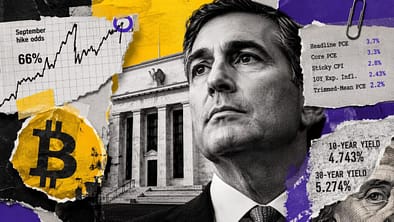
- CME FedWatch hike odds for September fell below full pricing after the vote, reducing the probability markets had assigned to further near-term tightening
- 9-3 FOMC vote margin on rate hold, largest dissent under Chair Kevin Warsh
- $64,325 Bitcoin price after announcement, up 1.1% versus prior 24-hour close
- 30% CME FedWatch hike probability one day before announcement, now priced lower
The Federal Open Market Committee kept the federal funds target range unchanged at 3.50% to 3.75% on Wednesday, but the decision came wrapped in an unusually public disagreement. Three regional Federal Reserve presidents, Beth Hammack of Cleveland, Neel Kashkari of Minneapolis, and Lorie Logan of Dallas, dissented, each preferring an immediate quarter-point increase.
The 9-3 split marks the most contested outcome since Kevin Warsh assumed the chair in May and represents the kind of internal divide that traders and asset managers have been watching for signals about the Fed’s true stance on inflation and growth.
The immediate market reaction was sharp and revealing. Bitcoin climbed from approximately $63,700 to an intraday peak near $64,700 within fifteen minutes of the decision, ultimately settling near $64,325 with a market capitalization of $1.29 trillion. Gold moved in tandem, rising from roughly $4,000 to above $4,084 before retracing to $4,076.
The synchronized gains in both assets reflected a single underlying trade: the sudden collapse of near-term rate hike expectations that had been baked into financial markets just hours before.
Three Regional Presidents Challenge Warsh’s Hold Consensus for First Time
The three dissenters all lead regional Reserve Banks rather than sitting on the Board of Governors in Washington, a distinction that matters for institutional reading of Fed politics. No governor broke ranks with Warsh on the hold decision, meaning the division occurred outside the Fed’s formal center of power.
This structure limits the immediate policy impact of the dissent but signals that at least one third of regional leadership believes current inflation pressures warrant tighter monetary conditions than the consensus permits.
Warsh’s first FOMC meeting in June produced a unanimous hold, making Wednesday’s 9-3 split a sharp reversal. Market analysts had flagged dissent as a real possibility heading into July, given persistent inflation readings and the hawkish rhetoric from several regional presidents over the prior weeks.
The fact that exactly three officials broke ranks, enough to count as significant but not enough to splinter the Committee further, suggests the Fed remains broadly aligned on a hold for now, even as internal pressure for tightening persists.
The policy statement itself offered little new guidance. Policymakers reiterated that economic activity is expanding solidly despite Middle East geopolitical uncertainty, and they emphasized continued strength in productivity growth and capital investment. Inflation, however, remains above the 2% target, a point the Committee attributed to supply shocks in specific sectors including energy.
The language around price stability was unchanged from June, offering no hints about the timing or sequence of potential future moves.
Traders Had Priced July Hike at 30% Despite Fed’s Consistent Hold Messaging
The market’s pre-announcement positioning reveals why the hold triggered such a swift asset rally. CME FedWatch data showed hike odds hovering near 30% just one day before the July 29 decision, while prediction market Kalshi estimated roughly 23% odds on Wednesday morning.
These probabilities were elevated enough to keep yields elevated globally, with bond markets pricing near their highest levels since 2008. The persistence of hike odds despite the Fed’s patient messaging suggested traders were hedging against a surprise move or testing whether regional dissent could overcome consensus.
Bank of America noted pre-announcement that a July increase would mark an unprecedented move for the Fed. The bank’s analysis pointed out that the central bank has not raised rates since 1994 with less than 60% market probability priced in beforehand, underscoring how unusual it would have been for the Committee to hike on Wednesday.
The fact that hike odds remained in the 23-30% range anyway reveals how much uncertainty hangs over monetary policy, even as the Fed’s own communications lean dovish.
The immediate aftermath saw interest rate swaps reprice sharply, with markets no longer fully pricing in a September hike.
Bitcoin and Gold Surge as September Rate Path Shifts Lower
The repricing of rate expectations proved the engine behind the cryptoasset rally. Bitcoin’s 1.1% gain to $64,325 over 24 hours arrived entirely in the minutes surrounding the announcement, not spread across a broader trading session. The same pattern held in gold, which moved from $4,000 to a high above $4,084 in the quarter hour after the Fed’s statement.
Both assets benefit from lower nominal rates and reduced real rate expectations, making them natural hedges against monetary easing or a halt to tightening.
For institutional investors, the chart pattern matters as much as the price level. Cryptocurrency and gold have historically moved together during periods of Fed pivot or policy uncertainty, and Wednesday’s synchronized gains reinforce that correlation.
An investor holding either asset as an inflation hedge or rate-sensitive portfolio offset saw both positions rewarded simultaneously, validating the hedge thesis at a moment when it mattered most to portfolio performance.
The broader rate market signaled the shift plainly. Futures and swap markets pulled back from fully pricing a September increase, a move that eases pressure on bond yields that had climbed sharply in prior weeks.
Oil markets, which remain a key swing factor for both inflation expectations and Fed reaction function, fell sharply after Washington paused strikes on Iran, though tension resurfaced later in the session. The lack of a decisive oil decline meant the Fed’s inflation-fighting credibility remained untested in Wednesday’s aftermath.
Dissent Signals Genuine Split on Inflation Versus Growth Trade-Offs
The 9-3 margin raises a tactical question for institutional positioning: whether the three dissenters represent an isolated bloc or the leading edge of a broader hawkish shift. Hammack, Kashkari, and Logan have each signaled concern about persistent inflation in recent weeks, and their dissent suggests they view current rate levels as too loose relative to price stability risks.
Each runs a regional bank with distinct economic conditions, meaning their votes likely reflect genuine regional data divergence rather than a unified opposition to Warsh’s leadership.
No Board of Governors member dissented, a fact that limits the political weight behind the hawkish challenge.
The dissent also matters because it shows that the Fed remains genuinely divided on how much slack remains in the economy and labor market. Warsh and the consensus nine believe current rates are appropriate and that further data should guide any future moves.
The three dissenters evidently believe inflation pressures, despite some moderation, warrant proactive tightening now rather than data dependence later. This divide will resurface at every meeting until either inflation clearly declines or the dissenters’ regional data weakens enough to align them with the hold consensus.
What Institutional Investors Watch Until the September Meeting
The next FOMC decision arrives in September, and the market’s shift away from full hike pricing creates a concrete deadline for tracking Fed intentions. Between now and then, economic data on employment, inflation, and growth will either validate Warsh’s patience or vindicate the three dissenters. A strong inflation read or