The 80-Day XRP Price Downtrend Meets a Wall of Korean Bids
XRP has bounced 4% off its August low as South Korean retail and institutional buyers stack orders at depressed prices, while momentum indicators flash their first bullish signal in 80 days of decline. The reversal remains unconfirmed, but the convergence of Korean retail demand, whale accumulation, and ETF inflows suggests institutional investors are testing whether the downtrend has finally exhausted itself.
- XRP ranks third by 24-hour volume on Korean exchange Upbit, behind only Tether and Bitcoin among 275 KRW markets
- Combined Upbit and Bithumb buy orders outweigh sell orders by roughly two to one within 1% of spot price, a 34% bid advantage
- RSI climbed from below 20 in early June to low 40s at August low, creating bullish divergence as price makes lower lows
- 4% bounce off August low as South Korean buyers defend support levels
- 11.98% whale cohort share of XRP, up from 10.66% around August 1
- $14.86M XRP spot ETF inflows in week ending July 31, strongest in four weeks
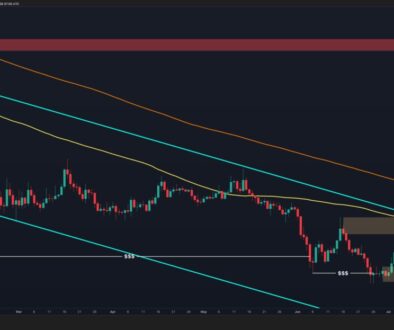
XRP has stabilized after an 80-day decline that cut the altcoin into a falling channel since May 14, though the technical rebound from early August lows remains tentative. The price bounced roughly 4% from its August low despite trading down 2% on the day, signaling renewed buying interest at depressed levels.
What distinguishes this bounce from earlier false starts is the visible alignment between three independent signals: concentrated retail demand from South Korea’s largest exchanges, whale accumulation by holders commanding 100 million to 1 billion tokens each, and renewed institutional inflows into XRP spot exchange-traded funds.
For institutional investors tracking XRP as a potential tactical position, the convergence warrants close attention to whether this reversal framework can break the falling channel that has capped every rally in the past four months.
South Korean Retail Traders Stack Orders Two-to-One in XRP’s Favor
XRP ranks third by 24-hour trading volume on Upbit, South Korea’s largest cryptocurrency exchange, trailing only Tether and Bitcoin among 275 won-denominated markets. The ranking reflects retail concentration among Korean traders, who have historically moved altcoin prices ahead of broader institutional adoption.
More telling than volume rankings is the structure of the order book itself: combined buy orders on Upbit and Bithumb, the two dominant Korean exchanges, outweigh sell orders by roughly two to one within 1% of the market price, creating a 34% bid advantage at current levels.
This two-to-one skew reflects resting liquidity, not a single transaction wave. Buyers have posted substantially more passive orders at prices just below spot than sellers have posted asking prices just above it, a pattern that typically precedes directional moves.
The lean is noteworthy because order book depth at this scale requires coordination or shared conviction across dispersed retail participants; isolated whale bids cannot produce a two-to-one ratio across two major exchanges simultaneously.
Korean traders are also paying a small premium to the global price on Bybit, sitting near the top of its seven-day range, another sign that domestic demand is willing to cross the bid-ask spread aggressively.
Korean premiums have historically preceded altcoin rallies in Asia-Pacific time zones and subsequent spillover into Western markets. The current premium remains modest rather than extreme, which institutional analysts interpret as early-stage accumulation rather than euphoric retail buying.
That calibration matters because a thin premium paired with two-to-one bid depth suggests patient entry, not capitulation or panic buying.
Momentum Divergence Signals First Bullish Break in Technical Pattern
The most concrete reversal signal emerges from a classic technical split: while XRP price continues making lower lows into August, the Relative Strength Index, which measures the speed and magnitude of recent price moves, has climbed from below 20 in early June to the low 40s at the August low.
RSI below 20 typically indicates oversold conditions, and its recovery to the 40s represents a higher low even as price carved a marginally lower low, creating what technicians call a bullish divergence. The pattern suggests selling pressure is fading even as price weakness persists, a common precursor to trend reversals.
Price has already reacted to this divergence with a 4% rebound from the August 1 low, mirroring a recent surge in dip-buying activity. The rebound occurred without leverage-driven inflation: Bybit perpetual funding rates sit near plus 0.006%, a mildly positive reading far below the plus 0.01% to 0.02% levels that typically signal overheated long positioning.
The absence of funding premium means the bounce reflects genuine spot demand rather than leveraged traders riding a momentum wave, a distinction that carries weight for institutional risk managers tracking whether retail enthusiasm is masking underlying fragility.
Whether this momentum inflection converts into a sustained reversal depends on validation from larger market participants. Momentum divergence alone has triggered false rallies throughout this 80-day decline. The real test is whether large holders and institutional vehicles confirm the signal by adding exposure at these compressed valuations.
Whale Accumulation and ETF Inflows Join Retail Bid Surge
Institutional conviction is beginning to show. On-chain data from Santiment shows the share of XRP held by wallets commanding between 100 million and 1 billion tokens jumped from 10.66% to 11.98% around August 1, the period of maximum price weakness. Wallets in this cohort typically represent seasoned traders, fund positions, and strategic holders rather than retail speculators.
The 1.32 percentage-point increase suggests large holders either deployed new capital or consolidated holdings during the capitulation, a behavior historically correlated with trend reversals. The caveat is that such shifts can also reflect wallet relabeling rather than pure accumulation, so the data point must be weighed alongside other signals.
XRP spot exchange-traded fund inflows provide a cleaner institutional signal. ETF inflows reached 14.86 million dollars in the week ending July 31, the strongest week in four weeks and a marked reversal from the prior week’s 7.18 million dollar outflow. The weekly inflow momentum improved from negative to 6.78 million, then to 8.15 million, before the final week’s jump.
For institutional investors, ETF flows are a direct measure of fund positioning and serve as a leading indicator of institutional conviction, since ETF structures typically require advance capital commitments.
Whales and ETFs Back the South Korea Signal
The alignment of three independent demand sources, Korean retail at two-to-one bid advantage, whale accumulation jumping 132 basis points, and four-week ETF inflow highs, creates a rare institutional setup. No single signal guarantees a reversal, but the convergence across retail, on-chain, and fund flows narrows the probability that this bounce is another false start in the falling channel.
Falling Channel Resistance Remains the Critical Breakout Test
XRP price still trades inside the falling channel that has capped every rally since May 14, making that channel the defining technical hurdle for any sustained reversal. The channel has repeatedly rejected rallies that initially showed promise, including intraday bounces that faded before testing the upper band.
To convert the current momentum divergence and institutional inflows into a confirmed trend break, XRP must hold above the August low and then decisively clear the falling channel’s upper resistance, a level that shifts daily as the channel tightens.
Channel breakouts carry institutional weight because they represent technical levels where algorithm-driven stops, fund rebalancing triggers, and derivative contracts cluster. A clean break above the falling channel would attract momentum traders and technical funds positioned for breakout plays, potentially accelerating the move beyond what fundamentals alone would suggest.
Conversely, a rejection at the channel, even after the current 4% bounce, would validate the bearish narrative and likely trigger liquidations from traders who interpreted the divergence and inflows as reversal confirmation.
The timing of this test matters for position sizing. Institutional traders typically size smaller into unconfirmed breakouts