
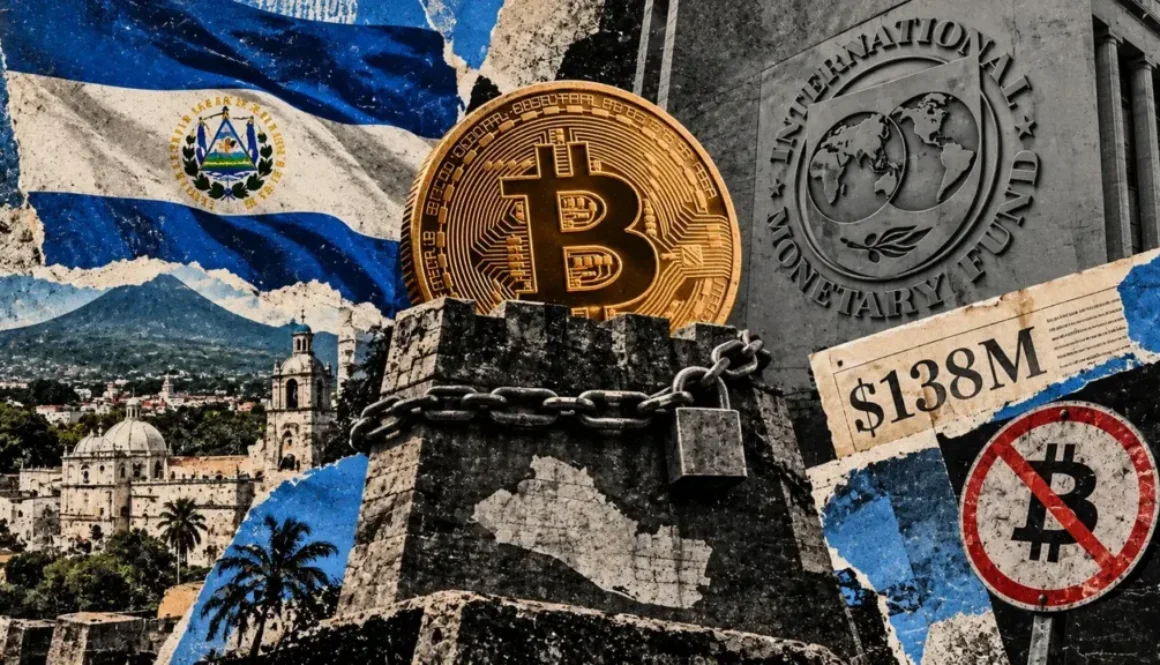
IMF releases $138 million to El Salvador after freezing Bitcoin purchases
El Salvador secured a $138 million disbursement from the International Monetary Fund after agreeing to keep its Bitcoin reserve frozen to donations only, with no further state-funded purchases allowed under its $1.4 billion loan program. The decision shows the IMF is willing to overlook past breaches of its Bitcoin accumulation limits as long as President Nayib Bukele’s government documents where new coins come from.
- The IMF released $138 million, equal to SDR 101.96 million, against a $1.4 billion Extended Fund Facility approved in February 2025.
- El Salvador’s reserve stands at roughly 7,794.37 Bitcoin worth about $666.1 million, a figure the IMF says should not grow from new public purchases.
- The government still owes the IMF a full unwind of state exposure to the Chivo wallet and tighter disclosure rules for public-sector crypto holdings.
- $138M IMF tranche released, about 10% of the $1.4B total program
- 7,794 BTC state reserve size, valued near $666.1 million today
- Feb 2025 approval of the 40-month Extended Fund Facility
The IMF completed the second and third reviews of El Salvador’s loan program on Thursday (October 1), clearing the way for the $138 million disbursement and granting waivers for performance criteria the country had already missed on Bitcoin accumulation. The waivers came after Salvadoran authorities took corrective steps and renewed their commitment to the program’s terms, according to CryptoSlate’s report on the decision. The Fund’s board attached the condition that no further accumulation is envisaged beyond documented donations, a distinction that lets the reserve’s dollar value rise with the market price without implying new state purchases.
IMF Grants Waiver Instead of Cutting Off Financing
El Salvador’s Bitcoin reserve has grown in ways that appeared inconsistent with its IMF commitments, a pattern CryptoSlate has tracked in prior coverage of additions to government-linked wallets, including a reported 1,540-coin increase the IMF said Bukele’s government did not pay for.
Rather than halting disbursements over that gap, the Fund chose waivers, a mechanism that keeps the $1.4 billion facility intact while preserving the no-new-purchases rule going forward.
The IMF’s broader review found fiscal consolidation on track and reserve and liquidity targets comfortably met.
That assessment, laid out in the IMF’s completed review, gave the board cover to treat the Bitcoin breach as a procedural issue rather than grounds to stall the program. The arrangement mirrors how other institutional holders disclose and justify reserve changes, a transparency standard not unlike what Strategy outlined in its 8-K filing on its own corporate Bitcoin position.
Chivo Wallet Still Carries Unresolved Public Exposure
El Salvador has transferred majority ownership and control of the state-backed Chivo wallet, the app the government built to let citizens hold and spend Bitcoin alongside the dollar, to a private operator.
The IMF said that shift reduces the state’s direct role in crypto but stopped short of calling the job finished, telling El Salvador that remaining public-sector exposure to Chivo should still be fully unwound.
That leaves one of the program’s original crypto-related conditions open even as a fresh tranche of financing clears.
Disclosure Rules and Digital Asset Law Face Amendment
The IMF is asking El Salvador to improve disclosure of public-sector crypto holdings, strengthen regulation and governance for digital-asset providers, and amend its Digital Asset Issuance Law where necessary. Those demands sit alongside the no-new-accumulation pledge as conditions tied to future disbursements under the facility.
Future IMF reviews will hinge on whether El Salvador can document any change in its Bitcoin balance while completing the Chivo unwind and the governance reforms. Unexplained increases in the reserve could again force Bukele’s government to seek waivers before unlocking additional tranches of the $1.4 billion facility.
The CCS read. The waiver matters less for Bitcoin policy than for what it tells institutional lenders about El Salvador’s credibility as a borrower. By trading disclosure commitments for continued financing instead of forcing a reserve sell-down, the IMF has effectively let Bukele keep the $666 million position intact while absorbing the compliance cost through paperwork rather than coins.
The next test comes with the program’s fourth review, when the IMF will check whether El Salvador has finished unwinding public exposure to Chivo and tightened disclosure of any change in its 7,794 BTC holdings.