
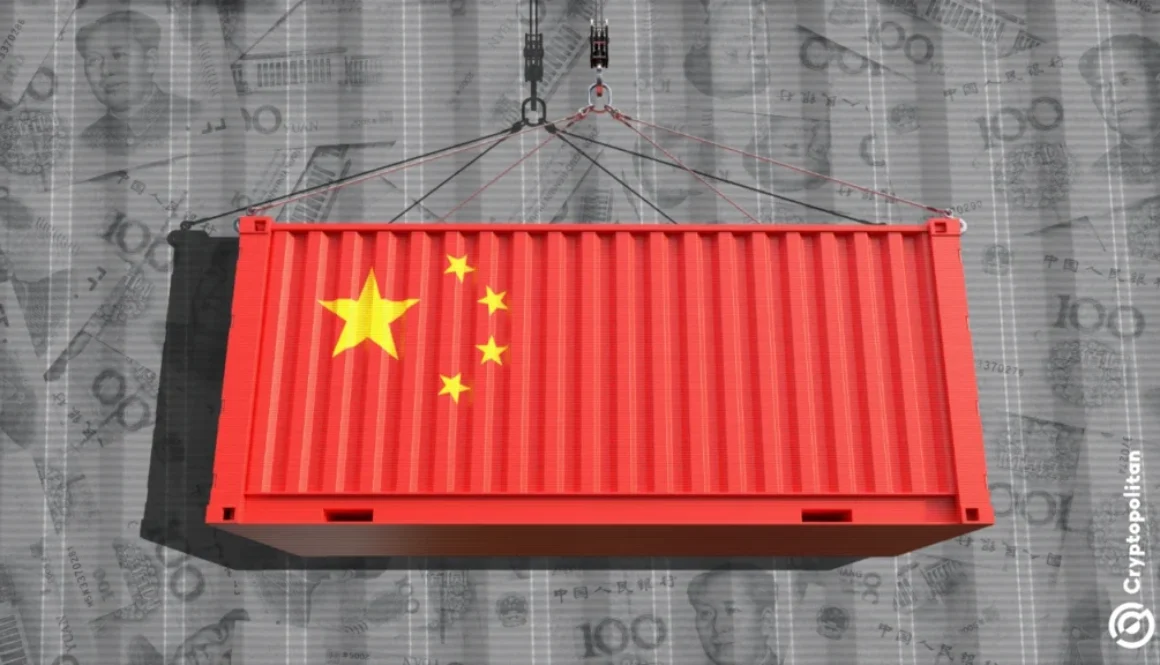
Slow exports of China’s rare-earths are threatening global supply chains
China’s rare-earth export licensing system is operating at a pace far slower than global demand, threatening production continuity across automotive, defense, and renewable energy sectors. For institutional investors with supply chain exposure, delays in these critical mineral shipments represent a material risk to earnings guidance and operational timelines across multiple industries.
- China restricted exports of seven key rare-earth elements and permanent magnets, requiring Ministry of Commerce licenses for each shipment.
- European importers report license approvals arriving slower than demand, with executives calling delays “untenable” for foreign operations.
- Tesla, Ford, and Lockheed Martin have warned investors that supply chain disruptions could slow or halt production timelines.
Beijing’s tightening of rare-earth export controls, implemented shortly after US tariff announcements in early April, has created a bottleneck that is now constraining global supply chains in real time. The new licensing requirement applies to shipments of seven strategically important rare-earth elements and the permanent magnets manufactured from them—materials essential for electric vehicle motors, wind turbine generators, humanoid robots, and advanced military systems. While Chinese exporters including Yantai Zhenghai Magnetic Material have begun receiving approval to resume orders, the pace of license issuance from Beijing’s Ministry of Commerce has not kept pace with the volume of pending applications. A European executive based in China, speaking on condition of anonymity, characterized the current processing delays as untenable for multinational operations, describing administrative incompetence at the working level as a contributing factor to the disruption.
Supply Chain Disruption Accelerates Across Multiple Sectors
The immediate impact of licensing delays is rippling across industries dependent on rare-earth permanent magnets. Tesla, Ford, and Lockheed Martin have each informed investors during recent earnings briefings that China’s export controls pose a direct threat to production timelines and supply continuity. Wolfgang Niedermark, a member of the executive board of Germany’s Federation of German Industries (BDI), stated that the window for avoiding significant production damage in Europe is narrowing rapidly. Some shipments destined for European customers have received clearance—at least one consignment bound for Volkswagen’s German operations was approved—but the overall approval rate remains insufficient to meet current demand levels.
Volkswagen acknowledged to investors that while its rare-earth supplies remain stable in the near term, its suppliers have received only a limited number of export licenses from Beijing. This constraint creates a timing problem for multinational manufacturers: inventory buffers can absorb short-term delays, but sustained licensing bottlenecks will translate into production slowdowns within weeks rather than months. The automotive and aerospace sectors face particular vulnerability because they operate on just-in-time supply models with minimal inventory reserves. A single missed shipment of rare-earth magnets can halt entire production lines, and the current licensing process provides no visibility into approval timelines.
Strategic Tensions Between Washington and Beijing Shape Export Policy
China implemented the rare-earth export restrictions shortly after US President Donald Trump announced steep tariffs on Chinese goods on April 2, positioning the mineral controls as leverage in the escalating trade dispute. The timing and scope of Beijing’s action suggest deliberate strategic calculation: rare earths represent one of China’s few asymmetric advantages in trade negotiations, given that China processes approximately 60-70 percent of global rare-earth supply and dominates the permanent magnet production chain. By restricting exports of these materials, Beijing can inflict pain on US-aligned manufacturers without triggering immediate retaliation mechanisms available to Washington.
The declaration of a 90-day trade ceasefire between Washington and Beijing earlier this month has not clarified the licensing situation for shipments destined to the United States. Industry participants have not reported any confirmed license approvals for US-bound rare-earth shipments since the ceasefire announcement, raising questions about whether Beijing is using the licensing process as a negotiating tool. One significant data point: Tesla secured assurances from Chinese officials that rare-earth magnets incorporated into the company’s robotic systems would not be diverted to military applications, suggesting that Beijing is evaluating end-use applications on a case-by-case basis. This level of administrative scrutiny adds processing time and uncertainty to an already sluggish approval system.
Institutional Risks and Supply Chain Recalibration Ahead
For institutional investors with exposure to automotive, aerospace, and renewable energy companies, the rare-earth export constraint represents a material operational risk with earnings implications. Companies that have guided investors toward production targets or revenue expectations based on normal supply assumptions now face delivery risk. The rare-earth supply chain cannot be easily substituted or rapidly diversified: Western alternatives to Chinese rare-earth processing either do not exist at scale or require multi-year development timelines. Western companies have begun exploring alternatives, including rare-earth recycling from end-of-life products and development of magnet-free motor technologies, but these pathways cannot relieve near-term supply pressure.
The administrative challenge facing Beijing’s Ministry of Commerce creates additional uncertainty. Industry participants fear the ministry will be overwhelmed as license applications accumulate, potentially leading to either further delays or a political decision to approve requests more liberally. European importers are currently uncertain about documentation requirements and proof-of-use standards needed to secure licenses, with particular concern about whether they can demonstrate that shipments will not be re-exported to the United States. This documentation uncertainty is creating a secondary administrative burden on Western manufacturers, slowing their ability to submit complete applications.
Investors should monitor three near-term indicators: the approval rate for European license applications relative to pending requests, any confirmed approvals for US-bound shipments during the 90-day ceasefire period, and whether major manufacturers announce production delays tied to rare-earth supply constraints. A sustained licensing approval rate below 50 percent of pending applications would trigger production delays within 6-8 weeks. The current situation underscores that supply chain resilience in critical materials remains an investment risk factor with direct implications for near-term operational performance across the manufacturing sector.
Institutional Portfolio Risk and Supply Chain Hedging Strategies
For asset managers and pension funds holding positions in automotive, aerospace, and renewable energy equities, China’s rare-earth export controls present a material valuation headwind that extends beyond near-term guidance revisions. Institutional sell-side analysts have begun factoring supply scarcity premiums into earnings models across affected sectors, with some firms reducing full-year production estimates by 8 to 12 percent for manufacturers dependent on Chinese rare-earth magnets. The risk is particularly acute for funds with concentrated exposure to electric vehicle suppliers and tier-one automotive component manufacturers, which operate on margins of 4 to 7 percent and lack pricing power sufficient to absorb cost increases from alternative magnet suppliers without triggering customer contract renegotiations.
Supply chain hedging strategies employed by multinational corporations have intensified in response to the licensing delays. Spot prices for dysprosium and terbium, two of the seven restricted elements, have risen 18 to 22 percent since the licensing system became operational in mid-April. Several institutional investors have begun accumulating positions in rare-earth mining equities outside China—primarily Australian and Canadian producers—viewing supply diversification as a structural shift rather than a cyclical opportunity. However, the lead time for increasing non-Chinese production capacity ranges from 24 to 36 months, leaving importers and downstream manufacturers with limited optionality in the medium term. This temporal mismatch between supply constraint and production capacity expansion creates an asymmetric risk profile for equity portfolios overweight in consumer electronics and defense contractors.
The geopolitical dimension of rare-earth supply control carries implications for institutional allocations across sovereign debt and currency markets as well. Countries including Japan, South Korea, and several European Union member states have accelerated government funding for domestic rare-earth exploration and processing infrastructure, signaling a shift toward supply chain sovereignty that mirrors post-pandemic trends in semiconductors and lithium. These capital commitments, while strategically rational, typically generate submarket returns in their initial phases and represent capital reallocation away from higher-yielding assets. Institutional investors positioned for extended periods of China-centric supply constraints should account for both the direct cost of alternative sourcing and the opportunity cost of government-backed diversification initiatives that may not generate competitive returns for 5 to 10 years.
The precedent established by China’s rare-earth licensing system extends beyond magnets to broader questions of mineral export control affecting cobalt, nickel, and graphite supply chains. Fixed income investors analyzing credit risk for companies in energy transition industries should incorporate scenarios in which critical mineral access becomes a function of geopolitical alignment rather than market price alone. This shift represents a departure from decades of commodity market assumptions and creates elevated refinancing risk for leveraged entities without diversified supply relationships or government backing. Rating agencies have begun incorporating supply chain resilience into credit assessments, a development that will likely tighten borrowing costs for manufacturers lacking verifiable mitigation strategies.