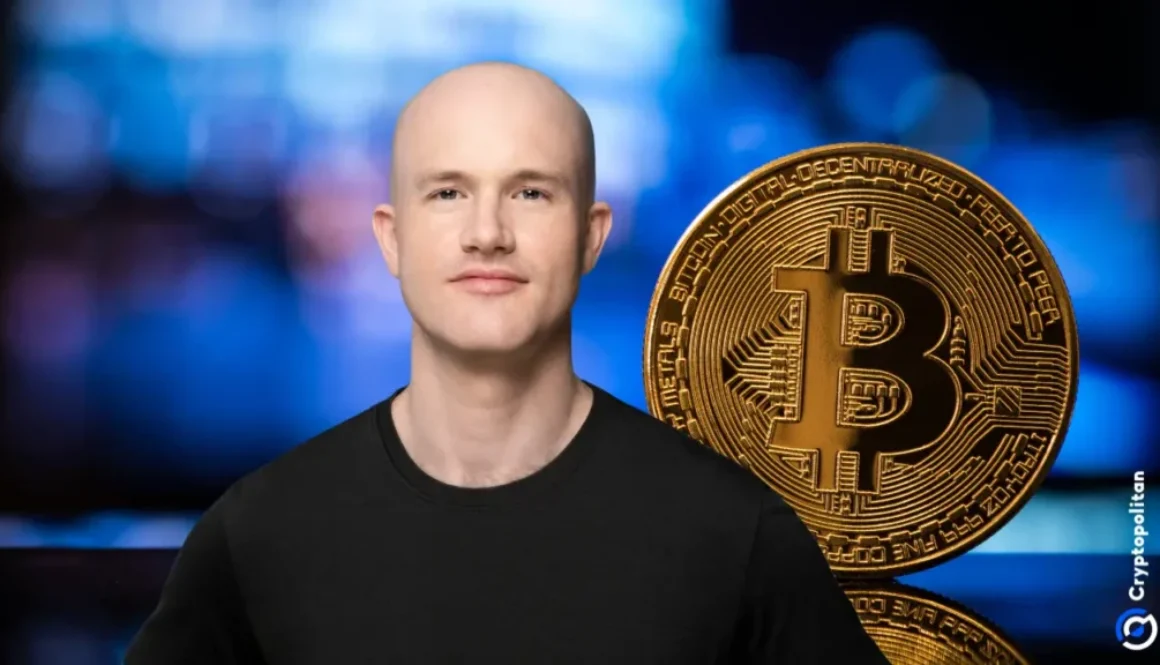
Coinbase CEO says anyone can start investing in crypto with just a few dollars
Coinbase CEO Brian Armstrong is making a straightforward case: cryptocurrency investment barriers are lower than most people assume. Speaking recently on social media, Armstrong argued that anyone—regardless of financial means—can begin participating in digital assets with minimal capital, and that the technology will eventually become so intuitive that users stop thinking about it as “crypto” at all.
Accessibility as a Core Message
Armstrong’s pitch centers on a fundamental claim: you don’t need substantial wealth to enter the crypto space. Small daily investors and traders can build positions with modest dollar amounts, he contends, making digital assets available to ordinary people rather than exclusively to institutional or affluent buyers.
The Coinbase CEO frequently emphasizes a wider global context. Billions of people lack access to traditional banking infrastructure, forcing them to rely on alternatives that may be expensive, inconvenient, or simply unavailable. Cryptocurrency and blockchain technology offer these populations a path to financial services via smartphone and internet connection alone.
Many people will use crypto in the next ten years, and some will do so without even knowing it.
— Brian Armstrong, CEO, Coinbase
This framing positions crypto adoption not as a speculative trend, but as inevitable infrastructure evolution. Armstrong suggests the transition will happen so gradually and naturally that most users won’t consciously recognize they’ve crossed into the digital economy.
The Financial Inclusion Argument
Armstrong regularly connects cryptocurrency to decentralized finance (DeFi) capabilities—borrowing, lending, saving, and trading without intermediaries. In regions where traditional banks charge prohibitive fees or don’t exist, DeFi protocols theoretically level the playing field between a farmer in a developing nation and a trader in Manhattan.
The CEO frames this as a control problem. Ordinary people want safeguards against inflation, currency instability, and financial systems they don’t trust. Crypto ownership, in his view, transfers that control directly to the individual, removing reliance on government monetary policy or banking institutions.
Coinbase offers multiple on-platform financial services including decentralized exchange trading, crypto-backed lending, and DeFi yield mechanisms. Users can earn rewards, borrow against holdings, or trade directly without leaving the platform.
Armstrong suggests that geographic location becomes irrelevant in a blockchain-based financial system. A village with no bank branch gains identical access to global markets as someone in a major financial center. The technical barriers that once excluded billions now crumble.
From “Crypto” to Simply “Money”
One of Armstrong’s recurring themes is normalization through familiarity. Early internet users faced overwhelming complexity—technical jargon, confusing protocols, counterintuitive interfaces. Today, billions use the internet automatically without understanding TCP/IP or domain systems.
Cryptocurrency will follow this trajectory, Armstrong predicts. Eventually, consumers won’t categorize transactions as “crypto payments” or “blockchain transfers.” They’ll simply move money, store value, or access credit, with the underlying technology becoming invisible infrastructure.
This normalization requires both technical refinement and user experience design. Coinbase positions itself as the intermediary that handles complexity on the backend, allowing ordinary users to interact with advanced financial primitives intuitively.
The Case Against Traditional Finance Friction
Armstrong regularly points out the economic inefficiency embedded in legacy payment systems. Credit card transactions typically incur 2–3% in fees despite moving only digital information. The underlying technology—a simple value transfer across a network—costs almost nothing to execute.
Blockchain systems theoretically eliminate this friction. Settlement can happen in minutes or seconds with minimal costs. Armstrong views traditional finance’s fee structure as economically indefensible once transparent alternatives exist.
It doesn’t make sense that people still pay 2–3% in fees every time they use their credit cards when they are just moving information through the internet.
— Brian Armstrong, CEO, Coinbase
This efficiency argument extends beyond payments. Lending markets, currency exchange, and asset custody all carry intermediary costs that blockchain can theoretically reduce. Armstrong sees Coinbase’s mission as bringing those efficiency gains to mainstream consumers.
Armstrong emphasizes that the cryptocurrency industry requires clearer regulatory frameworks. Years of legal uncertainty discouraged institutional participation and investor confidence. Recent global legislative efforts, including frameworks in developed economies, are beginning to reduce this ambiguity.
The regulatory environment remains critical to Armstrong’s broader vision. Companies and investors stayed cautious for years because government responses to new crypto products remained unpredictable. Clearer rules—though potentially restrictive—reduce business risk and accelerate mainstream adoption.
Armstrong’s messaging reflects a strategic positioning: Coinbase as the compliant, mainstream entry point for crypto assets. Rather than positioning the company as a disruptive challenger to finance, he frames it as an efficient modernization of existing financial functions.
Coinbase’s Market Position and Industry Evolution
Founded in 2012, Coinbase has grown to become one of the world’s largest cryptocurrency exchanges by trading volume and user base. The company’s 2021 initial public offering marked a watershed moment for crypto industry legitimacy, signaling that major financial institutions and retail investors viewed cryptocurrency as a permanent asset class requiring regulated trading infrastructure.
Armstrong’s accessibility messaging directly supports Coinbase’s business model. As the primary on-ramp for retail investors entering cryptocurrency, the company benefits when barriers to entry decline and adoption accelerates. By consistently emphasizing that crypto requires minimal capital and technical knowledge, Armstrong removes psychological obstacles that prevent mainstream users from downloading the Coinbase app and making their first purchase.
The competitive landscape within crypto exchanges has intensified significantly. FTX, Kraken, Gemini, and traditional finance platforms like Fidelity and Charles Schwab now offer cryptocurrency trading. Armstrong’s emphasis on inevitability and normalization positions Coinbase as the first-mover beneficiary of a market that will eventually reach billions of users, even if competition becomes fierce.
Industry analysts estimate the global cryptocurrency market could expand tenfold over the next decade as regulatory clarity improves and technical infrastructure matures. Armstrong’s narrative—that barriers are lower than people think and adoption is inevitable—serves as both genuine conviction and shrewd business communication.
Market Implications and Timing
Armstrong’s messaging occurs against a backdrop of significant market volatility. Cryptocurrency prices fluctuate dramatically based on macroeconomic conditions, regulatory announcements, and technological developments. Yet his emphasis on accessibility and long-term adoption remains consistent regardless of short-term price movements.
This approach differs sharply from traders focused on immediate speculation. Armstrong frames crypto adoption as a multiyear infrastructure buildout comparable to early internet adoption curves. Such framing can stabilize investor sentiment during downturns by refocusing attention on fundamental value propositions rather than price momentum.
The accessibility narrative also addresses criticism that cryptocurrency primarily benefits early adopters and wealthy investors. By emphasizing that anyone can start with small amounts, Armstrong counters perceptions that crypto is exclusive or elitist. This rhetorical strategy broadens the addressable market by positioning participation as democratic and accessible rather than exclusive.
Long-Term Vision and Infrastructure Development
Armstrong’s consistent messaging reflects a long-term vision where cryptocurrency becomes genuinely embedded in everyday financial transactions. This requires not just individual adoption but institutional integration—payment processors, employers, retailers, and governments accepting and transacting in digital assets.
Coinbase’s product roadmap reflects this vision. The company continues expanding beyond spot trading into derivatives, staking services, and institutional custody. Each product addition aims to reduce friction and expand use cases beyond speculation toward genuine utility.
The accessibility narrative serves a dual purpose. It broadens the market narrative beyond speculation toward genuine utility, while simultaneously lowering psychological barriers for new users. If crypto adoption requires no special knowledge or capital, adoption velocity accelerates.
Whether this vision materializes depends on execution across multiple dimensions: technology development, regulatory approval, price stability, and genuine user experience improvements. Armstrong’s framing, however, reflects where major cryptocurrency companies are positioning themselves: not as boutique financial products for enthusiasts, but as foundational infrastructure for global finance.
The coming years will test whether Armstrong’s optimistic accessibility narrative translates into sustained adoption or whether cryptocurrency remains confined to a niche of technically-inclined and financially-sophisticated users. His consistent, patient messaging suggests Coinbase is prepared for a multi-decade transformation rather than expecting overnight mainstream acceptance. This patient capital approach differentiates Coinbase’s strategy from more volatile competitors and positions the company to capitalize on whichever adoption scenario ultimately materializes.
Get weekly blockchain insights via the CCS Insider newsletter.