
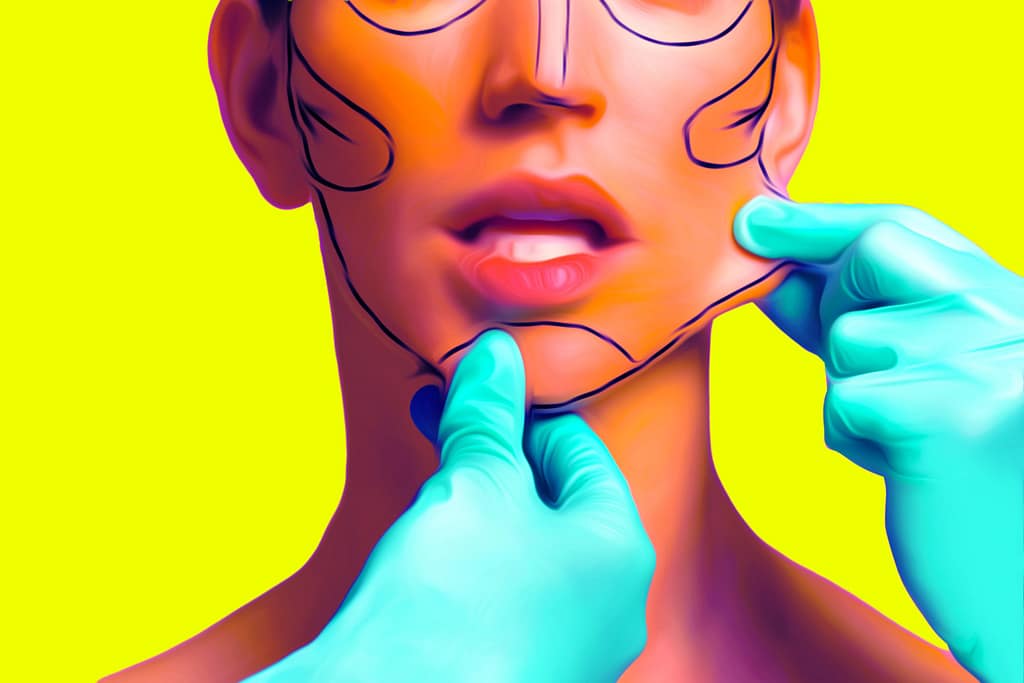
People Are Getting Plastic Surgery to Look More AI-Generated
Plastic surgeons report a surge in patients requesting procedures to match AI-generated versions of themselves, raising concerns about how algorithmic beauty standards are reshaping surgical demand and patient expectations. For institutional investors tracking AI’s societal impact and healthcare sector disruption, this trend signals both a market expansion opportunity and emerging regulatory risk in the cosmetic surgery and AI tool sectors.
- Patients using AI image tools develop significantly higher surgical expectations than those using traditional filters or no digital aids.
- Cosmetic dermatologists report specific requests for “Bratz doll” aesthetics: oversized eyes, exaggerated lips, and chiseled jaws mimicking AI-generated caricatures.
- Plastic surgeons debate whether specialized AI simulation tools could reset patient expectations or instead deepen reliance on error-prone technology.
- 1 woman in her 70s requested facial reconstruction to match AI image of herself at 30, per Manhattan surgeon account
- ChatGPT image generation tool explicitly cited by New York cosmetic dermatologist as source of unrealistic patient requests
- Last year survey by Beth Israel Deaconess Medical Center documented significantly higher surgical expectations among AI photo-editing users
Cosmetic surgeons across major U.S. cities are encountering a new form of patient mismatch: individuals arriving with AI-generated selfies that bear little resemblance to achievable surgical results.
Rachel Westbay, a cosmetic dermatologist practicing in New York, described a consultation where a patient presented a ChatGPT-generated image with dramatically oversized eyes, full lips, and an angular jawline that resembled a doll more than a human face.
The aesthetic has been dubbed the “Bratz doll” look by practitioners, a reference to the intentionally exaggerated toy line that defined a generation’s beauty standard through cartoonish proportions. Westbay expressed shock at the request, comparing the disconnect to a patient asking for surgery to resemble a fictional animated character.
This phenomenon represents a qualitative shift from earlier digital beauty influences. Snapchat filters and Instagram-driven influencer culture have long shaped aesthetic preferences, but AI tools operate differently in both scope and perceived authority.
Unlike a filter that applies algorithmic adjustments in real time, an AI image generator creates a persistent artifact, a specific, customizable rendering that a patient can study, share, and internalize as a goal.
The accompanying language models amplify this effect: a chatbot that appears to understand and validate the user’s aspirations carries psychological weight that a passive filter does not, particularly among users unfamiliar with how generative AI functions.
Beth Israel Survey Documents Significantly Higher Expectations Among AI Photo Users
Research conducted by Beth Israel Deaconess Medical Center and cited by practitioners in the field quantifies the expectation gap. Patients who employed AI tools to digitally alter their photographs reported “significantly higher” expectations for surgical outcomes compared to peers who did not use such technology.
The finding matters because surgical satisfaction depends heavily on alignment between patient desire and achievable results; unrealistic expectations are a documented source of post-procedure dissatisfaction and malpractice claims in cosmetic surgery.
Sachin Shridharani, a plastic surgeon in Manhattan, recounted a specific case illustrating the severity of the gap. A woman in her seventies arrived with an AI-generated photograph requesting what she called a “surgical time machine”, requesting that Shridharani reconstruct her face to match an image the AI had generated of herself at approximately thirty years old, resembling her granddaughter.
When Shridharani explained that surgical reversal of four decades of aging is not feasible, the patient remained insistent. The surgeon’s challenge was not a technical one but a perceptual one: the patient had internalized the AI output as a plausible template for what surgery could deliver.
The gap extends beyond elderly patients seeking age reversal. Younger patients request the Bratz doll aesthetic explicitly, bringing printed or screenshotted AI images to consultations as specifications. This represents a departure from earlier cosmetic surgery norms, where patients might reference celebrity photographs or movie characters.
A celebrity reference remains anchored to a real person’s actual face; an AI-generated image is a pure aesthetic construct with no real-world constraint, making it inherently more extreme and often anatomically inconsistent.
Surgeons Debate Whether Specialized AI Tools Can Restore Professional Authority
Some plastic surgeons see an opportunity to use AI not as a patient expectation driver but as a reality check. Justin Sacks, a reconstructive plastic surgeon at Washington University, has proposed that specialized AI simulation software could help bridge the expectation gap by showing patients realistic previews of what a given procedure would actually produce.
Sacks suggests that if a surgeon could run a patient’s photograph through an AI model trained on actual surgical outcomes, rather than idealized or caricatured renders, the consultation conversation would shift dramatically. A patient would see not what they asked for, but what they could realistically expect.
Do you realize the conversation that you would have and the expectations that you would have after that clinic visit? It would be astounding.
Justin Sacks, reconstructive plastic surgeon, Washington University
This approach has intuitive appeal but introduces distinct risks. It requires AI tools trained on large datasets of actual surgical outcomes, which are expensive and proprietary. It also assumes that surgeon-guided AI simulation would carry more weight with patients than patient-generated AI rendering, an assumption unproven in practice.
More critically, it deepens surgeon dependence on AI at a moment when the technology remains error-prone; a surgeon who relies on AI-generated surgical previews to set expectations has outsourced a core professional judgment to an opaque system.
The field remains divided on whether AI should be incorporated into the surgical consultation at all, or whether surgeons should instead develop clearer communication protocols to address AI-generated expectations without using AI tools themselves.
Cosmetic Surgery Market Expansion Meets Emerging Regulatory and Reputational Risk
For institutional investors tracking the cosmetic surgery sector, this trend presents a dual opportunity and risk profile. The surge in patient demand, driven by readily available, customizable AI tools, expands the addressable market for surgical procedures. Patients who might never have considered cosmetic intervention are now arriving with specific requests, however unrealistic.
From a pure revenue perspective, cosmetic surgery practices could expand their client base among demographics previously indifferent to elective procedures.
Countering this opportunity is significant reputational and liability risk. Cosmetic surgery satisfaction and word-of-mouth reputation directly correlate with patient outcomes matching expectations. A surgeon who performs technically excellent work but fails to manage AI-inflated expectations faces negative reviews, reduced referrals, and potential malpractice exposure.
The medical literature on cosmetic surgery already documents that unrealistic expectations are a leading driver of post-procedure dissatisfaction; AI-generated expectations could accelerate this problem sector-wide.
Healthcare regulators and professional societies have begun to take notice. The American Society of Plastic Surgeons and similar bodies may eventually issue guidance on how members should address AI-generated patient imagery, similar to earlier statements on social media filters and body dysmorphic disorder.
Any such guidance that restricts surgeon use of AI in consultations, or that requires explicit patient education about AI limitations before surgery, would reshape how the industry handles these consultations.
The key question for surgeons and their investors is whether the market expansion from AI-driven demand outpaces the reputational and regulatory friction it creates. Watch for the American Society of Plastic Surgeons’ official statement on AI-generated patient imagery and surgical consultation protocols, expected within the next 12 months; such guidance will signal whether regulators view this as a manageable patient communication issue or an emerging standard-of-care problem requiring formal intervention.