Key takeaways
- SEBA Bank operates as a crypto-first neo-bank with a full Swiss banking license, designed specifically for digital assets rather than a traditional bank pivoting to crypto.
- The bank bridges traditional and digital finance by offering custody, ETPs, ETFs, options, staking, and credit products to institutional investors entering cryptocurrency.
- Institutional adoption is accelerating as investors shift from questioning Bitcoin's viability to understanding portfolio allocation, diversification benefits, and blockchain as a value transfer system.
- SEBA Bank's research focuses on three pillars: analyzing crypto as an emerging asset class, monitoring regulatory developments for institutional clarity, and providing educational content.
- The bank publishes educational materials through 'The Bridge' publication and operates a separate education department to help traditional bankers understand blockchain technology.
A crypto-first Swiss bank
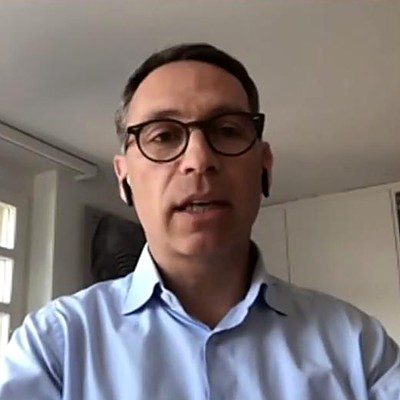
Ashton Addison: You come from a traditional economics background. What drew you into digital assets?▶ 00:23
Yves Longchamp: I'm an economist, and I first worked for the Swiss National Bank. I've always been interested in the role of money in society, and in finance in general. I realized that everything is becoming digital, and that the next step for money is probably to become digital as well. Money has changed over time with society, regulation and technology, and I think this is a new iteration. I wanted to take a deep dive into it, which is why I went into crypto.
Ashton: Is SEBA a traditional bank that has moved into crypto?▶ 01:07
Yves: No. SEBA is a new bank. We received our Swiss banking license a few years ago, so we have the same license as any other Swiss bank, but with a twist, and the twist is crypto. We are crypto first, and we also offer traditional services, but they are targeted at crypto. We are not a traditional bank moving into crypto; we are a crypto bank, designed to support all the assets and services linked to crypto activity.
Ashton: What is the bread and butter of SEBA, and what are you focusing on in digital assets?▶ 01:54
Yves: The idea is to bridge the worlds of digital and traditional assets. Most of our clients are institutional investors who want to jump in and get a first experience, and we try to simplify things as much as possible, because this is a complex world to enter. First, they can custody their cryptocurrencies directly in the bank. Then we add financial services: products like ETPs or ETFs, options on different cryptocurrencies, yield enhancement through staking, and credit. If you hold some bitcoin you expect to rise in price but need fiat to buy something, you can borrow against it. Traditional investors get access to crypto as an asset class, and crypto natives get the banking services a universal bank offers.
We are not a traditional bank moving into crypto; we are a crypto bank, designed to support all the assets and services linked to crypto activity.
What institutional clients are asking
Ashton: What are you seeing from institutional clients moving into cryptocurrencies?▶ 03:49
Yves: We observe a lot of interest, and it is growing. About three years ago, people were unfamiliar with bitcoin and wondered whether it would survive. That question is no longer asked. Bitcoin is here and I think it is here to stay. Now they want to know how to invest, what it means for their portfolio, whether it offers diversification, and how to add crypto without being too bothered by the high volatility. Then there is a second type of question. Many people see blockchain as a new operating system for value, monetary or non-monetary, such as identity or ownership, and they want to invest in that environment. Some Swiss banks are also thinking about whether DeFi will take the place of centralized finance, or whether the two will be linked.
Ashton: Crypto moves into almost every industry. How do you decide what your research team focuses on?▶ 06:14
Yves: It's difficult, because it's a fast-moving environment and thousands of new things develop every day. Luckily I can rely on a great team, and we focus on a few angles. First, we treat crypto as an emerging asset class and try to understand the fundamentals, so we gather the information a typical institutional investor would look at to make their own decision. Second, we follow regulation very carefully. Our clients want to be sure they don't make mistakes, and regulation is coming, which is good because it creates clarity for institutional investors. Third is education, which is key to starting any discussion, so we write reports that are purely educational and explain the basic concepts.
Opening the door to DeFi
Ashton: DeFi offers higher yields and more volatility than centralized staking. How deep have you looked into it, and how cautious should a bank be?▶ 09:55
Yves: We are a whitelister for Aave, for example, and the idea is again to make the bridge. We also offer staking for a few currencies, where we take care of the risk of who is validating, and there is some insurance. More important is creating an environment where institutional investors are ready to put their money in. You need a pool where, even if you don't know who else is swimming in it, you know they are all clean. So you need KYC and AML checks. To my knowledge we are the first to offer this whitelisting, and the project will be launched soon. We are just opening the doors to DeFi, which is likely to commoditize a lot of services banks offer, like exchange, borrowing and lending. I'm very optimistic, because I think digital finance and traditional finance will merge.
Bitcoin is here and I think it is here to stay.
Growth, Abu Dhabi and the two-way bridge
Ashton: SEBA closed a $110 million round at the start of the year. What will the capital be used for?▶ 11:57
Yves: We saw growth last year and it seems to be continuing, so we're happy to have additional funding to expand. First, we want to go to Asia. We just opened a branch in Abu Dhabi, but we want to go further east. We also want to strengthen our position in the roughly 25 markets we cover. We are still a small bank, and one way to expand is to hire, so we will need some extra headcount.
Ashton: What will be the key to a successful bridge from traditional investors into this new world?▶ 13:13
Yves: For institutional investors, I think the banking license is key. We are similar to the people I used to talk to, so it's easy for them to come to us and trust us, because we follow the rules that exist in the traditional space. Behind that, we have not only bankers but also blockchain engineers and IT people who simplify the complexity. The bridge also has to work the other way. A crypto native can be extremely rich in bitcoin, but may still want to buy a house or a car, and getting money back into the financial system is difficult. So we offer 24/7 trading and great custody, and you can spend your money or get credit. Even in a peer-to-peer environment, I think a bank makes sense to bridge these two worlds in both directions.
This interview has been edited for length and clarity. Recorded March 2022.