Alessandro De Carli / Acurast
Alessandro De Carli on decentralized compute from smartphones
In this episode
Cloud compute is expensive, centralized, and full of hidden trust assumptions — and most builders do not have a real alternative.
Alessandro De Carli, Founder of Acurast, breaks down how Acurast turns everyday smartphones into a decentralized compute network, and why trusted execution environments (TEEs) let real workloads run with confidentiality and verifiability.
Understand what “confidential compute” actually means, how decentralized compute can compete with Big Tech cloud, and what it takes to scale a network toward billions of devices.
acurast.com · @Acurast on X · apps.apple.com · Watch on Refinitiv
- Acurast leverages trusted execution environments in smartphone hardware to enable attested, verifiable compute that prevents cheating in decentralized networks.
- Confidential compute allows users to offload workloads to strangers without risk of data tampering or inspection, addressing privacy concerns with AI agents.
- Over 200,000 compute units have onboarded to Acurast globally, currently used for specialized applications like web scraping and resilience testing.
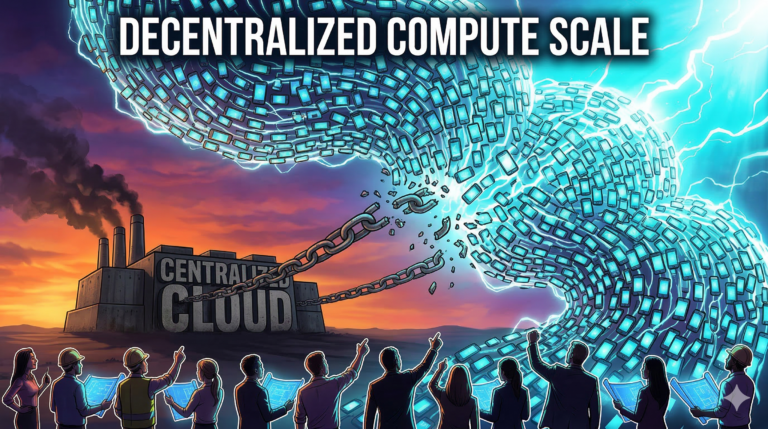
- Decentralized compute networks offer resilience advantages over centralized cloud providers, particularly against outages from geopolitical events or infrastructure failures.
- Adoption of decentralized compute faces barriers due to convenience and established market dominance of centralized providers like AWS.
Chapters
Transcript
Read the full transcript
0:00I'm Ashton Addison from the Crypto Coin Show, and today on Blockchain Interviews with Alessandro De Carli, founder of AccuRays, here to talk about decentralized compute powered by smartphones, trusted execution environments to make mobile devices a serious security layer, and building alternatives to big tech cloud infrastructure, decentralized networks,
0:24decentralized AI compute. It's what we're all about. Alessandro, welcome to the show, and thank you for taking the time.
Well, thank you for giving us the opportunity, Ashton.
Yeah, excited to dive into this because I'm guessing most people are underutilizing the capabilities of their smartphones. Maybe they're scrolling on X or Instagram when they could be
0:46contributing to decentralized networks and potentially earning from it as well. I'd love to dive into the insights and how we can make that happen for more people that are outside of crypto, and get them involved in decentralized networks. I'd love to kick off our conversation by hearing a high-level on what you and the team have built at AccuRays, and how it relates to this,
1:07and then we can dive into all the details.
Yeah, I would love to. Perfect. I think that you already touched upon a couple of core ideas, right? Crypto today is just very very few people that are actually leveraging this technology for yeah, with all the benefits that it brings. And with AccuRays, we always wanted to basically touch the masses,
1:36right? People should be able to onboard devices and provide compute without even noticing that what they're actually working with is a blockchain, and they crypto system, right? This is maybe one of the initial things because the whole population of people that know crypto is very very limited, and then the population out there that has actually a smartphone
2:00is huge, right? And with that in mind, we basically took a look at the mobile device and how can you actually turn that into a device that can contribute value to a network? And value in our context means compute, right? Compute in form of RAM, storage, the compute cycles of your CPU and also GPU that the mobile device has
2:29as well as ultimately the bandwidth that it may be able to provide. Now, one of the interesting parts about mobile devices is that they all come pre-shipped with something called a secure element. And inside that secure element, which is basically a piece of hardware, which is the piece of hardware that allows you to do things like Google Pay or also Apple Pay, right? Inside
2:56that piece of hardware, there is a subsystem called the trusted execution environment. Now, this all sounds quite technical and boring, but the actual meaning of it is that you can prove to a decentralized network like Akamai that the hardware is actually completely genuine and the compute cannot be faked.
3:24So, that was one of the kind of foundations for the entire network because as soon as you start incentivizing people for compute that they provide to a network, you end up in a very weird situation where if people know how to cheat, they will be cheating, right? And then all of a sudden, the entire system starts falling apart. Now, with Akamai, that is not
3:44possible because only attested devices, so devices that you receive an attestation, a cryptographic attestation coming out of this yeah, trusted execution environment will be able to actually onboard. So, that was one of the main contributions in general to the community and crypto community from from Akash being able to leverage those
4:13bits of hardware in mobile devices. Another very nice side effect of this execution environment it that is that it allows you to basically offload a compute workload to somebody else, and that somebody else will not be able to tamper with the execution or even inspect it. So, this is a concept called confidential compute. And with these two properties, so the
4:42Ability to know that the computer's real and the ability to offload tasks to complete strangers, you are actually able to then build up a network like like Akash, and so we did. And the numbers are actually quite impressive. We have more than 200,000 compute units that have onboarded onto the network from all around the globe. And these are all being used already
5:10today by yeah, for various yeah, demand use cases. Mhm. Now, you mentioned as well that it might be a possibility to utilize such a network to maybe challenge also hyperscalers, but it's not the I mean, this is the ideological idea where where we want to go to. But, it
5:40was not necessarily where we wanted to add value in the first place. Mhm. Because the compute network today is mostly used for quite specialized use cases like web scraping, also resilience [clears throat] testing, and then running workloads confidentially. Like you can think about now AI agents coming up, right? You're sharing a lot of secrets with those AI
6:07agents. And then you have the option to either basically purchase your own Mac mini to run them at home or rent the compute from from somebody. Now, if that somebody is just giving you the compute without the property of confidential compute, you do know that somebody can potentially get access over all of your data. And with the confidential compute, that changes.
6:36
Mhm. Yeah, that's that's really important factor and I appreciate you laying all that out. I think now that more people are getting more intense compute into the LLMs and they're getting used to not just copy pasting, they're actually giving the credentials to the AI and be like, just do it all for me. And whether that's also making the
7:01payment or you know, using my API keys that might have access to my personal information. Now we're just handing it all over to the AI. And who who where that computer is going on what server owned by who and who else might have access to it, nobody really thinks about that or knows with these centralized AIs. So, I think it's important as more people start
7:26handing over their lives to AI agents that to have that confidential compute.
Yeah, absolutely. And you know, these companies notoriously don't have your best interest in mind. You can see that by maybe Yeah, small things like like ads trying to persuade you to purchase things that you might
7:54not need, but this can quite quickly also turn into bigger things where for instance, you will be denied certain health insurance products just because the whole system knows you very very well and the risk data is then being shared with some health insurance companies.
Yeah, it's crazy. And I was reading this thing with Accurist on the cloud
8:23rebellion. Is everyone There's always been a controversial take on the cloud and that there is no cloud, it's just somebody else's computer. And whether they have access to it. So, do we need to get rid of the cloud or at least that the way that everyone can see at least the person who owns the cloud can see into it?
Well, nowadays this topic is more
8:49relevant than ever. You just had a couple of outages because a lot of the newer data centers happen to be placed in the Middle East around Dubai, right? And then sadly, those were targets now
Mhm.
for yeah, missiles and whatnot. And that resulted in outages. So, I think
9:16resilience has always been a topic and basically also a reason why not to move everything to the cloud. Eventually, the benefits of having somebody else just manage all of your compute were higher than than people thinking about these potential cases where they would be completely dependent on
9:44these providers, right? But nowadays, you know, it's like a pendulum. It swings from one extreme to the other, and I feel like now you can really feel the swing back to the other extreme where people will say, "Well, okay, let's just not rely on clouds." And yeah, I think it's always a trade-off. You obviously
10:11do have benefits of running things in a cloud, but I think you will end up somewhere in the middle in the end. And now with AccuNest, we do provide quite a nice combination of being able to rent compute when you need it, but then whoever is providing that compute is not there to
10:38Yeah, they are not able to ultimately get access over your data or tamper with the execution that you want to take place.
For sure. There's trade-offs in both directions. That having a verifiable compute confidential compute is important, but also the efficiency of it and the convenience, you know, which I think
11:04a lot of people that use cloud or AWS, you know, it's just it's the go-to, it's there, and going to a decentralized compute network, you know, like Akash or any of these other ones that have been around for a few years, they didn't pick up because everyone's just doing this because it was more convenient, even though we might be sacrificing our personal
11:24information. How does that translate into AccuNest and like the efficiency and the compute power, you know, besides the confidentiality.
Right. I do believe that you're bringing up a couple of topics that we could drill down a little bit more, right? I think decentralized compute has been around for quite some time, and it offers a
11:52property that I believe is very much sought after and very much relevant nowadays, which is resilience, right? You no longer depend on a handful of data centers from hyperscalers, but now all of a sudden your data center is spread across thousands if not millions of households. And I think that alone, that property
12:20alone has some very important value to it. Now, the other reason why I don't think basically, and you brought that up, right? I don't think that it picked up so quickly is maybe the convenience, yes. But the other thing is if you hand out a task to a company like, I don't know, Google, right? A compute
12:50task. And they rent you the hardware and whatnot, you have one entity to talk to in case things go wrong. If you do the same with a decentralized network like yeah, a traditional decentralized network where you don't necessarily have properties like confidential compute, well, then start things start to become really, really tricky, because you will
13:15not [snorts] hand over your personal data to perfect strangers. You will maybe try yeah, some computation on open-source data, data that you ultimately don't necessarily care too much about if the broad public gets gets access over that. And I think one of the reasons why it didn't pick up is definitely this confidentiality aspect, which we
13:43already touched upon in great length. Yes, and because also with a cash that you mentioned, nowadays it's actually quite convenient to purchase a compute there. You can utilize also credit cards very similar to AWS and whatnot. And the same thing holds true also for accuracy, right? So the convenience factor is slowly also going away, but I think ultimately for
14:17this to really scale, you need this confidentiality and security aspect. I really don't believe that anything else will work.
Yeah. With contributing into the network, you know, there's many people, myself included, have some phones laying around. How powerful they are now might be questionable. How easy is it for people that maybe it's their main phone, maybe it's their
14:44backup phone, to get involved in the network and contribute and potentially earn from that?
It's basically as easy as installing an app. So it is available on the iOS and Google Play Store. And you install the app and what happens is that you have a very short onboarding process and then you already start providing the compute to the network.
15:12We always have been opt-in. This means that we never wanted the compute to be provided when the app was going into the background. For various reasons. Also for performance, right? Mobile devices have a very strong main core, and the main core is shared for the application which sits in the foreground, and we absolutely want to leverage that performance
15:40as well. So, yeah. Ultimately, it's it's quite straightforward to onboard onto Accuras a device that you use every day or a device that you have laying around. But for both cases, the application needs to be running in the foreground. So, for something that is just laying around, that's not a problem. You would have that application in the foreground, and then
16:06it starts providing that compute. But if it is your everyday device, this means that you will most probably just provide the compute while charging or whenever you choose to do so.
And is there a restriction for laptops and other computers that it's only for the phones? And why is that?
Yes. Today, there is the limitation
16:35that we only accept mobile devices. And this includes also tablets, by the way. So, it's not strictly just for phones. However, the reason why we're not opening up for, let's say, all laptops and servers and so on and so forth is because those devices are all lacking that secure element. And we absolutely need that as a central piece to ensure
17:03that the compute is genuine, and that the confidential kind of container has not been tampered with. And yeah. That is ultimately a very technical reason why we're not opening up for
[snorts]
laptops and so on and so forth. To be perfectly frank, mobile devices also have another very big advantage. And this is that they are way
17:32superior when it comes to performance in the chips that they provide. If we take a look at Apple, they make more than half of their revenue from the iPhone
alone.
Mhm.
And they're spending 33 billion in R&D every single year. So, you are effectively talking not about a kind of consumer device, but the
18:00most and best engineered piece of hardware out there in terms of compute units. So, you can just leverage that. And we did run a lot of benchmarks, and those numbers don't lie. You can also go on independent websites like cpumonitor.com, and you will soon find out that the compute performance in mobile devices is far superior than the one in servers.
18:28Servers optimize not for single core performance like like the mobile devices do. They optimize for more multi-threading, but they also consume way more than than a mobile chip. So, yeah. I think if you There is a lot of reasons why the mobile device is the compute unit of the future. Also for such a
18:56crowd-sourced compute network like Akash.
For sure. Yeah, I There's probably some people now that they don't even have a computer, they only have their their phone. And like that is the computer now cuz And they're so powerful. Most people are not using it to its full potential.
Well, Yes, I mean Well, well, I think running something like Snapchat
19:22with filters is a quite computational computationally intensive task as well. So, the devices are so powerful for a reason. Now, is that so useful? That might be another discussion, right? But, yes. They are They could be used for more useful tasks, definitely.
For sure. I'd love to dive into how crypto and cryptocurrencies can play a role in
19:52this. You know, do you earn crypto and fiat potentially, or do you need crypto to do compute? How does that tie into the network?
Well, with Accuras, we wanted to be multi-chain from the start. And this also meant that we wanted people to be able to pay for the compute with regardless which token. So, from a stable token to even the actual Accuras token. The
20:19entire system is designed so that ultimately the demand of that compute results in a in ACUs being burned like like a gas fee, right? If you want to run a smart contract on Ethereum, you burn the ETH to run that. And if you want to run a computation on Accuras, you burn
20:47ultimately the ACU. But, where you're coming from does not really matter. So, if you're coming from the USDT part, or if you're coming from the Bitcoin or ETH part, it does not really matter to the network. And this ability of being so interconnected with other ecosystems and this fluency of also being able to
21:16leverage DeFi to say it doesn't really matter with which token you're coming is I believe a very very big plus from the composability of cryptocurrencies that we're leveraging in this case. Yeah.
Yeah, that's really nice being able to pay stable coins or volatile coins if you don't want to move and being multi-chain you know, that's a that's a
21:43big advantage and for those people that, you know, getting more people into crypto is there is it still easy to if you don't have crypto can you get on-boarded or use other fiat alternatives as well?
I mean, for Accuras, the only thing you need is a phone and then you are able to on-board onto the network and also start getting rewarded for the compute
22:11that you're providing.
Mhm.
I do see that crypto is the settlement [snorts] layer of AI agents for sure. And I'm not the only one saying that but I really think that yes, these agents cannot create
Mhm.
some bank accounts or also create some or
22:40purchase some some credit cards or set up some credit cards, right?
Mhm.
So I do think that the rails are are being put in place so that crypto feels way more native to us as as humans and I think that yeah, with Accuras, we want to follow the same philosophy that you ultimately don't really realize the underlying technology that you use and
23:09you can just leverage and get the benefits out of it.
Mhm. Now, I agree. AI agents, they won't be going to the branch to open a bank account. They'll be using stablecoins or something. And with AI agents, the most popular as as of recent, now this OpenClaw AI agent that people are installing with their Mac Mini or on a VPS, can that technology specifically tie
23:37into using the confidential compute on Accurics?
Yes. So, the short answer is yes. The slightly longer answer is that as it stands today, the execution environment that we provide is a JavaScript only execution environment, which means that the workload needs to be kind of written in a very specific way. This already allows us to do a lot of
24:03things and nice use cases that are being built on top of that, but what the labs here at Accurics have been working on is the ability to launch containers. Now, that is a complete game changer because all of a sudden, you receive a environment which is very similar to a Linux environment, a full-fledged Linux environment with all the packages that
24:30you can install and so on and so forth, including packages like OpenClaw. And the cool thing about this piece of technology is that all of it is running inside that confidential compute environment, providing you all of those benefits. So, basically, you will be able to run very very soon. This is something that is already now being tested from our side and being
24:57rolled out in the next couple of weeks. You will be able to run something like Open Claw with AccuRanker and share all of the secrets and whatnot with that instance because it's then running inside the confidential compute.
Very cool. I'm looking forward to that. And what else?
What else is in the works for the next evolution? Obviously, getting
25:23Open Claw integration and AI agents following along as they get more widely adopted, making sure that's targeted towards the confidential compute versus some server that could be blown up somewhere and they're reading your information. Obviously, that's important. But how else can we get more people, whether it's to contribute to the network or to realize that they
25:45should be pointing their Open Claw to confidential compute, you know, throughout the rest of this year? What are the targets in growing awareness of the platform?
Well, the push for resilience is one that resonates very well with the Web3 community because Web3 has been built with resilience at its heart, right? This was the core idea of something
26:10like Bitcoin,
[snorts]
being independent [clears throat] of the fabricated financial instruments and the current financial system. And it's the same thing for AccuRanker. You shouldn't be dependent on somebody else basically centralizing the compute and gaining that full control over it. What you can do to mitigate that is basically contribute yourself to that
26:38network and then start utilizing the computer in a decentralized way. For me, where I see the next big bigger milestones are definitely now a couple of technical milestones like this container milestone that we were just talking about. Then there is also compute cluster milestone that will be releasing shortly after the container
27:07one. One thing that is maybe less technical will be the availability for people to basically create software and then provide not only compute but also provide the software onto the network so that others can choose to use software from from you but all settled and basically within the
27:35accuracy ecosystem. Similar to a app store if you want where you can then just as an individual developer create your specific crawler or create your your specific deployment and then somebody else will find that interesting and can just utilize that. And that somebody else will not necessarily be a human, right? That can also be then an agent leveraging this. So I really see
28:05how this web 4.0 push is basically becoming a reality and how everything is going into one direction there.
Yeah. Yeah, crazy times we're in and it's moving so fast too. You know, AI at least the computational power and the levels of consciousness it seems to be getting is going doubling in months not years. So
28:34it's important to get it right with the network. I'm definitely going to download the app on some of my other devices. I can leave a link to the app store and the play store in the show notes and the socials, and the site. Is there Is there a best place to follow along with the updates towards, you know, the open clock containers and the network besides
28:58getting the app?
Yeah, absolutely. So, we do have a couple of channels that are relevant. One is the Twitter account that Yeah, it's basically AccuRanker and you can find that on Twitter. The other one that provides maybe more summarized knowledge and at the at an interval is the newsletter that you can subscribe to
29:27by just going on accuranker.com. And then, if you happen to have any sorts of questions, the community in Discord is very very active. And yeah, that's basically where I point people to if there's more also technical questions on how to use the network, how to onboard devices in bulk, and all of those questions.
Sounds great, Alessandro. I'll also
29:54leave that in the show notes. I appreciate your insights into centralized compute, confidential compute, importantly, and earning from your phone is always nice. All those links will be in the show notes. All the best to move forward with AccuRanker, and I would love to follow up again in the near future.
Fantastic. Let's do that. Thank you so much, Ashton.
Related coverage
More interviews
 Quantum computers could crack Bitcoin keys by 2028, says Postquant Labs CEONov 24, 2026
 0G Labs' Michael Heinrich on cheaper open AI modelsNov 19, 2026
 Why Wall Street is moving toward 24/7 trading in 2026Nov 13, 2026
 How Wallet V is letting AI agents trade while keeping your keysNov 10, 2026
 How Silent Payments Keep Your Bitcoin PrivateNov 9, 2026
 How XYO is building proof in a world of AI fakesNov 5, 2026