Key takeaways
- Aeternity uses state channels built into the protocol to enable off-chain smart contract transactions at high speed without fees while maintaining blockchain enforcement.
- The platform is written in Erlang, a functional programming language from the telecom industry used by Cisco and Ericsson, enabling lower-level internet integration.
- Aeternity uses a functional programming language for smart contracts to reduce bugs and enable formal verification methods, addressing security concerns with large asset values.
- The blockchain incorporates naming systems and oracles at the protocol level rather than as separate layers, abstracting complexity for developers.
- Aeternity maintains proof of work consensus similar to Bitcoin while innovating on the proof of work mechanism itself and supporting hyperchains and proof of stake blockchains.
From a failed startup to building Aeternity
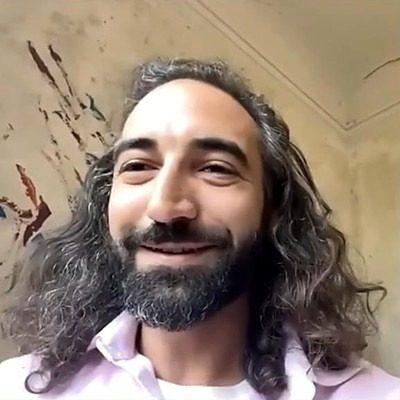
Ashton Addison: What led you into crypto, and then to building Aeternity?▶ 00:22
Yanislav Malahov: Before blockchain, I studied computer science with economics as a minor and went into the startup scene. I wanted to launch a Web 2.0 mobile app, and I failed. Then I discovered Bitcoin. After reading the white paper I thought there was something to it, so I went to a Bitcoin meetup. I had found Bitcoin by Googling 'cryptocurrency,' because I knew we would need crypto and currency together to create new currencies on the internet. I bought my first Bitcoin, and about a year later I decided to become a professional in the space. I soaked up all the information available and worked on several projects, including the Dark Wallet project. I also worked with Vitalik, before Ethereum, on a wallet that let digital artists issue and timestamp digital artwork as tokens on the Bitcoin blockchain. Today we would call them NFTs. Later I wasn't happy with some things in Ethereum, especially the technology. When I saw that the market understood the potential of smart contract platforms, I decided to create a technologically more advanced version, written in Erlang.
Ashton: What did you take away from Bitcoin and Ethereum?▶ 03:29
Yanislav: I'm somewhat of a Bitcoin maximalist. I believe Bitcoin needs to succeed so that all the other cryptocurrencies can succeed. There is only one Bitcoin, the chain with the most proof of work, and projects that try to double Bitcoin are not Bitcoin. Its most important value proposition is the 21 million coins and following the chain with the most proof of work. We see Aeternity similarly: the mainnet uses proof of work, and we may be one of the very few proof-of-work smart contract platforms. We also innovate quite a lot on the proof-of-work mechanism itself.
I believe that if you add work to any proof-of-stake chain in a smart way, you get higher security.
Why Aeternity is built the way it is
Ashton: What makes Aeternity different and valuable?▶ 05:34
Yanislav: State channels are part of the protocol and built into the smart contract language. Users of a smart contract can exchange transactions within a channel at the speed of light, without paying transaction fees. It can still be enforced by the chain, as if everything had been on-chain from the beginning, because every state update is signed by both parties, like a legal contract. If the counterparty disappears, you publish the last signed state to the smart contract. Aeternity also has a naming system and oracles built in. Smart contracts are written in a functional programming language, which is made for writing faster, safer code because there are no side effects. That makes formal verification much easier, and we're working with a team of specialists who use maths to prove that software does what it is supposed to do. If we're talking about trillions' worth of assets on blockchains, we want to be sure the software does what we want. The blockchain itself is written in Erlang, which came out of the telecom industry in Sweden at Ericsson and is used by Cisco and Ericsson in internet and telephone switches.
Ashton: Some argue proof of work is less scalable than proof of stake. How do you balance scalability and security?▶ 18:18
Yanislav: I think people are mixing something up. Proof of work is even more scalable than proof of stake, because the block headers are smaller and the proofs are much easier. It's a more elegant, compact chain design. Proof of stake has had many problems, Solana for example. Does the first proof-of-stake blockchain still exist? I don't think so. The first proof-of-work blockchain does. It speaks for itself, and it's almost a primitive in cryptography that should be used smartly where it enhances security. I believe that if you add work to any proof-of-stake chain in a smart way, you get higher security. With hyperchains we take a hybrid approach and piggyback on the proof of work of a parent chain. Bitcoin is a great parent chain, but Dogecoin is also amazing for the beginning because of its much lower transaction fees. We use the parent chain as an entropy source and timestamping layer for an unlimited number of child chains, which can even be nested. They reuse the proof of work without paying for it, just paying transaction fees to the parent chain and earning hyperchain coins.
Hyperchains: your own chain on someone else's work
Ashton: How independent will hyperchains be from their parent chain?▶ 21:17
Yanislav: At launch there will be one parent chain. Later, token holders should be able to decide through governance that from a certain block they switch to another parent chain, running its full nodes and reading and writing to it. It adds complexity, but it's quite easy to implement because the parent and child chain layers are completely separate. Only a very few transactions need to be inserted into the parent chain, and the parent chain's miners don't know anything about hyperchains. To them it looks like a standard transaction with a random hash inside. So hyperchains can operate fully stealth, without fear of being threatened by the parent chain operator. That's different from merge mining, where you need the miners' collaboration. Here, anybody can launch a hyperchain.
Ashton: Is the full release of hyperchains out yet?▶ 23:41
Yanislav: No. There's a testnet, or test version, and a graphical interface for staking. A full version is expected later this summer, though that's my personal view and I don't have a guarantee from the developers.
Ashton: What else is on the roadmap?▶ 24:10
Yanislav: For the Aeternity Crypto Foundation, hyperchains are the most important thing: a way for everybody to launch their own chain, independent from the parent chain, which just piggybacks on its work and uses it as a timestamping layer. Beyond that, there's the Superhero wallet, superhero.com, which I'm also involved in. It's a wallet for the Aeternity ecosystem, and I think the plan is to expand it into a multi-chain wallet supporting hyperchains, Bitcoin, and maybe Ethereum and a few other technically cool projects. DeFi is also one of the focuses. My vision is that wallets are a gateway to the DeFi world, and dapps should interact with them smoothly. So far it's complicated and a hassle, and cracking that is key to mainstream adoption.
So hyperchains can operate fully stealth, without fear of being threatened by the parent chain operator.
Adoption, capital and governance
Ashton: Can Aeternity compete with layer-1s that host the major DeFi and NFT dapps? What are its main use cases?▶ 10:35
Yanislav: Mostly I see experiments, or early prototypes, but there's no mainstream adoption yet. If we get one killer app that achieves mainstream adoption on Aeternity, the blockchain has a big chance. I'm involved in different projects, as an investor or contributor, and there's lots of hype in this space, so I pick the more technologically interesting projects, maybe ones under the radar. The product needs to click at some point, and then users grow organically. I don't think any project has had that click moment yet.
Ashton: Will Aeternity focus on end-user-facing dapps, and how does the ecosystem grow?▶ 13:33
Yanislav: I don't speak for Aeternity; I speak for myself and maybe as a representative of my company. Aeternity is fundamentally a DAO, in that it's decentralized and token holders can vote. Personally, I think the ecosystem needs to grow, and that requires capital. Token sales are a proven mechanism in the decentralized world for bringing in capital. I'd like to see more token-sale projects on Aeternity, and I'll be happy to support them myself and with my team. I've made several attempts to start some sort of token-sale factory. Maybe it will succeed at some point. One of the most important things for success is just to continue.
Ashton: How can people get involved with the foundation and the DAO?▶ 26:28
Yanislav: There are two separate things. The Aeternity Crypto Foundation is headquartered in Liechtenstein and gives grants to open-source developers building software for the ecosystem, including core development. The DAO lets people vote on governance decisions. You can bring up issues and vote on them, with every coin representing one vote, and votes can be delegated. You don't earn a reward for voting, but it's in everybody's interest to vote because it decides the future of the chain, and hard forks are decided this way. For example, the community decided through a governance vote, in which we as the founding team didn't participate, that the mining reward is split, with around 10% going to the Aeternity Crypto Foundation. That could be changed anytime with another vote.
This interview has been edited for length and clarity. Recorded June 2023.