Key takeaways
- The Sandbox is a user-generated content platform where creators can build 3D assets, games, and NFTs using tools like Voxel Editor and Game Maker.
- The Sandbox virtual world contains 166,461 total land parcels as NFTs, with approximately 45 percent sold since 2019 to over 5,000 landowners including major brands.
- Land prices have appreciated from $32 in December 2019 to an average of $500-600 on secondary markets, with rare parcels selling for over $1.2 million.
- SAND token serves as the platform's medium of exchange for purchasing land and user-generated content assets on the marketplace launching in beta.
- Major partners including Atari, Binance, Coinmarketcap, and entertainment brands have purchased land to build game experiences and engage with the Sandbox community.
A user-built world on the blockchain
Ashton Addison: What is The Sandbox?▶ 00:21
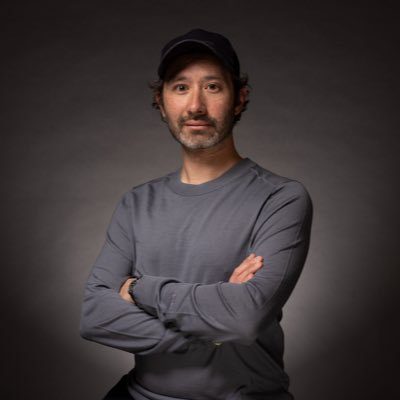
Sebastien Borget: I'm the co-founder of The Sandbox and the president of the Blockchain Game Alliance. The Sandbox is a gaming virtual world on the blockchain where users can make 3D assets as well as game experiences and monetize them using blockchain technology, essentially non-fungible tokens (NFTs), as well as SAND, the utility token of the platform.
Ashton: How do NFTs work inside The Sandbox?▶ 01:05
Sebastien: At its basis, The Sandbox is a user-generated content platform. Anyone can make their own games and their own NFTs. We provide an NFT maker called VoxEdit, a 3D editor where you can upload your 3D models, animate them, publish them on our marketplace and tokenize them as NFTs to sell to other users. They can then use those assets in our Game Maker, a no-code, no-programming tool for creating game experiences. Beyond asset NFTs, we also have LAND. As a virtual world, we have a map of 166,461 LANDs in total, each one a unique NFT at a unique location. Since 2019 we've sold about 45 percent of the map across several pre-sale and public sale rounds. Each LAND lets you publish a game in our virtual world and monetize it as players and creators use it. We have more than 5,000 LAND holders, including partners such as Atari, RollerCoaster Tycoon, Care Bears and the Smurfs. Exchanges including Binance, CoinMarketCap and Coincheck, the number one exchange in Japan, also own LAND and will be building experiences there.
We saw immediately the potential of applying NFTs to user-generated content.
Creator ownership and the LAND market
Ashton: Why is user-generated content so central to The Sandbox?▶ 04:01
Sebastien: We think it's the key. The Sandbox is an IP that has existed for more than 10 years, starting on mobile, on iOS and Android. But we had a specific issue: creators were contributing amazing content and contributing to the success of the game, yet we had no way to reward them fairly because of the platform we were running on. At the end of 2017 we saw CryptoKitties and CryptoPunks appear. We saw immediately the potential of applying NFTs to user-generated content. Any player could become a creator who owns their creation, finally owns their asset, can exchange it with other users and can use it in as many games and platforms as possible thanks to the interoperability of NFTs. They can monetize it by selling it on The Sandbox marketplace or, because of the decentralized, permissionless nature, on secondary marketplaces like OpenSea.
Ashton: How have LAND sales gone, and can everyday buyers get involved?▶ 06:06
Sebastien: We designed the world to be as accessible as possible to any creator. Each LAND is also pretty big, so you don't need many to build a great experience. When we started the first pre-sale in December 2019, there was a 40 percent discount, so LANDs were as low as the equivalent of $32. That's a very small amount for game creation and a presence in the metaverse. Values have started to increase, but it's still very accessible. We keep supplying new LAND in public sale waves at a fixed price. The smallest LANDs are about 1,000 SAND, which today is the equivalent of $200 to $300, still very reasonable compared with other decentralized virtual worlds. We also ran auctions for the largest, rarest parcels, up to 24 by 24. Last month we sold one 24-by-24 parcel for 1.2 million SAND in an OpenSea auction, which was a record. In February we sold more than 7.9 million SAND, three million dollars' worth of LAND, which is more than we sold in the year before. That shows the acceleration of NFTs and the adoption of virtual LAND as a digital asset of value.
SAND, governance and the roadmap
Ashton: What else does SAND do, and does it create a sustainable ecosystem?▶ 09:16
Sebastien: We designed SAND as a utility token and a medium of exchange for the platform. Users buy LAND with it, and buy assets made by other creators on our marketplace, which launches in beta this month. We waited a long time to introduce SAND. We only introduced it last August, through Binance Launchpad, because we wanted to show the world that the tools were ready and usable before the token arrived. SAND is also a way to participate in the governance of our decentralized virtual world. We are planning that over the next three to five years, SAND will be 100 percent in the hands of the users, so we as a company will no longer earn anything. Through the DAO, they'll make the main decisions that drive our roadmap, including how the foundation funds artists and creators to build more content, and parameters like marketplace transaction fees. Finally, SAND is a way to access DeFi gaming, combining NFTs and DeFi. You can stake your SAND to earn rewards in guilds.
Ashton: What can we expect over the next six months to a year?▶ 11:28
Sebastien: We're opening our marketplace in beta, where selected artists and creators will sell their creations and start earning SAND. We'll progressively open it to more users, so anyone will be able to mint and sell their creations for other creators to use in their games. It's a circular economy where players and creators are both rewarded. We're also working on what we call, for now, Pre-Season Zero, which will get a new name once we unveil it. It will introduce play-to-earn in The Sandbox. A first group of users will access the public alpha to play a 15-day season of games and levels. Once they reach a certain progression level, they can claim rewards, including SAND and NFTs. They can keep the NFTs as collectibles, or sell and trade them on the marketplaces and turn their time into a revenue stream. After that, we plan to add more feature packages to the Game Maker for more diverse game experiences, and to introduce live events with artists and celebrities. The Sandbox will be a multi-platform 3D virtual world, so we'll progressively bring it to mobile and hopefully to consoles in the future.
SAND will be 100 percent in the hands of the users, so we as a company will no longer earn anything.
This interview has been edited for length and clarity. Recorded March 2021.