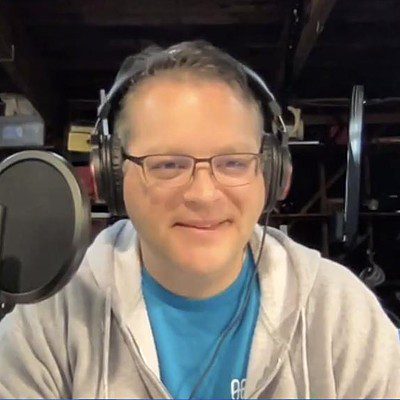
Key takeaways
- Harmony is an EVM-compatible Layer 1 blockchain with sharded proof-of-stake architecture enabling fast finality and thousands of transactions per second.
- Harmony's competitive advantage lies in community building and multi-chain interoperability rather than technological superiority over other blockchains.
- The platform aims to fund and support over a thousand DAOs by creating frameworks where members share assets, accountability, and interests.
- DAOs require mental model shifts from traditional employment, relying on shared passion and intrinsic motivation rather than nine-to-five employment structures.
- Emerging DAO tools like Coordinape enable peer-based reward distribution and recognition, addressing scalability challenges in decentralized organizations.
Harmony's pitch: community over specs
Ashton Addison: What is Harmony, and what sets it apart?▶ 00:44
Sam Harrison: We're a layer one blockchain, and we're totally EVM compatible. Anything you build and deploy on Ethereum or other EVM networks, you can also deploy on us very quickly. Transactions finish within two seconds, and we do thousands of transactions per second. We're also the first production-grade sharded proof-of-stake network, which means we can scale horizontally to as many transactions as we need. We have four shards spun up right now, but that's just because that's what demand requires. The technology across chains is pretty similar, though. What really makes Harmony different is our community, and the way we're actively creating a robust, self-perpetuating ecosystem that embraces a multichain future. We're building as many bridges to as many chains as possible, but it's also about building bridges to people, because that's what blockchain is all about. We joke that we're non-monogamous, so come and join us.
DAOs aren't nine to five, they're 24/7, because they rely on shared interest.
The plan for a thousand DAOs
Ashton: What is Harmony's vision for DAOs?▶ 02:59
Sam: Our vision is to fund and back over a thousand DAOs over the next year or two. It's ambitious and it isn't easy. Code operates more or less exactly as you design it, but people are a little squishier. Almost every definition of a DAO says that members share assets, accountability and interests. Assets aren't only a bank account or a pool of investable funds. They're also information, so we try hard to make sure everyone in a DAO has as much information as anybody else. We really believe DAOs are the future, but it's very early days. We're building, learning and tripping up occasionally, but we're pushing forward.
Ashton: How can DAOs scale to coordinate tens of thousands of people or more?▶ 05:02
Sam: I wouldn't say I'm the guru, but I've led the DAO effort at Harmony. First, you need a framework. A minimally viable DAO is basically a multi-sig wallet, like a Gnosis Safe, plus a Snapshot instance. That gives you shared assets and shared accountability through voting. Tools like Aragon, DAOhouse and MolochDAO give you frameworks to do more. One of the most interesting things in the last two or three months is Coordinape, which lets people balance rewards peer to peer. At the end of the week you take, say, 100 tokens and divide them among the five people you worked with, recognizing who was great. Aside from tooling, though, the biggest thing is the mental model, and that has been difficult to adjust. DAOs aren't nine to five, they're 24/7, because they rely on shared interest. That's the only way DAOs can compete with trillion-dollar corporations: they tap into enthusiasm. In a company you have one CEO creating the vision, and you're limited by that one perspective. In a DAO you capture the innovation, power and passion of everybody in it. That's why I think it's going to revolutionize where we're going.
Getting paid for what you're passionate about
Ashton: What is the Want to Earn program, and how does it help builders and creators?▶ 09:37
Sam: What we're trying to do is decentralize employment payment. If you're passionate about something, you'll want to work on it, and hopefully you can get paid for it. There are hiccups every time you try something revolutionary. As a made-up example, say you join a fly fishing DAO whose mission includes teaching people fly fishing knots. You hold an hour-long tutoring session and send the DAO an invoice for 75 an hour, or whatever it is. The DAO votes on it and pays you. Sometimes people value their contribution more than the community does, so there are trade-offs, and there are mechanisms for that. This is one way we're trying to realize the promise of cryptocurrency, which at the very beginning was to unshackle us from the burdens of traditional finance. You don't have to rely all the time on a nine to five and the banks. You can rely on yourself and have personal accountability. Want to Earn is about creating that mechanism and flywheel to enable personal financial freedom.
None of it happens behind closed doors, so you can see why I declined or approved each one.
Community numbers, grants and open evaluation
Ashton: Where does the Harmony community stand right now?▶ 13:18
Sam: On Twitter we have roughly 200,000 followers, and roughly 40,000 on our subreddit. Telegram and Discord are in a similar range, roughly 20,000 to 40,000. The community is very involved. Working on an open protocol, every now and then I find an amazing project I had no idea existed. DeFi Kingdoms is massive, with almost 250 million in total value locked, and I didn't realize how big it was until I looked at it myself. We also have about 40 DAOs already established, with something on the order of 500 active governors, and they've held over 300 votes on community direction. So it's active.
Ashton: Are there incentives for developers to build on Harmony?▶ 15:23
Sam: Yes. We're running a 300 million dollar ecosystem grants program. You can find the details at harmony.one/300, which breaks down the categories and what we're looking for. Projects can come from other chains. If you have huge traction on Ethereum, you don't have to leave. You can deploy on us as well and grow your own community. We also fund launch grants, bounties, events and DAOs. For more on how a grant works, see harmony.one/apply. We're totally open, so you can visit our forum at talk.harmony.one and watch people apply, and see me and my colleagues responding and evaluating them. None of it happens behind closed doors, so you can see why I declined or approved each one.
This interview has been edited for length and clarity. Recorded November 2021.