Key takeaways
- InsurAce provides three types of DeFi insurance products: smart contract risk, centralized exchange risk, and oracle event risk coverage.
- InsurAce's portfolio-based coverage allows users to insure multiple protocols in a single transaction, reducing gas fees and premiums compared to buying individually.
- InsurAce uses risk assessment questionnaires with over 40 questions to determine pricing, rather than relying solely on staking amounts like some competitors.
- InsurAce operates across eight different blockchain chains and covers assets in over 50 different DeFi protocols as of the interview date.
- InsurAce launched its token in March and deployed to Ethereum mainnet in April, with additional deployments on BSC and other networks.
Why DeFi needs insurance
Ashton Addison: What is InsurAce, and what are you building?▶ 00:47
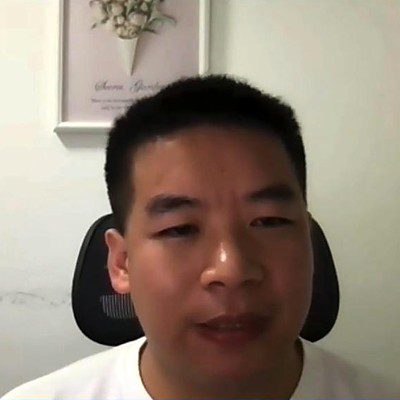
Oliver Xie: The crypto space really is the wild west right now, especially on security. You see hacking news here and there, with one protocol or another getting hacked. What we do is use insurance products and services to make DeFi a safer place. We want to give DeFi users reliable, robust and secure insurance, and at the same time provide a sustainable investment return. We started the project last September and launched our token in March this year. Our mainnet went live in the second half of April, so we have been on mainnet for around three months. We now cover more than 50 DeFi protocols across eight different chains.
Ashton: How do your main products work in practice?▶ 03:25
Oliver: We currently offer three types of insurance, and smart contract risk cover is the major one. Say you're a DeFi user farming on several protocols and you worry that one of them might get hacked. You buy cover for those protocols, and if your assets are hacked you request a claim and we compensate you for the loss. We also cover centralized exchange risk. And we work with project teams too. If you're launching a DeFi project and you're afraid it will be hacked, then your tokens, your assets and your users would all suffer. You can come to us and we will provide cover for your project.
Insurance works like rain shoes. You never think of it when it's sunny, but when it rains you ask where your umbrella is.
What sets InsurAce apart
Ashton: Other DeFi insurers are emerging. What is your competitive advantage?▶ 06:25
Oliver: Insurance works like rain shoes. You never think of it when it's sunny, but when it rains you ask where your umbrella is. We respect Nexus Mutual, but what we offer uniquely is portfolio-based coverage. Say you farm on five or six protocols. You can buy cover for each one by one, or you can buy it together as a portfolio. That saves premium and gas fees, and saves time. Back in April and May, when ETH gas fees were crazy, that mattered a lot, because you get multiple protections in one transaction.
Ashton: How does your pricing differ from other protocols?▶ 08:59
Oliver: At some protocols, pricing is based on staking: the more stake that comes into a protocol, the lower the premium. That causes problems for new protocols, because people are afraid of the risk and won't stake, so the price stays very high. Yet new products are exactly the ones that need insurance most. We price on risk assessment instead. We send project teams a questionnaire with over 40 questions, run a risk assessment, and set the premium from that. That gives a more accurate and reasonable assessment of a protocol.
Ashton: You also run an investment arm. How does that fit?▶ 10:16
Oliver: The funds that people stake into InsurAce can be used for investment and generate returns. That is a classic design even in traditional insurance. On one hand you provide insurance services, and on the other you invest. Together they provide security and returns to users.
The InsurAce token
Ashton: What role does the InsurAce token play in the ecosystem?▶ 11:51
Oliver: First, it's a governance token. You can use it for voting and community governance. But rather than discussing utilities or use cases, we focus on value creation and value capture for token holders. As an insurance platform we have several sources of income. We earn premiums on every cover we sell, and we have already earned over 130K in premium in the past two to three months. We can also charge fees on cross-chain bridge transfers. The token distributes the income generated on the platform back to token holders. Those fee and revenue claims are what I think will create sustainable value for holders.
Eventually you start to think about how to make money securely, and then you think about us.
What's next
Ashton: What are the main milestones on your roadmap for the rest of 2021?▶ 14:03
Oliver: We are pretty much aligned with our existing roadmap. The first item is an API. DeFi services are too far from the end user. You farm first, then you think about insurance, then you go find a provider. With the API we can integrate into other DeFi protocols' business flow, so while you're farming you can just tick a box to get insured. It will help us expand our sales network and improve user experience, and it should come in the next two to three weeks. The second is multichain expansion. We are deployed on Ethereum and BSC, and we also built our own cross-chain bridge, which I think is more secure, given the security issues other bridges have had.
Ashton: Is there a market for insurance among institutions?▶ 17:50
Oliver: Yes. Aave and Compound are starting to target institutional customers. Institutions can lend and borrow there, but insurance is an indispensable part as well, because institutions take security to a much higher level. If insurance follows up with products and services for them, I think that would be a very good market fit.
Ashton: Why isn't DeFi insurance taking off faster, and when do users start to need it?▶ 19:05
Oliver: Insurance is more of a risk-management role. When you come into DeFi you start with trading, then lending and borrowing, then farming, and only after that do you think about insurance. That's why it isn't explosive at the first stage of DeFi, but I think it has long-term potential. Eventually you start to think about how to make money securely, and then you think about us.
This interview has been edited for length and clarity. Recorded July 2021.