Key takeaways
- Lisk provides an SDK and platform for developers to build blockchain applications using JavaScript, targeting the large developer community familiar with the language.
- The platform aims to connect multiple blockchain applications through an interoperability protocol rather than creating isolated solutions.
- Lisk offers quarterly hackathons with prize pools up to $60,000 and a grants program with approximately $65,000 to incentivize developer participation.
- The cryptocurrency industry has become saturated with competing platforms, requiring Lisk to differentiate through developer experience and accessibility rather than language alone.
- Lisk is implementing interoperability with external ecosystems including Ethereum and Polkadot, moving beyond its original isolated ecosystem vision.
From ICO to a saturated market
Ashton Addison: What is Lisk, and what solutions is your team building?▶ 00:19
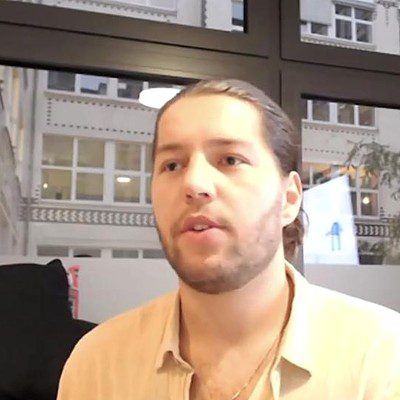
Max Kordek: Lisk is an OG project of the crypto scene. We've been around since 2016, but we had some starting problems, so I'd say we've really been around since 2019, when we hired our research team and introduced our research-led effort. We basically have two products: the SDK and the platform. The SDK is aimed at developers, to make it easy to build their own blockchain applications. These are similar to a dApp, but built natively on their own blockchain. The platform then aims to combine these applications through a common interoperability protocol. There are so many JavaScript developers out there that we wanted to target that group, so all our tools are built completely in JavaScript. Experimentation is extremely important, and I think startups eventually come out of those experiments. But a connected ecosystem is much more powerful, which is why we also built the platform.
Ashton: The industry has changed a lot since 2016. How did that shape Lisk?▶ 02:42
Max: When we started in 2016, venture capitalists hadn't discovered blockchain yet, so it was more of a grassroots effort, with retail investors doing our ICO. For the first two years we struggled a bit, because it took us a year to find a jurisdiction in which to create a legal entity. We're now based in Switzerland. Over the years the industry became more professional, more capital flowed in, and projects heavily backed by venture capitalists, like Polkadot or Cosmos, came along. Back then DeFi and GameFi weren't terms. Today we have to find a niche or a unique value proposition, and for us that's ease of use, accessibility with JavaScript and a heavy focus on developer experience. The industry is also very saturated, with so many smart contract platforms and blockchain application platforms. That's why interoperability is so important. There will always be a multitude of options, so the technology has to connect the different ecosystems. You can't have island solutions.
A JavaScript developer is much cheaper than a Solidity developer.
JavaScript as the developer draw
Ashton: Does JavaScript help bring developers to Lisk, and what incentives do you offer?▶ 06:38
Max: JavaScript definitely helps. It's our biggest unique selling point for developers, though you still have to focus on user and developer experience, because the language alone doesn't cut it. If a company wants to do something with blockchain and is hiring a team, it will usually look internally first, and it's more likely to already have JavaScript developers than Solidity developers. A JavaScript developer is much cheaper than a Solidity developer. I now see rates reaching into the thousands of dollars for one day of Solidity work. But the industry is so saturated that this alone isn't enough, so we have incentive programs. Every quarter we run a hackathon called Hack on Lisk. The first had around $33,000 in prizes, and the second, currently running, has $60,000. We also have a grant program that offers developers around $65,000 to build a blockchain application on the production platform. We have two applicants from the first wave, and we're evaluating the second. People from all over the world take part because they believe in the project, but in most cases they saw it was JavaScript and played around with it. The developer experience is dramatically easier than our competitors'.
What the LSK token does
Ashton: How does the LSK token fit into the ecosystem?▶ 10:20
Max: We're currently in the Sapphire roadmap phase, where we implement our interoperability protocol. It lets blockchain applications, each living on its own native blockchain, send data and tokens to each other. The next phase is called Diamond, where we branch out to ecosystems like Ethereum, Polkadot and Cosmos. The token's first use is on the Lisk blockchain itself, which is delegated proof of stake. You vote for validators, or delegates as we call them, with your LSK stake to secure the chain and generate blocks. The second use is transaction fees. The third is the most interesting. Developers can use LSK for fees in their blockchain application or create a new token, and we want them to use LSK. Having your own token is complicated. There's a lot to take care of legally, and as a Swiss foundation we're audited every year at the level of a bank. You also have to put a lot of effort and money into creating a market for it. You also need LSK to pay the fee to move from one blockchain to another, and DeFi use cases like collateral and liquidity will need it too.
Each blockchain application is somewhat of a multiplier. They all attract their own little community.
Roadmap and getting started
Ashton: What are the next big milestones for Lisk?▶ 13:36
Max: We're in a bit of a lull, because we just released Lisk version 3, which we worked on for three years. Essentially every part of the protocol was touched. We introduced a new fee system, a new address system, a new BFT consensus algorithm for block finalization, and a new multi-signature scheme. After about 20 minutes a transaction is 100 percent certain to be confirmed, which matters for cross-chain transactions. In May we introduced our interoperability protocol with over 20 research papers. We're implementing it now, and we expect to finish next year. Then comes the testing phase, which is the most challenging part. That will conclude the ICO promise my partner and I made in 2016. We're also sketching out a new vision, something bigger, because the industry has moved on and the old vision is outdated. We plan to reveal it next year. Protocols are becoming secondary, because Cardano, Polkadot, Cosmos and Ethereum all have great ones. What matters more is the ecosystem: how easily new users are onboarded, how many exchanges list the token, how helpful the community is, and how many production applications are built. Each blockchain application is somewhat of a multiplier. They all attract their own little community.
Ashton: How can developers and the community get involved?▶ 18:05
Max: It's super simple. Developers should head to our documentation at lisk.com/documentation, where you'll find everything you need to use the Lisk SDK. Everyone else should join our Discord server, where our main community lives and can help with questions. After that, install our wallets and acquire a tiny amount of tokens to play around with the network. It's insanely cheap now. You can use everything and spend something like 10 cents.
This interview has been edited for length and clarity. Recorded September 2021.