Key takeaways
- Decentralized Pictures uses blockchain to democratize film financing by outsourcing script review to a global community rather than relying on traditional studio gatekeepers.
- The platform incentivizes community members to evaluate submitted film ideas by paying them a portion of submission fees, creating a crowdsourced intelligence system rather than crowdfunding.
- The team has been developing the concept since 2015-2016, initially considering distribution disruption before pivoting to focus on the financing stage of film production.
- Community moderators post bonds to smart contracts to prevent collusion and self-regulate content, avoiding the need for the foundation to define what constitutes acceptable art.
- Winning projects receive detailed demographic data about audience response before being shepherded through production, packaging, co-financing, and distribution via the foundation's production network.
A crowd-sourced route into Hollywood
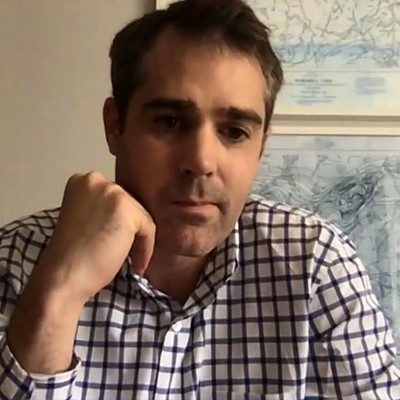
Ashton Addison: What is Decentralized Pictures Foundation, and what solutions are you bringing to film?▶ 00:22
Leo Matchett: Decentralized Pictures Foundation is focused on talent discovery and content curation. We use blockchain technology to democratize the decision-making process over which artists get a shot at getting their foot in the door in Hollywood. We intend to build a virtual studio of applications, covering the departments you would find at a big studio, and we're starting with financing. Users submit ideas to funding rounds that we post to the web application, and they pay a fee to submit. That fee doesn't go to the foundation. It's locked into a smart contract and incentivizes the rest of the community to review. Anyone who gives their opinion on a project earns a portion of that fee, a bounty if you will. Through that process we aggregate data and certain projects rise to the top. We then shepherd the winning project through the life cycle of the film. We've been reaching out for years to build a production network that helps winning artists package, co-finance, distribute and sell their films.
Ashton: What problems in the traditional film industry were you trying to solve?▶ 02:39
Leo: It's a very centralized industry. A relatively small group of decision makers are good at what they do, and they pick great content. We're not trying to take a lane on their highway. We're building a different highway to get to the same place. One problem we're solving is what we call drinking from a fire hose. Most of the big companies and agencies won't take unsolicited material. You can't just send them a script and say, give this a read, and if you like it, call me. Their development and acquisition departments are relatively small, and the inflow would be impossible to review. So we outsource that review to the world and incentivize people to help. We also get data on which demographics a piece of content resonates with. When we take winning projects to our production network, we can bring a detailed report on who is responding well, not just the script.
Ashton: Is this essentially a Kickstarter for films?▶ 05:07
Leo: Kickstarter and Indiegogo are crowdfunding platforms, and that is not what we are. We are the ones financing the winning projects. Rather than asking our community to give money to finance these projects, we flip it and say you will be paid to give your opinion and tell us which project we should finance. So it is not crowdfunding. It's a crowdsourcing of intelligence data platform.
We're not trying to take a lane on their highway. We're building a different highway to get to the same place.
Why start with financing
Ashton: How did Decentralized Pictures begin, and why did you start with financing?▶ 06:25
Leo: We've been thinking about it for a long time. When Ethereum launched in late 2015 and smart contracts were becoming a reality, we were conceiving ways to bring them to our space. At the end of 2016 and into 2017 we started putting together a team and raising money. We initially thought distribution was a huge issue, with all the territories, sales agents and intermediaries between the person buying a ticket or streaming a film and the artist who created the IP. Everyone takes their pound of flesh as money goes down that waterfall. But there's significant incumbent inertia at that end of the film life cycle. So we thought, there are so many great ideas and artists out there, so let's start at the other end, with financing, discover great talent and use blockchain efficiently to do it. We're creating transparency in the voting process, which matters because we're giving away significant amounts of money. We're creating value for participants through our economy of idea submitters and evaluators. And we're creating efficiency by dynamically paying people for doing work.
Keeping evaluators honest, and what the token does
Ashton: If evaluators are paid, how do you keep them giving honest opinions and keep the ecosystem in line?▶ 09:10
Leo: We have a moderation process where the community self-filters spam. Anyone can apply to be a moderator, and they post a bond to a smart contract for the time they serve. That discourages colluding with participants, because they risk losing the bond, and the bond is significant. We're a relatively small team and we can't police an ecosystem on our own, so we want to decentralize that process. We don't want to define what's art and what's not. That's a very difficult and subjective question. To start, content should fit within the MPA rating system, between G and NC-17. We're not a pornography site, and we don't want to promote hate speech or terrorist recruiting videos. This is a moving target and we plan to evaluate as we go.
Ashton: What is the DCP token, and how is it used across the ecosystem?▶ 11:21
Leo: We've stood on the shoulders of giants and ported software to create our own chain. The token will pay gas fees for anyone who wants to build on that chain, and it's an incentive mechanism across the applications in our virtual studio. In the financing application, people can use it to submit project ideas and earn it by giving their opinion on project ideas or creative queries. Anyone can post a subjective question to the community, target it to specific demographics, and people earn for answering. We're even talking with companies about using it to license software or buy subscriptions to streaming services. We'll also promote other organizations and individuals who want to build arts and culture applications in our ecosystem. It's really the fuel for our ecosystem and the blockchain itself.
we flip it and say you will be paid to give your opinion and tell us which project we should finance.
Beta net, mainnet and a fair launch
Ashton: What milestones are you aiming for by the end of the year and beyond?▶ 13:29
Leo: We're focused on launching what we're calling the beta net, the underlying blockchain infrastructure, and we're very focused on a fair launch. In the beta net phase, anyone who wants to run a node and help us decentralize, secure and validate the network can start with an equal stake. We'll be releasing that software very soon and letting people start validating and mining on the network. At the end of the beta net phase we'll transition to mainnet and launch our first application, the financing application. We're also working on other applications and hope to release those in early 2022. We'll sell our tokens to the public at the same price, and in the same amount, that early purchasers got. We had to sell some tokens to get where we are, and we're lucky to have supporters who understand that. We hope this galvanizes the community and builds confidence that we're launching as fairly as possible.
This interview has been edited for length and clarity. Recorded September 2021.