Key takeaways
- Spectre.ai offers zero-leverage short-duration trading on crypto, stocks, and derivatives with typical returns of 70-100% on trades lasting seconds to minutes.
- The platform uses decentralized autonomous liquidity pools and smart contracts to eliminate counterparty risk and prevent broker fraud common in centralized trading.
- Spectre differentiates from major exchanges by specializing in sub-minute trading timeframes rather than long-term holding or high-leverage futures trading.
- The platform currently supports 80-100 assets including 30-40 cryptocurrencies, 20-30 global stocks, and exotic products like reverse futures and CFDs.
- Kay Khemani's background in equity research at JP Morgan and Goldman Sachs, combined with fintech entrepreneurship, informed Spectre's focus on retail trader protection.
Cutting out the broker
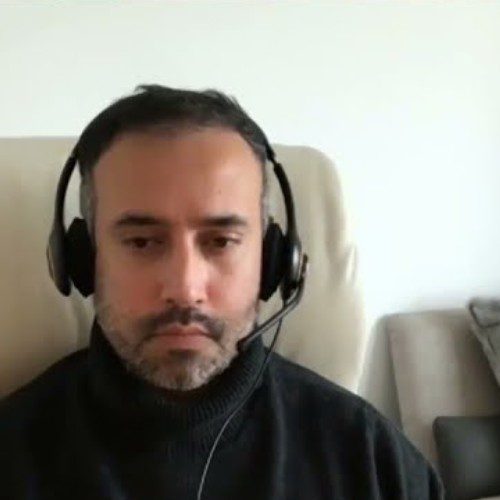
Ashton Addison: How did your background in equity research lead you to build Spectre?▶ 00:22
Kay Khemani: My background is in equity research. I spent around six years in the sector, at JP Morgan and then Goldman Sachs, in a relatively senior capacity. Then I left and started my own entrepreneurship journey. Around 2014 or 2015 we got into financial technology, mainly financial education and automatic trading algorithms, and we spotted a problem in retail trading. As a retail trader, you generally need to send your money to a broker. Most of the time there's no problem if you're with big regulated shops like Interactive Brokers or Saxo Bank. But with brokers that offer CFDs, highly leveraged products and binary options, things start to go wrong. We saw this accelerate in 2015, 2016 and 2017. Clients were winning and not getting their money back, price feeds were broken or manipulated, or account managers traded on a client's behalf without permission. That woke us up. Through smart contracts, blockchain technology lets you disintermediate the centralized human being, in this case the brokerage. So we created a smart contract, and the decentralized autonomous liquidity pool concept was born. A retail trader can use Ethereum to trade against a market maker, directly through a smart contract. If they win the trade, they get the money. If they lose, the money goes, minus commission, to the technology provider and the market maker. It took us three or four years to scale the product to where it is today.
All our contracts are zero leverage, so you cannot lose more than the amount you commit to a trade.
Short-duration trading with no leverage
Ashton: How does Spectre differ from exchanges like Binance, Kraken and Coinbase?▶ 03:44
Kay: On those exchanges you can buy and hold long term, and some also offer futures and perpetual futures with a lot of leverage. We're all about lower-risk trading, though you can still earn high returns. They're just not the crazy 200 to 700 percent that comes with excessive leverage. All our contracts are zero leverage, so you cannot lose more than the amount you commit to a trade. Where we specialize is duration, the short end of the curve. Traders want to generate 70, 90 or 100 percent ROI within five, ten or twenty seconds, or a minute. You can say, 'I believe Bitcoin is going to go up in the next two minutes,' take a trade of 100, and if Bitcoin is even a basis point higher, you get paid a certain percent. Based on market volatility and liquidity at that time, the system creates a market for that specific trade. On average, traders earn anywhere from 70 to 100 percent, and with certain upgrades it can go as high as 400 percent. The most important thing is that it's zero leverage. It's short-term, high-return trading with a medium risk profile.
Ashton: Is Spectre built for crypto traders, equities traders, or anyone who wants this kind of strategy?▶ 06:36
Kay: It's designed for anyone looking for this kind of strategy, and we want to introduce it to the crypto industry. People there already have fantastic options with Kraken, Coinbase and Uniswap, with the pre-sales and all the exciting token launches. That's not what we provide. With us, no trader ever actually owns the underlying asset. We're telling the crypto community that if you want a high return in a very short period without leverage, check out Spectre. It's a very focused offering, and it's not just Bitcoin. We offer 40 cryptos, and that should rise to around 400 by the end of next year. Ultimately, anything that goes up or down, and that you can research fundamentally or technically, can be traded. That includes currencies like the euro and US dollar, volatility-based products, and traditional cryptos and equities. Soon, I think, we'll be adding more exotic things like orange juice futures and durian futures.
Trust and the two-token model
Ashton: How does Spectre's model address fraud, and how is its reputation?▶ 08:43
Kay: A retail broker lives and dies by its online reputation these days. You'll always find the odd disgruntled trader online, which is normal, because 75 percent of traders lose money when they trade a CFD. We're always looking at what traders say about our platform and responding to feedback. But when it comes to fraud, and the fiduciary responsibility Spectre has towards its traders, that's where it really stands apart. If you look at the online reviews, Spectre generally has a superior reputation relative to competitors. The platform has been built over three and a half to four years, so any fraud would eventually have been weeded out by retail traders. They have so many options now, like Robinhood, Interactive Brokers and Saxo. To stand out, we offer a very unique product to crypto, and we do it in a fraud-free way. Although I'm a representative, the Spectre team is based in Asia, and a lot of the growth has come from there.
Ashton: How does the two-token system work?▶ 11:02
Kay: SXUT is a utility token you can use to upgrade, whether you're trading decentralized or centralized on Spectre.ai. But the vast majority of traders deposit in fiat, or convert crypto to fiat, and trade that way. They then buy upgrades on Traders Bay, the marketplace for upgrades, mostly with fiat. Spectre.ai uses the fiat generated from those upgrades to buy SXUT and burn the tokens. That's been a multi-year burn, so it's driven by utility. People who understand how to use a DEX can also buy SXUT and upgrade directly. The other token is SXDT, the Spectre rewards token. It's a passive income-yielding token that has been around since May 2018, when the first dividend was paid. Those rewards are paid in fiat cash, not in tokens. We have a few thousand token holders, and the rewards grow as Spectre.ai grows as a platform.
Soon, I think, we'll be adding more exotic things like orange juice futures and durian futures.
What's next, and how to start
Ashton: What milestones is the team aiming for by the end of the year and into 2022?▶ 14:19
Kay: It's all about getting more assets onto the platform, so we can reach different types of retail traders around the world who are used to trading a specific type of asset. Second is listening to the vast amount of customer feedback Spectre.ai has received over the years. Our platform is still in its infancy relative to other brokers, so technically there are areas to fill: much faster charts, quicker entries and more seamless trading. TradingView, for example, is such a well put-together platform and a fantastic information nexus, where you can speak to other traders. That team has done things really well. We're working on upgrading our charts to make them very quick to load, and these things really matter to retail traders. Beyond that, the team is working in Indonesia on adding more payment service providers, specifically on the digital asset side. On the legal side, the team is always working on getting more regulated licenses.
Ashton: How can viewers start using Spectre and follow its updates?▶ 16:44
Kay: Go to spectre.ai. Spectre is not open in around 15 countries, and US citizens are one of them. We don't offer services to US citizens. If you're in a jurisdiction where Spectre offers services, create a demo account. I would not advise trading with real money if you've never traded. I'd use the demo account for a few months, get in touch with the team and learn about the product. Then, when you're ready, you dip your toes in, and eventually you end up in the deep end. We never advise just depositing money and blowing your account. Go slow.
This interview has been edited for length and clarity. Recorded October 2021.