Key takeaways
- Vailiens is a first-person shooter sandbox game where players own virtual homes and can customize items as NFTs on blockchain rather than centralized servers.
- The November 30th NFT drop features interactable 3D VR assets that function as lifetime battle passes and grant access to exclusive virtual social spaces.
- NFT ownership in gaming enables true asset interoperability across multiple virtual worlds and metaverses, unlike traditional games where studios control all digital items.
- AEXLAB is building virtual reality social spaces that require NFT ownership verification for entry, creating exclusive communities with real liquidity and tradeable value.
- The company aims to partner with other VR studios to create an open borderless metaverse where users can transfer earned or purchased items between different worlds.
Why ownership matters in VR
Ashton Addison: What is AEXLAB, and what are you building?▶ 00:23
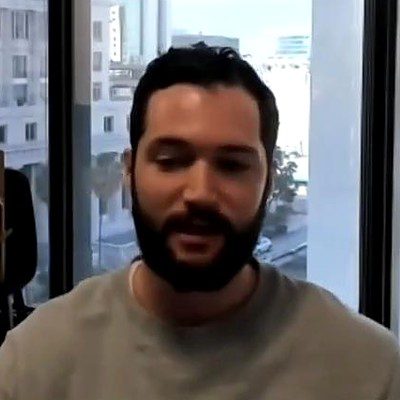
Jonathan Ovadia: I'm one of the three founders of AEXLAB, a virtual reality game development studio. Our signature product is Vail VR. It started as a first-person competitive shooter and has organically evolved into a first-person shooter sandbox experience. The second you get into the game, you're dropped into your virtual home, and it's up to you what to do from there. You can invite friends to hang out, play mini games or sports, do fitness or host events. Or you can click Play Match and jump into the competitive scene: team deathmatch, search and destroy and all the regular fun goodies gamers are used to.
Ashton: Why bring NFTs into the game?▶ 01:27
Jonathan: We'd started building this metaverse where everyone could own things in their house and design it any way they want. What really got me excited was the NFT craze. I'll be the first to admit I was skeptical. Then I realized I'm 26 years old and I'm not going to be a boomer. Bitcoin was a boomer thing, the internet was a boomer thing. Things people keep calling scams end up taking over our lives. When I looked under the hood, I realized all an NFT really is is a form of ownership. Do you own your digital items on an immutable blockchain that can't be edited? Or do you only think you own them, while the studio's centralized server decides that you do and can take them away at any moment? That has happened many times. So the items in our virtual homes could be NFTs, owned on the blockchain instead of on our server. That lets users freely transfer them to other worlds, other VR destinations and other virtual homes. That interoperability got me excited. As a gamer, I collected Pokémon, and they're nowhere to be seen. If they'd been NFTs on an immutable blockchain, I'd probably have tens of millions of dollars of Pokémon I could have sold. Or at least I could have shown my children that their dad had Pikachu. I have 20 years of gaming and nothing to show for it.
Ashton: What excites you about NFTs specifically for VR and the metaverse?▶ 04:01
Jonathan: When people see headlines about PFPs selling for millions of dollars, they don't realize you're not buying a PFP. You're buying into a community, a club of people who share similar ideas as you. You're purchasing a lifelong membership that has value and liquidity, because you can sell it. What excited me was building something more than a Discord, a Telegram or a WhatsApp group chat, which is just text. That's so 20 years ago. So why not build VR social spaces where the only way to enter is by verifying that you own the NFT?
Never wait in line again. If you own an NFT, you're 100% welcome.
Inside the Vailiens drop
Ashton: What does the Vailiens drop include?▶ 04:41
Jonathan: It comes out on Tuesday, November 30, on metadrop.com, and it's essentially a proof of concept of what NFT technology can mean in the metaverse. First, it's an interactable 3D VR asset, not just a profile picture. You can actually touch it and play it. Think Pokémon, which I love, but inside our game, where you can battle them, race them and do a bunch of other things. Second, it serves as a lifelong battle pass that lets us airdrop in-game items that are yours to own forever. Third, it gives you access to the Vail Citadel, a members club where the NFT community can hang out with friends. At NFT NYC I waited in line for two hours and didn't get in. The venue was oversubscribed, and these were people with very expensive JPEGs. That night I decided we'd build this virtual reality space. Never wait in line again. If you own an NFT, you're 100% welcome. Be in your boxers in your house and go hang out with your friends. Fourth, we want to partner with other VR studios to adopt this open, borderless metaverse concept, so our items can go into their worlds and theirs into ours.
Ashton: How can people get one, and how does the auction work?▶ 13:33
Jonathan: You don't need to be in the game. You go to metadrop.com, connect your wallet and place a bid. It goes live at midnight on November 29, so on Tuesday the 30th. We built one of the most interesting auction mechanics that has never been done before. On most NFT drops you get two or three minutes, and you often pay more in gas than for the NFT itself. The people who get in are the ones willing to spend crazy amounts of gas, and they flip it on the secondary market, so the people who really want it pay a ton more. So we're doing a three-day auction, with no stress and no gas wars. We're doing 6,000 NFTs in six breeds, 1,000 per breed, so think of it as six simultaneous auctions. The top 1,000 bids in each auction at the end of the three days get one, and everyone pays whatever the 1,000th bid is. If you really want it, throw up a big bid and you'll still pay only the floor. There's no price discrimination. Everyone around the world has a time zone with access. You're just signing a bid, so you won't spend much on gas, and we'll mint them slowly after the auction ends so no one wastes money.
From VR music to a metaverse platform
Ashton: How did AEXLAB start, and how long have you been at this?▶ 06:44
Jonathan: From the outside people think I'm a genius, and the truth is it's not true. I was in school and didn't have much money. My brother had an indie music studio. There was no money in it, but he'd give me $500 a month to help, and I did the business management and the bookings. Then Oculus came out and my team got the development kits. The initial concept was VR music video experiences, so people could immerse themselves in the artist's vision. In 2017 we released Water Planet on Steam, an EP by one of our artists, my sister Future Virgo. Every person who put on a headset was blown away. But when you told them they needed a PC and a rig, it was expensive, and that was a big barrier to entry. Now the Oculus Quest 2 is $300, cheaper than an iPhone, and that accelerated everything. We decided to make a game in 2017 because there was no money in the music thing. A VR music experience is something you only play once, so people would buy it, rate it five stars and refund it. With a multiplayer game, as long as you keep putting out content, it's playable forever. Four years later we're coming full circle, with in-game concerts, raves and festivals.
Ashton: Where is Vail VR today, and how can people get in?▶ 11:14
Jonathan: All you need is the VR headset. We're on Steam. You can join our Discord at discord.gg/vailvr, where we're always giving out access keys, or search Vail VR on Steam and request access. We let people in in waves. This Sunday, November 28, we're hosting a tournament with iVRL, one of the best VR esports leagues, going live at 1 p.m. Eastern. We're already being played by some of the top VR esports players in the world, and I'm very proud of that. The competitive side is rock solid, and we'll keep adding more content, guns and levels. In 2022 we're focused on creator toolkits and building out the Vail social side. We want full Vail sports, music and arts. One thing VCs always ask me is what my exit strategy is. I have so many things I want to build that I have zero intention or plan to exit. I imagine building until the day I die.
I realized all an NFT really is is a form of ownership.
This interview has been edited for length and clarity. Recorded November 2021.