A custodian built for institutions
Ashton Addison: What is Standard Custody and what does it focus on?▶ 00:20
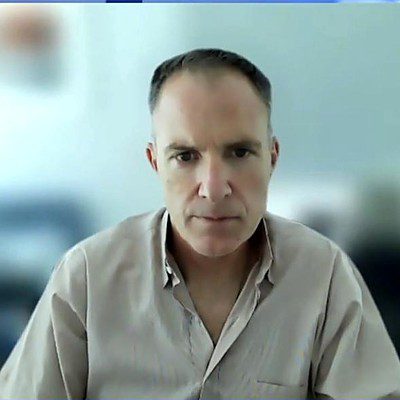
Jack McDonald: Standard Custody is a digital asset custodian focused on serving institutions with custody and escrow services for a broad range of digital assets. That means not just cryptocurrencies but also traditional assets that over time will be digitized or tokenized. We're the only crypto custodian with a blockchain at our core. We're regulated by the New York Department of Financial Services, which puts us in a very select group of firms, and we have insurance through Marsh.
Ashton: How are you positioning the company to bridge traditional investors into crypto markets?▶ 01:03
Jack: Our recent partnership with Cowen is a good example. We have both traditional and blockchain DNA. Our founder, Arthur Britto, is one of the three co-founders of Ripple, and David Schwartz, Ripple's CTO and chief cryptographer, is on our board as an investor and advisor. My background is in traditional capital markets, and our vice chairman, Tim Keaney, used to be vice chairman of BNY Mellon, responsible for all asset servicing. We expect a real merging of these two ecosystems over time. We preach evolution not revolution. Cowen led our $60 million Series B because they want custody at the core of their digital asset strategy. They want to re-platform their capital markets business, layering trading, lending, margin financing and prime brokerage on top of a regulated and insured custodian. I think they'll be the first investment bank on Wall Street going to market with a holistic buy, hold and custody offering.
We preach evolution not revolution.
Trust, audit trails and the New York licence
Ashton: Is trust the deciding factor for institutions choosing a custodian, and how do you prioritize it?▶ 05:02
Jack: Trust is key, ironically, because in many cases what we're developing is a trustless society, replacing trust with truth through our blockchain. But from a counterparty standpoint, we want to be a trusted counterparty. We do that through our team and its deep history in traditional capital markets, through being regulated by the New York regulator, and through insurance from a brand name like Marsh. These are the foundational building blocks traditional capital markets use to give comfort to the boards of asset managers and their investors. Having a blockchain at our core also separates us. It gives an immutable record of every step of a transaction, including the identity of each participant who initiates or approves it, through to the final transfer of the asset. That audit trail is another component of trust.
Ashton: New York's crypto licences are hard to get. Why did you go that route?▶ 08:05
Jack: I wish they were handed out like cookies. It would have saved me a lot of money and time. But we were deliberate. We wanted to be a qualified custodian for institutions, and in the US the only ways to do that are to be a broker-dealer regulated by FINRA, which hasn't been giving out those licences, or an FCM regulated by the CFTC, which has only awarded licences to entities that want to trade futures. For our business, the only real alternative was state by state, and fewer than a handful of states award digital asset charters, such as South Dakota, Wyoming and Nevada. New York is the most stringent on capital requirements, onboarding, policies, procedures and cyber. We felt the effort would work to our benefit as institutions surveyed their options, and that's been the reaction since we launched.
Security, staking and DeFi
Ashton: Staking and DeFi look attractive to institutions with large holdings. How do they fit with custody?▶ 12:36
Jack: It's very attractive. You want to fully service your assets and take full advantage of them, and staking is a perfect example of getting yield. The attributes of traditional cold storage are evolving quickly with the advent of DeFi, and the technology behind it is changing too. One benefit of entering the market now is that we've taken advantage of technical innovations from the last two or three years. We fully plan to be a full-service, DeFi-supportive participant, and there will be certain protocols we support for staking and other DeFi opportunities. Whether we do something natively or through partners like Cowen depends on the product or service you're looking for.
Ashton: Standard Custody has said funds are safer than in cold storage. How?▶ 14:21
Jack: None of the other custodians have a blockchain at the core. That lets us run business logic we've developed, along with our own proprietary multi-party computation, or MPC, stored in the blockchain but run through our hardware security modules. That intersection gives us a more robust security shield. It also gives us an immutable record of every step of every transaction that can never be altered, with the identity of every participant secured. The most secure platforms can exist, but what good are they if you can't access the asset? Keeping assets very secure but also accessible is the fine line many in the industry are trying to walk. We feel we've cracked the code.
The most secure platforms can exist, but what good are they if you can't access the asset?
Funding and where the market goes next
Ashton: With the Series B closed, what happens next?▶ 09:51
Jack: We're in serious growth mode. We're hiring lots of engineers, building out the client success and sales teams, and adding to our compliance efforts. Part of the proceeds will go toward building teams in Europe and Asia. We also have bigger ideas around settlement that would be cross asset class and cross chain, an interoperable settlement layer. We're running some proofs of concept now, and we'll direct some of the funding toward those initiatives.
Ashton: Which industry trends are you most excited about?▶ 15:57
Jack: There are three. The first is DeFi. We're a mission-driven company and we believe in the democratization of finance. The second is institutional adoption, and our thesis that institutions will want to do business with trusted counterparties. Going to market through trusted partnerships and heavily regulated entities will be a real differentiator. The third is nascent but happening quietly: the digitization or tokenization of traditional assets. It's a massive greenfield opportunity, far greater than the cryptocurrency market alone. We can start with illiquid or opaque asset classes like real estate, venture capital and private company shares. We have proofs of concept running in Europe with large asset owners and asset servicing firms, and we expect to do more.
This interview has been edited for length and clarity. Recorded June 2021.