Key takeaways
- EthicHub is a DeFi protocol connecting investors to small farmers in Mexico, Honduras, and Brazil who lack access to traditional financing for working capital.
- The platform breaks the poverty cycle by providing affordable loans to established farmers with near-zero risk, achieving less than one percent default rate over three years.
- A two-tier investor model offers low-risk eight percent returns for lenders while ETHIX token stakers provide collateral through an over-collateralized compensation pool.
- EthicHub has lent over 1.5 million dollars to farmers while building a network of 1,500 investors and expanding through new loan originators in the value chain.
- The company's long-term vision includes gamifying the platform to allow investors to directly support farmer productivity through equipment purchases and land improvements.
Lending to the unbanked, starting with coffee
Ashton Addison: What is EthicHub, and what problem are you solving?▶ 00:42
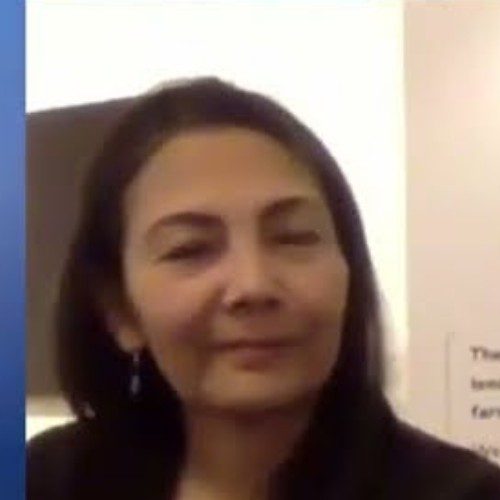
Gabriela Chang: EthicHub is a DeFi protocol for secure lending for sustainable impact. We're tackling what may be the biggest problem of the current financial system, which has left out almost a quarter of the world's population. We believe blockchain can mend this dysfunction. We connect economic regions so both benefit: anyone can lend money to small farmers to raise their productivity, their income and their living standard. In parallel, we provide the warranties, the collateral, to secure those loans so investors feel secure lending to these farmers.
Ashton: How long has the team been working on this, and where do you operate?▶ 03:21
Gabriela: The idea started in 2017. We had a small proof of concept and launched the MVP by mid-2018, long before DeFi was a thing. In 2020 we released our token. Today the system is 25 times collateralized through the compensation system. We started with coffee in Mexico because it's what we know, and now you can lend to smallholder farmers not only in Mexico but also in Honduras and Brazil.
The perceived risk is far higher than the real one.
How loans reach farmers, and how risky they are
Ashton: If I were a coffee farmer in Mexico who needed capital, how would it work?▶ 04:14
Gabriela: We're providing working capital to a very safe activity. These people are experts at producing coffee, but they don't have the money. With a harvest once a year, you need to borrow to eat and to tend your land. If the only money you can find carries over 100 percent interest, you pay back the debt when you sell the coffee, have money to live on for a month or two, and then borrow again. That's the poverty cycle. We break it by injecting affordable money. Farmers get in contact with what we call a loan originator, who helps them organize and validates that the money will be used in productive activities. That's almost zero risk, because you're injecting money into something that was already productive.
Ashton: Who are these loan originators, and how are they vetted?▶ 05:28
Gabriela: They can be cooperatives, distributors, fertilizer suppliers, or traders who buy the farmers' coffee and export it. Basically, anyone who is an actor in the value chain, works directly with the farmers and has a positive business model. Then there's due diligence. We are the first auditor, and we stake our own tokens as collateral for the loan originators we've audited. Now we're speaking with new potential loan originators and auditors who will bring many more originators into the system.
Ashton: Isn't lending to farmers risky for investors?▶ 07:18
Gabriela: The perceived risk is far higher than the real one. After more than three years working with these farmers and lending them over $1.5 million, the default rate is less than one percent. To reduce the perception of risk further, we developed collateral for crowd lending, so investors are no longer at risk. Even that one percent is covered by our compensation system. I think that's the huge innovation. We pioneered using blockchain to finance small farmers, and now we're pioneering providing the collateral.
Two kinds of investor, layered collateral
Ashton: How do investors get involved, and how does the compensation pool work?▶ 08:09
Gabriela: We have two kinds of investors. The low-risk, low-return lenders earn eight percent and provide the loans to farmers. That's very secure because other, savvier investors buy the token and stake it on behalf of the farmers, providing collateral. If there is a default, those investors take the risk. To date there has been one percent default, and it was 100 percent compensated by the compensation system. In addition, the loan originator has to have skin in the game, and so do we as the auditor.
If we prove it can be done at major scale, others will follow.
Scaling up and the road ahead
Ashton: What's next: more of the same, or are you expanding in other ways?▶ 09:30
Gabriela: We're starting to scale and looking for new loan originators. We're also growing on the lending side, with more than 1,500 investors already, and that number is rising. In the medium to long term, we want to gamify the system, like a real-life farm where you invest in the farmers, buy them tractors and land, help them, and compete and play to improve the world. That's our vision, our dream.
Ashton: Where do you see EthicHub in five years?▶ 10:53
Gabriela: I hope we're already impacting millions of small farmers and that our token is in the top 100 of the market. But especially, we'd love to set the reference that it's possible to use blockchain to improve the world and make a better living for everyone. If we prove it can be done at major scale, others will follow.
Ashton: What obstacles do you foresee as you grow?▶ 11:46
Gabriela: Technology isn't one, because we don't interact directly with the farmers. The loan originator interacts with the smart contracts, not the farmers, which matters because they often lack connectivity. Our main challenge is credibility: proving that what we're doing is scalable. We're in our seed round now and have a new collaboration with IDB Lab, the Inter-American Development Bank, and we're using it to draw the metrics. We need to prove growth on all three legs, as we call them. We're confident, because we've done harder things. Imagine trying to explain EthicHub in 2018 to impact investors who thought Bitcoin was something weird.
This interview has been edited for length and clarity. Recorded February 2022.