Key takeaways
- Quadrata is developing privacy-preserving digital identity solutions that attach identity and reputation data to blockchain wallet addresses as non-transferable NFTs.
- The platform enables portable identity and reputation across decentralized applications, allowing users to maintain a single global identity rather than separate accounts per application.
- Quadrata has been in development for over a year, is currently deployed on testnet and Mumbai for Polygon, and can be integrated with a few lines of code.
- The solution uses non-transferable NFTs as the standard for identity attestations because they are widely understood by developers and leverage blockchain infrastructure for composability.
- Early interest in Quadrata comes from DeFi applications and compliance-focused players seeking identity solutions for decentralized platforms.
One identity across applications
Ashton Addison: What is Quadrata building, and where does it fit in the blockchain space?▶ 00:22
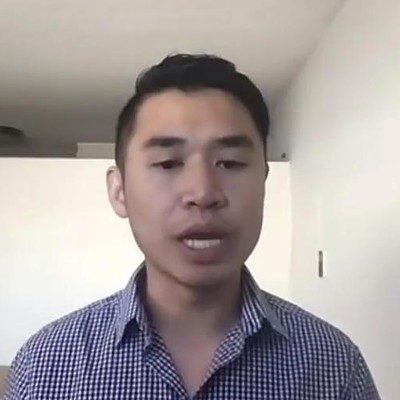
Fabrice Cheng: Users of decentralized applications today are identified only by a wallet address. That has great properties: it's fully anonymous, fair and inclusive. But applications lack something critical to build better products. We want to enable identity, compliance and reputation, taking the best practices we're used to from Web2 and fitting them into the blockchain paradigm, without sacrificing data privacy or user anonymity. In a nutshell, we're bridging identity, compliance and reputation in a privacy-preserving way, so applications can access the information natively on chain and users get a better product.
Ashton: Web2 logins are a mess and platforms keep getting breached. How do you let users control their personal information without compromising it?▶ 01:59
Fabrice: We take the best of blockchain technology, which is the global, shared ledger. There's no reason a user's identity and reputation should be unique to each application. If I have a good reputation as a customer on Amazon, that shouldn't be tied only to Amazon. It should carry over to Airbnb. With blockchain, I could have a single login, which is my account, and attach a notion of identity and reputation to it. Every application built on a public blockchain could then query it. That makes it a global identity and reputation, portable across applications. The technology just wasn't there before to allow that, and now blockchain gives us a means to achieve it.
The wallet is the perfect single sign-on. There's no reason to create another login and password.
A non-transferable NFT tied to your wallet
Ashton: How do Quadrata identities work, and how do they differ from earlier digital identity attempts?▶ 05:30
Fabrice: The identity space has left a lot of bones behind. Many people have tried, and it's a complex topic. What sets us apart is that identity is tied to your wallet. The wallet is the perfect single sign-on. There's no reason to create another login and password. What matters is how you attach KYC, identity and reputation information to it. We use a non-transferable NFT attached to the wallet, for two reasons. First, it's a standard that a lot of developers and users understand, so it can show up on OpenSea or MetaMask. Second, NFTs are a very good fit for representing attestations about your identity and reputation. Integration is simple because the functions are standardized. Having it on chain also lets us leverage blockchain's uptime and infrastructure. If our team were inactive for several months, it wouldn't disrupt the system. It also opens the door to more composability and interoperability between applications.
Ashton: In Web2 you can ask a provider to restore your account. What happens if you lose access to a decentralized identity?▶ 12:15
Fabrice: The KYC verification is still performed by a centralized entity. Quadrata never sees that information. We plug into reputable identity providers that collect, verify and securely store it. If your wallet is hacked or stolen, or you lose access to it, you can request that the passport and the data associated with that wallet be deleted. Similarly, if you still own the address but your private key has leaked, you can burn your passport yourself, and burning is irreversible. To attach a new passport, a bad actor would need access to personal information about you.
Ashton: Why isn't logging in with a decentralized identity already the norm?▶ 14:30
Fabrice: We're halfway there. Most decentralized applications no longer ask you for a login and password. You just connect your wallet. That permissionless model will continue, but more applications will require users to identify themselves for specific actions, potentially with passports. The flow is the same: you connect your wallet, and if you have a passport, the application can access information about it. We're not trying to add an extra layer of identification. We're piggybacking on wallet connections, and we make querying passport information as simple as possible. That's the main reason we opted for an NFT linked directly to the wallet.
Compliance, bots and NFT drops
Ashton: Which applications will use Quadrata first when mainnet launches?▶ 08:46
Fabrice: Without being too specific, there are a few categories. In DeFi, it's mostly about compliance. Many players want to attract broader institutional capital, and a key blocker for financial institutions is knowing they're not commingling funds with bad actors. With Quadrata Passports, you can build lending protocols or DEX pools where everyone has a passport, so you know a compliance check has been performed on an ongoing basis. The second category is the metaverse. Play-to-earn experiences attract people who create bots and many wallets to automate actions and extract as much value as possible. If every participant has to own a passport, you know they're a real person, and you get simple Sybil resistance against people holding multiple accounts. The third is NFT drops. For very high-demand NFTs, you want to keep bots from scooping up the majority of the sale, so identity and Sybil resistance can be very valuable.
We're not trying to add an extra layer of identification. We're piggybacking on wallet connections.
From testnet to mainnet
Ashton: How long has the team been working on this, and where does the product stand?▶ 04:22
Fabrice: We were originally funded by Spring Labs, our parent company. The idea came out of Spring Labs about 14 months ago, and about nine months ago we spun out. So we've been working on it for over a year. We're on a testnet, and the technology is ready for applications to integrate. We've deployed on Mumbai, the Polygon test network. Any application built on those networks should be able to integrate with Quadrata with a few lines of code and access attributes from consumers' passports.
Ashton: What needs to happen before you can launch on mainnet?▶ 13:43
Fabrice: At this point it's purely about the security of the protocol. The product is working as intended. We're undergoing security audits from external firms and doing heavy internal QA and penetration testing. It's not a matter of missing features. It's about making sure we launch with the best security properties around our product.
This interview has been edited for length and clarity. Recorded June 2022.