Key takeaways
- Etherisc provides an open platform with on-chain smart contracts and off-chain components enabling teams to build insurance products quickly.
- Blockchain-based insurance offers standardized protocols allowing composability with other financial products, unlike traditional insurance requiring custom interfaces.
- Etherisc operates in Kenya with approximately 17,000 farmers using automated crop insurance triggered by satellite rainfall data.
- Parametric insurance determines claims through databases and external data sources rather than human underwriting and manual claims processing.
- Developing countries show faster cryptocurrency adoption than G8 nations, making them ideal markets for blockchain insurance implementation.
Insurance as open infrastructure
Ashton Addison: What is Etherisc, and what does it bring to the insurance industry?▶ 00:23
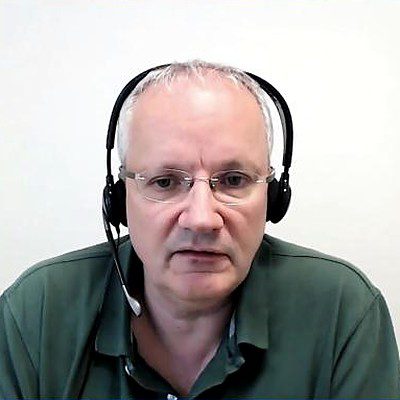
Christoph Mussenbrock: We want to build an open platform where people and teams all over the world can build their own insurance products. We provide the essential building blocks, something like an operating system made up of on-chain and off-chain components. There is a complete on-chain smart contract suite, so you only need to configure your product as a statistical model. The off-chain components include a toolbox for building the front end. We can also help teams with insurance regulation, because we gathered experience over the last year. We don't have a solution for everything, but we have a lot of experience, and it helps teams build their products in much shorter time.
Ashton: When you founded the company, what did you see in traditional insurance that needed fixing?▶ 02:02
Christoph: We had the vision of a system that works completely on-chain and is composable with other financial products in a way traditional insurance cannot be. In traditional insurance you can have software systems, but for each partner you need a different interface and you build everything from scratch. On blockchain you have standardized tokens and standardized smart contracts, so you can interact with every other smart contract in a standard way. One building block is insurance, one is supply chain, one is oracles, and everything fits together automatically. That is a huge advantage. The other big reason is transparency, for the customer, the insurer and the investors who provide the risk capital. It removes the black boxes where people don't know how their products are calculated or whether they will get a payout. More transparency means more fairness.
They don't use cryptocurrency, and they don't even know they are using blockchain. They just have tools that give them transparency on their own product.
Why adoption starts in developing countries
Ashton: How close is decentralized insurance to mainstream adoption, and why is it still early?▶ 04:04
Christoph: The main issue is adoption of cryptocurrencies by the general public. Many central banks are experimenting with digital currencies, but it's all early stage. Interestingly, crypto adoption in developed countries such as the G8 is still at a lower level. El Salvador made the step of introducing Bitcoin as legal tender, and developing countries like Kenya are making much larger steps toward adoption. That's why we work in Kenya, where we have some 17,000 farmers on our system. They don't use cryptocurrency and don't even know they are using blockchain. They just have tools that give them transparency on their own product. I think adoption is the main showstopper for decentralized insurance, so we start in developing countries. Insurance companies worldwide are interested in blockchain but still reluctant, for regulatory reasons. I think it will take maybe two or three years until the mainstream of the industry dives into decentralized finance and decentralized insurance, and we need to use that time to build up our position.
Ashton: How does the crop insurance work for farmers in Kenya?▶ 07:05
Christoph: First of all, it's a fully automated product. There is no human interaction in processing the policies, because onboarding, underwriting and claims are all done automatically. The farmer onboards with a simple feature phone by typing in a code that is distributed with seed bags, for example maize or soya beans. He pays a premium with his phone through an electronic payment system and receives a policy for the specific crop. From the activation of that code we also know where the farmer lives. The risk we insure is too much or too little rainfall. Using satellite data, we can see whether there is sufficient precipitation at the farmer's location, and if there isn't, we can trigger a payout directly. All of that is controlled by a blockchain. The farmer can also access his data on-chain and see what's happening, and that transparency helps build trust between the farmer and the company.
Parametric products and the DIP token
Ashton: Beyond farming, what are the early use cases for Etherisc?▶ 09:13
Christoph: The main use case is parametric insurance. That means whether there is a loss can be determined by a database rather than by humans, be it a weather, wind or solar energy database. With IoT you have plenty of data, so there are many new use cases. One example is flight delay, where you can protect yourself against a delayed flight using flight databases. We also use wind data for hurricane insurance, for example in Puerto Rico, and these products are being developed now. In principle you could also use human agents for claims. You would still have transparency and composability from the blockchain, but the process would be less efficient. We postponed that for now, but in principle you can do any type of insurance.
Ashton: What role does the DIP token play in the protocol?▶ 10:56
Christoph: Every insurance needs a capital pool, a risk pool, to cover excessive losses, because premiums alone would not pay for a lot of losses. People who put money into the pool need to stake DIP tokens, and staking is the main mechanism. Those who stake earn returns from the premiums that are not used to pay out losses. That's very similar to traditional insurance, but we put the whole thing on-chain, so it can be done with much less friction. People can enter or leave the pool much more easily than in traditional finance, where you invest for a long time and lock up your capital. So decentralized insurance can use capital much more efficiently, at least in the long term. We are currently working on the staking models, and the DIP token is the token that drives the whole staking process.
I think adoption is the main showstopper for decentralized insurance, so we start in developing countries.
The next six months
Ashton: What are the major priorities for the next six months?▶ 12:39
Christoph: We started in Kenya with our first crop insurance product, and we developed it so it can be a blueprint for virtually any country with crop insurance. The system is always the same: satellite data, policies, and farmers using electronic devices to onboard and make payments. It can be modified easily for different countries. In the next six months we will move to other African countries and deploy the product there, sometimes with different payment systems and different risks, but the principle is the same. We want to build a universal platform with reusable components that work in basically any context, and the same goes for wind and hurricane insurance. So the next six months are about scaling these basic insurance products and introducing staking, which brings us into the whole value chain of on-chain risk transfer.
Ashton: How can developers and the wider community get involved?▶ 14:15
Christoph: We are publishing a series of tutorials that interested teams can work through. In the near future we will also provide a complete software development kit, so you can start your own product in a local testing environment with some sample products. In a matter of a few hours you can have your own insurance product running. For developers we also have a rapid development environment, which we acquired in the last six months, and it lets you build a front end for insurance applications in really no time. We don't only have the on-chain components, we also have a complete environment for building the off-chain ones. For the wider community we will build first products they can use, for example flight delay, as well as different staking solutions. Everybody is invited to our Telegram channels, and we also have blogs and a forum.
This interview has been edited for length and clarity. Recorded October 2021.