
Luke Mulks / Brave
Brave's plan to bring self-custody payments to 120 million users
In this episode
Brave has 120 million-plus users and most still don't touch crypto. SELF-CUSTODY PAYMENTS is how Brave is closing that gap, and Roadmap 4.0 is the plan to turn the world's biggest privacy browser into a Venmo-like, self-custody wallet anyone can use.
Luke Mulks, VP of Business Operations at Brave and host of the Brave Technologist podcast, joins Ashton Addison on Blockchain Interviews to break down Brave Pay, the GENIUS Act-compliant Brave Rewards Card, and x402 support for AI-agent stablecoin payments. Luke explains how the new wallet waitlist has already crossed 100,000 signups, what that surge revealed about demand, and what a unified self-custody payments experience spanning everyday purchases, agent-to-agent transactions, and a physical card actually looks like a year from now.
brave.com · @brave on X · Watch on Refinitiv
- Brave has 122 million monthly active users and 50 million daily users, most of whom don't use crypto, representing the largest crypto-adjacent product in the industry.
- Brave Pay and Roadmap 4.0 aim to create a self-custody wallet experience similar to Venmo, with the wallet waitlist already exceeding 100,000 signups.
- The new roadmap includes a GENIUS Act-compliant Brave Rewards Card and x402 support for AI-agent stablecoin payments spanning everyday purchases and agent-to-agent transactions.
- Brave uses zero-knowledge reporting and privacy-first principles to address fundamental issues in crypto and privacy tech that competitors don't solve.
- Linking Web3 data with decades of collected web data creates privacy risks that require careful consideration in product development.
Chapters
By the numbers
Transcript
Read the full transcript
I'm Ashton Addison from the Crypto Coin Show, and today on Blockchain Interviews, we have Luke Mulks, VP of Business Operations at Brave. I've been a Brave user for over 10 years, I believe, as my main browser, but there's so much more to dive into than that, and even I don't know all the details, especially with the new roadmap that Brave has just released, the Brave Pay
edition, and getting into agents, and where the internet browsing is going with AI, especially. So, excited to dive into all of this, and the latest. Luke, thanks so much for taking the time.
Hey, thanks for having me. Appreciate the warm welcome.
Yeah, excited to dive into this, and I love Brave as a product, and I'm excited to see it growing and getting more
people into crypto. I think it's that one product in the blockchain industry that there's a lot of people that are using it that don't necessarily use crypto, or don't know a lot about it, but it's a great gateway to get them in, and there are a lot of course that do use it, and maybe we can run through some of the numbers, but from what I understand, there's over 122 million
monthly active users, and 50 million people daily using it. That's got to be the top crypto active product, if not in the whole industry. So, first of all, congratulations to the team on those numbers. That's that's amazing.
Yeah. Oh, no, thanks. Thank you. We wouldn't be We wouldn't have them without having everybody using it and letting us know
what they want, you know? It's kind of what we what we were user-first company. We have been from the very beginning, and that's what we aim to do is deliver things that, you know, fill a void, and are what people need.
Definitely, and I think the fact that you don't need to necessarily use crypto, or know how to use it, just to
browse the web, although it's sitting right there, is part of the reason why there's so many monthly active users, because we don't you know, there's there's always been that barrier to entry, that little technical barrier, whether it's a seed phrase, or, you know, trying to get onboarding into crypto. There's always something that holds the non-technical people up, even the
technical people. And maybe you can talk about closing that gap and having hundreds of millions of users and how many of them are actually using crypto and how can we potentially close that gap?
Yeah, no, happy to. So, I mean, that's the thing that Brave's been really well equipped to do. It's something we've wanted to do from the very beginning.
It's just make it make make privacy protection default, you know, as a user-first company. That means you put the user principles and protection and you put their interests really before commercial interests, before anything. And it takes some strong principled people to do this. But, you know, luckily, that's what we were in the very beginning, you know, as
part of that early team. We were all people that had done lots of other jobs in tech and wanted to have a better crack at making this done the right way. And so, basically, like, yeah, like, with Brave, we've always had kind of this crypto element. Initially, it was a Bitcoin-based Brave Payments, which was kind of a proof of concept. And then we did BAT in
2017 and kind of brought this idea of like, look, like, as a content creator or as a user, one, you should earn be able to earn with your attention and then two, you should be able if you're creator, you should be able to get you know, support from users directly without a lot of intermediation. And so, you know, the being able to do this while also
preserving privacy, it's it's a nice thing and you've always got to have a hook, right? Like, where you know, we have really strong privacy protection by default. That also means you get a better YouTube experience and there's a couple knobs we can turn to like make that experience even better. And then you see that like people the market has a void, the YouTube stuff just gets
worse, right? Like, over time with more and more ads and then they throw a premium thing in and the costs go up, and we can be like look like you can have that experience in brave like for free, and then the rest of your web is amazing too because, you know, it's it's it's a byproduct of having good privacy and good good fundamentals. And we're trying to do that now like on the
we've been doing that on the crypto side. I mean, it was you know, we've been around for several cycles now, and one of the things that are you when your neighbor start asking your barber whoever starts asking you about this stuff, one of the things that people told me back in like 2021 was like you guys have a browser I can earn while I browse. I understand that, right? Like
these are the use cases where the and our challenge with users and with also creators cuz they're publishers and businesses is that you've got to make it familiar, you know, to a process they're used to dealing with and don't make it any more difficult than what they're what the competitors are doing, right? So like we set it up to where okay, if
you can if you can set up an ad tag on a site and go through all that process, you as a creator you can basically verify and start earning with us. And so finding those pieces and making the user experience really great is what's been missing I think greatly in the crypto space, but also in tech and in privacy tech in general. I mean, one of the things that when we first came to
market was just having ad blocking and tracking protection directly in the browser so that users don't have to know which of these extensions I have to get and what knobs are going to actually make me, you know, have better privacy or not. If we can you know, build to those first principles and kind of try to lead there like and then fix all the issues that come with that cuz nobody
else is really fixing them in a fundamental way. And then a lot of these issues that require tracking, you know, it's all about accounting for the most part. And so if we can get we were using zero knowledge reporting back in like 2017 like with this stuff like before people were even talking about ZK really outside of the crypto, you know, cryptography circles. And so if we can
get the accounting right and make that, you know, accounting work with the business side and show them the funnel that they're familiar with like we are not really that far off and we can make the user experience great and now we're kind of with this new roadmap we're kind of heading in that direction on you know the transactional side too.
Mhm. Yeah, a lot to unpack there and you know the privacy side I think any power user can be happy and see that regardless of crypto financial privacy or and whatnot. Just not having to see ads. If you go to YouTube, you don't have to pay YouTube to like not see the ads. Of course that's just a selling point in itself. But just the whole web, you know,
they're collecting your your the reason you're seeing ads and that they're targeted to for towards you specifically something that you they think you like is because they have your information and they're trying to use that against you to buy stuff. And like I think crypto and non-crypto users can appreciate to an extent it gets over overwhelming especially with YouTube and
Instagram, you know, more and more people are they're consuming and producing. But I mean if you go on Instagram on iPhone it's like every second thing is a advertisement that you probably don't want to see. It's this is getting too much and we need to have more privacy tech to be able to control what we want to see because all of that affects us.
It's a really good point. I think and
and when you start to bring the web 3 element into it especially now that like stablecoins and commerce and all these things are becoming more and more integrated into the major financial institutions and in turn into more and more of your everyday activity it becomes even more important because you've got decades of data you know, that's been collected about you on the
web that's been profiled and used for all sorts of purposes beyond advertising too. I mean the government's literally going and buying this data because they don't even need to like steal it anymore. Right? They can just go buy it from a broker and the brokers will sell it to them. But when you start to add in this web 3 piece it's even more gnarly because you know,
this data is on the blockchain and it's not you can't really remove it from that blockchain and you know, if you can link those things together it's something we actually have to really keep an eye on with a lot of the web 3 products is like are you just creating a richer target for these average users to basically collect even more meaningful information from you easier, right?
Because if the chain if data's on chain and like you know, your your wallet app is all of a sudden linking your social and your email and your your profile from you know, all these different places, it's not hard at all for them to build a graph of you and know what you're doing financially, know what your buying preferences are. So it goes beyond even just targeting with ads and
getting to like the deepest part of the funnel, which is like where you get to game over pretty fast like at scale if you don't be careful with this stuff and that's kind of one of the reasons why we're going in this new direction we're going in with this road map is because that transactional piece like there is not a great I mean there are a couple of options like
D-Cash and a couple of things. There aren't a ton of great ways that you have an equivalent thing to you know, digital cash that and if we're not making it so that you have like some equivalent to what we have already and have had forever, you know, where I can give you a $20 bill without someone taking a photograph of it. You know, then we're regressing and
and it becomes really dystopian and you know, this kind of dovetails against a lot of the stuff that you're seeing with the flock information. You know, these aren't I mean police departments and agencies are using this stuff but it's a it's a company that's actually, you know, collecting this stuff. It is not hard to social graph these things together like with other records, you
know, and so I think it's even a bigger moment for everybody to really kind of take a step back and one try to limit their footprint and then two just be kind of mindful of like what am I using? Is this thing like, you know, and it's hard. It's hard to do all that but if we can build a product that just work well, then it takes that burden off the user a
little bit.
Definitely. And earlier on you mentioned about creators earning from creations, their their content, and then being able to actually, you know, what do I do with that? Especially if I This is the first time I've ever got crypto on the payment side. I know that is a part of the road map, but could you sort of give a high-level on And I'll link
the road map as well in the in the description. But, can you give a high-level on what are the most important things that are on the newest road map?
Yeah, absolutely. So, you know, one thing we've done with the Basic Attention Token and with Brave and our crypto strategy is kind of make it easier for people to browse in or and make it easy for people to get into
crypto and kind of like make that remove as much of that cold start as possible. But, what we're seeing with AI and with just the movements of the web in general, everything is becoming more transactional. Like, if you think about it, you mentioned earlier, you know, the advertising was kind of this mechanism that funded the web, right? But, if we're going to a space and we're already
seeing this where AI summaries are taking 20 to 90% of web traffic, is no longer going to those destinations because they get the answer in these summaries in the serp, you know, the search engine page, well, that's going to fundamentally change the way that programmatic advertising works, right? Like, and things are going to be much more valuable at the transactional
level. But, also, we've learned this from running a you know, advertising campaigns and working with creators since 2018, 2017 where, you know, ultimately creators want to get paid they've got bills and ultimately advertisers want to know if a transaction happened because if they know that they can put money into the platform and that people will buy things
from it or whatever they're trying to do, then they'll keep putting money in there. It's a reliable source of, you know, ROI for them. And so, what we're trying to do, too, is like learning from, okay, users could earn from their attention with ads, the rewards become, you know, they're okay, but like, how can we make that more meaningful? Like, how can we bring
more of that demand side back to the users' hands. And you see this where what's translated really well with, you know, the purchase side of things is these loyalty and rewards programs that with cards and loyalty apps are big now where I can actually get, you know, cash back, you know, for my purchases and have it be meaningful. We're seeing this with crypto cards,
too. And so when with stablecoins getting us fit, what we're doing is roadmap is basically kind of saying, "Look, like let's build a stablecoin protocol where people can come in and out if they're crypto people, you know, with different stablecoins that are like Uniswap client or whatever. And then let's also make a card element where people can actually go and, you know,
they can spend and it feels like cash because they're using stablecoins and the on and off-ramps are super easy because that's really key. But then we can take the percentage of the revenue from all of this purchase activity, protocol revenue, things that are generating revenue in the wallet, and basically like buy back BAT for rewards with it. So instead of having just one
source of demand volume with the advertising buys, we can actually put this back in control of the users where the more you use this and the more you get these rewards back, but it's also good on the buyback side for BAT because these numbers just get really wacky. Like, you know, the more people use this stuff you're going from a scenario where, you know, maybe a couple
of bucks a month to something where, you know, the average purchase amount on these crypto cards is between a thousand and two thousand dollars a month, you know, I mean, overall volume a month with like three to five purchases, right? So like the amount of rewards you get back you can do is better, but what you start to have is kind of like I had
a value add web with my attention, but now you can also add that in from the commerce side. You can add that in to the creator side because if users have more rewards, they can they can offer more options to, you know, to give back to creators. We can also do things where we can, you know, there's these great pieces of technology that have been been built on the crypto side.
Token gating, all these wonderful things where you could put tokens into them and then basically like get this bearer access. If we can abstract that from the user make it feel like an all-access pass, have it be set to certain brands, certain creators, etc. And then also kind of on the creator side, if we already cite the sources for all the AI summarization we do, right? Like that
was something that's really important for us from the very beginning. Well, if you're a verified creator, why don't we make it so you can get micro royalties from that those sources that are cited from your content when it's used for AI summarization and other pieces that involve the AI. So, like what we're trying to do is kind of bring that in on
on the payment side to where like stablecoins are are obviously getting market fit there. How can we tie rewards to that way that meets people where they're at? You know, people are familiar with cards. It's not going to be upending these traditional rails overnight, but that's not the point. The point is to is to bootstrap the upgrade, right? Like if we can get
people using stablecoins in transactions, if we can have a really great element of that, you know, buybacks and make it feel like Starbucks stars and, you know, you're getting a lot of value add from that. And then on the other end of it, if we can find great ways where we can lock or stake or do things with that are going to like keep that from, you know,
getting sold on that side of it, then, you know, we've got really much better dynamics with the tokenomics and much better value add for users. And this is all just helping us with loyalty and retention and building something people want. But people like also want VPNs, they want other premium products and things like that where we can lock that value from rewards into, you know,
upgraded tiers for things like that and break through this more non-crypto audience because that's kind of the goal here. Like everyone talks about the next 100 million users in crypto or whatever. We have 50 million daily active users. We have 5 million users that are opted in every day to our rewards platform, right? The next 10 million plus users
for crypto are already in our product. We just have to meet them with something that they're familiar with. And that's not going to work by like trying to do everything like, you know, the crypto native way because it's just too complicated and tribal and too hard for people to understand. So, that's really what we're trying to do here is like leverage these wins with the AI
side and get in on the AI genetic side with things like that. And then also kind of like work with creators and getting them to earn from that side of it and then bringing all of this to users in a way with something like a Venmo or Google Pay or things with digital wallets and that's the other piece of this, too, is that like the crypto wallet in Brave
is very crypto native. You save other payment methods on another side of the browser. So, a big part of this road map is that we're going to unify it all. If we can get like a self-custody experience that feels like Venmo and treats crypto as a first-class citizen, that's going to put you in proximity with everybody. And what we've seen at Brave is that there's a lot of value in
being and having that first-class proximity because people are naturally curious. If you can show them that they're going to get some added value in a way they're not getting otherwise and make it easy for them, they're going to gravitate towards that, especially if it helps out Brave because there's this huge affinity our users have for making the brand successful.
Definitely. Well, that's very exciting. And with regards to the cards, you know, there's no getting around like paying your bills. You're going to have to pay it and people are always looking for what method they can do where they can get the most back or they can get extra value out of it, right? Because there's no avoiding paying these things.
And I've gone through the cycle with different crypto cards and it's quite a feat to go, I'm sure, internally from working on the browser and then working into payments and then moving into like physical cards. Even though it's all digital, you know, I think when people see see Bitcoin and Ethereum or stablecoins and they have a physical card, people that aren't technical or
not in crypto, they understand it so much better even though it's really the same. So, I think that's a great next step. I'm excited to see and experiment on it with, you know, the tiers and how we can earn earn more or get people their first crypto. I feel like stablecoins are getting to that point with the legislation. It's just a
matter of having somewhere accept it or maybe getting it converted to fiat so that you can pay, you know, your water bill or you can pay for the coffee with that card and then it pays in fiat to the user if to the supplier if they don't want to use crypto.
Yeah, I mean the card mechanism is really it's a pretty awesome thing to be able to use here because it's kind of like a
Trojan horse in a way for bootstrapping all this because you can save it in the browser in the wallet, you can put it in your other payment apps, too. So like if you wanted to go earn Starbucks stars for coffee or whatever McDonald's stuff or whatever and also earn crypto, you can do it because it'll just it's an accepted payment method, right? So like you have
these ways to kind of compound the value that you're getting back from these things that are that really resonate with people like especially now when people's, you know, budgets are really tight, gas is expensive, all this stuff. Any when you can give the users and that's what we're all about is just like adding that value for users and doing it in a way this is like a pretty
clever way of doing it. And also like we're going to do all of this with all of our first principles intact. So like the whole fully, you know, what you get with this is a better privacy product that's not really, you know, perforated in the market yet. And another way that we can kind of set an example as a company with the technology that others
can adopt. So like that's kind of the other goal here is like if we can make privacy better with this stuff, it's going to help people overall and help the space overall because everything we're doing is kind of open-sourced anyway.
Mhm. Now, that's really nice because I feel like Brave has been ahead of the curve on the privacy aspect. You've been
focused on it for you know, multiple crypto cycles. We're now just seeing a catch-up with, you know, Ethereum native protocols starting to talk about integrating more privacy and then corporations now that they're getting in, you know, now now that they're in crypto, they're like, "Hey, we want compliant privacy where people can't see what we're doing with our hedge fund and
trading." So it's really catching up and you guys are ahead of the curve on this.
Yeah, it is a thing about being too early sometimes and that's what we're feeling on this. It's just like I mean but also, like in this last administration, it was really difficult because like we have, you know, probably the biggest Cham and Token deployment like for you know, blinded tokens
in the world and we couldn't really advertise that because we didn't want to you know, there were with privacy products and also on the crypto side like there were there were such a threat to just being able to kind of survive that a lot of this you can't fund or so like there's a right ingredients now and the right environment and the right need
in the market for this to where I think like if nobody steps up and does this in a really great way that nobody's in a better position to do it than us and like and like all it takes is the willpower and the commitment from us to do it and this is the most ambitious road map we've ever put out. I mean, like regardless of what direction we're going in like and I think that
you know, we've just been committed to building you know, cycle after cycle and you know, it's not always the most hype oriented thing but that doesn't matter cuz now we've got you know, we've got 122 million monthly active users and you know, our dressable user Chrome with three and a half billion. So like the potential to go up from here is amazing
and it's just I don't know and I'm never I've been at the company for like 10 years and never been as excited about what we're doing as I am right now and regardless of how difficult the market is, I mean, like you know, that part will catch up whenever. I mean, we've got 66,000 waitlist sign-ups for this card and it's only been 3 weeks that we've had it out.
I mean, so they were seeing a really strong demand signal from this too and you know, it's helping with all the card issuer discussions and all of that too. So I think that we've we've got a lot of good momentum to our to our back. The token stuff will will will catch up eventually like the market's got to just wake up to it I think but whatever it's not
going to slow us down it never has like we're just going to keep building and then keep executing.
Definitely and yeah, the token part and with that, you know, it's hard to break out of the greater altcoin market with the stage of maturity that cryptocurrency industry is at, but you know, having a legitimate company, revenues, customers, 100 million plus
customers, that's sets you apart from 99% of the industry. And I think adding in those little focuses that are coming in this road map with BAT, I think it's going to make it stand out and you know, you can you can do the best you can do from your side and the market will pick up eventually. We're already seeing signs today actually, which is looking good.
So
Our holders have got some iron will and conviction. I think we've got, you know, one of the biggest on chain holder distributions in the market. I think we're 14th or so on Ethereum by by on chain holders and you know, we've grown over 100,000 on chain holders on Solana when we started doing BAT settlements on the Solana blockchain. But we're on the
three or four other chains too, BNB chain, couple others. I think like, you know, the people that tend to hold that hold it for a long time and you know, we're we've always kind of stood out as having a product and being a market and being strong willed. And you know, this is something where where we've always just been really serious about what we're doing with this and we're
that part's not changing whether we're, you know, 10,000 users or 122 million, you know, and or up to a billion, right? Like it's not going to as long as like as long as we have the leadership we've got, we're we're in a good spot.
Definitely. I'm looking forward to seeing it grow and 66,000 in less than a month is great considering you're probably
looking at, you know, crypto native audience as the early early adopters and with the with the state of the market and it being summer, you know, how many people are paying attention? I think we're just about to kick up into Q4, which is the usually the strongest quarter for markets, financial markets in general and people getting to the grind for the end of the year. So is
there any tentative timeline for that waitlist to end and then the next stages of actually getting the cards?
Yeah, we're in discussions with all the major card issuers right now. The waitlist numbers are helping us with it with that, you know, getting, you know, lots of options opening up there, but it's also helping us to understand where the demand's coming from globally
because we have users everywhere. Our aim is to get the cards, you know, hopefully get a partner locked in and at least like sign-ups if not virtual by the end of the year. That's what we're aiming for. If sooner better, great, but like there's a lot of things to navigate on this and yeah, like in Q1 and Q2 for a lot of the wallet rollout and the
protocol stuff on that side of it. And yeah, like, you know, the roadmaps for the next, you know, 16 months or whatever, 18 months. And so, but we've we've been running out of the gate pretty pretty hard here. We've already got UX testing we're doing on the wallet on that unified wallet scheme. We're going to do a big public call for testing for that. So, keep your eyes
peeled to our Twitter account or X account or whatever as we have open call for testers there. But yeah, and we also link out to the waitlist from our X and attention token and Brave accounts on X. And so, go sign up there if you haven't already. But yeah, like lots lots of things happening.
That sounds great, Luke. I'm looking forward to it. I'm excited for you guys
and for the industry to grow and move into this. And there's a lot we didn't cover. We'd love to have you back on in the near future. I can leave a link to the roadmap also and the X and the socials. People can get on the waitlist for free. Get get ready and follow along and we'd love to follow up again and see where this goes. So, thank you so much.
Thank you. Really appreciate it.
Related coverage
 Brave’s Rewards Card waitlist doubles to 131,000 before an issuer is namedSep 20, 2026
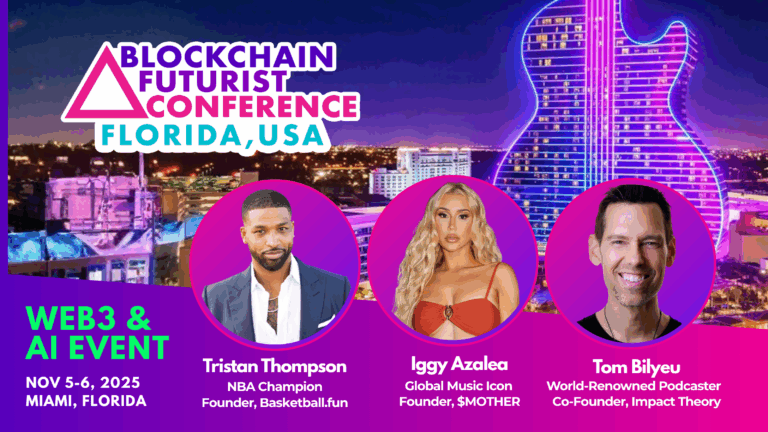 Blockchain Futurist Conference Florida 2025 Kicks Off in Just 2 Weeks, Featuring Iggy Azalea, Tristan Thompson, and Leaders in Web3 & AIOct 21, 2025
 Japan’s Amazon, Rakuten, shocks nation by helping Ukraine government sell weaponsMay 21, 2025
More interviews
 Geo Protocol founder Yaniv Tal launches Geo Debates, its first productSep 28, 2026
 How Brave is expanding beyond ad blocking with Drew PotterSep 27, 2026
 Why Kevin Carter thinks China is winning the AI raceSep 25, 2026
 Arie Trouw on why AI agents now need proof of actionSep 14, 2026
 How XYO is building an audit trail for AI agentsAug 14, 2026
 Dave Rodman on choosing the right offshore home for a crypto companyAug 4, 2026