Key takeaways
- Mt. Pelerin operates as a full reserve bank, never lending out customer deposits or leveraging its balance sheet, eliminating exposure to financial crises.
- The platform tokenizes banking assets and liabilities on blockchain, allowing customers to hold deposits as ERC-20 tokens in self-controlled wallets.
- Investment products are fractionalised into tokens costing five dollars or euros, enabling retail investors to participate in traditionally exclusive investment opportunities.
- Mt. Pelerin offers multi-currency accounts across thirty currencies with a master account interface, functioning as a traditional digital bank rather than a crypto bank.
- The bank automates loan contracts and other banking assets through smart contracts, incorporating cash flow and ownership structures directly on-chain.
A traditional bank, rebuilt digitally
Ashton Addison: Your team is building a bank for the new economy. What does that mean in practice?▶ 00:00
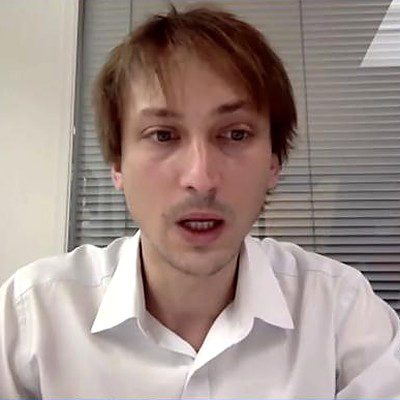
Arnaud Salomon: We're creating a digital investment bank here in Geneva, and we want to operate it a little differently. First, it's a full-reserve bank. Second, we want to run the business as a marketplace. And we'll use blockchain technology for tokenization, bringing the bank's entire balance sheet on chain in the form of smart contracts.
Ashton: Will customers get regular banking services, or is this a hybrid?▶ 00:47
Arnaud: It's going to be a very traditional type of bank. We're not building a crypto bank per se. We're building a traditional digital bank online. People will have accounts in 30 different currencies, so it's multi-currency from day one, with a dedicated IBAN for each currency. On top of that, we'll enrich the ecosystem with marketplaces where you can buy different types of products.
We will never risk people's money, never reinvest it on the market or gamble it.
Democratizing investment banking
Ashton: Mt. Pelerin talks about democratizing investment banking. What does that look like?▶ 02:19
Arnaud: Today, most products you can buy and trade on the stock exchange are handled by high-level bankers, investment bankers and traders. Once you're a bank, you can back those products with tokens that pretty much anyone can buy a fraction of, for five dollars or five euros. That's an opportunity for anyone to participate in the economy, and to have an impact locally as well. A local business owner could let customers put in $50 or $100 through tokenization and take part directly in the business's next venture.
Ashton: Do you expect traditional banks to adopt this model, or does starting from scratch give you an edge?▶ 04:00
Arnaud: There is a general trend, and here in Geneva we clearly see a lot of banks wanting to get into this movement. They contact us to develop new products and offers. But when you start with a legacy, you never really change completely. For them it's about adding new services on the side rather than radically changing their business model. I believe we'll see more and more competition going this way, simply because it's what people want.
Full reserve and a commission-based model
Ashton: What is the difference between full-reserve and fractional-reserve banking for customers?▶ 04:51
Arnaud: We will never risk people's money, never reinvest it on the market or gamble it. We refuse to leverage the bank's balance sheet, so we should never be exposed to a bank run. If 100 percent of clients want their money back at the same time, we should be able to deliver it. Most people believe the 2008 crisis is over, but how did we solve it? We didn't. We lowered interest rates and repaid the old debt by creating new debt, and now the bubble is growing much bigger than in 2008. When things go bad, we want to be pretty much the only bank that isn't affected, because we're not invested in the market. If you want to stay liquid in your bank account, you know there is zero risk for you.
Ashton: If you can't make money on deposits, what does the business model look like?▶ 10:12
Arnaud: You're totally right, that's the core of what we do. We're not a credit-based business. We're commission-based. We offer marketplaces where we act as a market maker, but ultimately our role is more that of a broker, consolidating all the offers on the market. Take a loan. As a customer, you don't care whether it comes from Bank of America or Lending Club. You care that it meets your criteria and that you get a good rate. We aggregate the market's offers, and whatever comes out on top is the best deal. The marketplaces are also open, so if you're unhappy with what's proposed, you can create your own deal and let other members subscribe to it. Crowdfunded loan platforms have one big drawback, which is liquidity. There is no secondary market, so your money is locked until the loan matures. With tokens, you automatically get a secondary market, so you can cash out if you need your money back or make another investment.
When you start with a legacy, you never really change completely.
Tokens, smart contracts and compliance
Ashton: How does the blockchain side work, from deposits to loans?▶ 07:41
Arnaud: We start with the liability side, meaning people's deposits. Every time you deposit a thousand euros in your bank account, we issue a thousand euros on chain as a token, held in a wallet controlled by the bank. When you make a payment out, you have two options. You can pay through the legacy routes, such as SWIFT or ACH in the US, in which case we redeem the tokens on chain and deliver the money to the correspondent bank. Or you can pay to an address rather than an IBAN, and the token moves from the bank-controlled wallet to the one you specify. Compliance is enforced in both cases. The asset side is where it gets really interesting, because all banking assets are contracts. We incorporate those contracts into smart contracts and automate functions such as the cash flow and ownership structure. A loan is an asset for the bank, but a very illiquid one. If the bank sells it, you as the customer don't change counterparty, so the original bank has to stay in the loop every month. If the loan is a smart contract, you keep paying as before, but the ownership can move. And because it's represented by a token, it can be owned collectively by the crowd, in fractions.
Ashton: How involved are you in security tokenization, and how do you handle compliance?▶ 12:30
Arnaud: The entire bank is going to be tokenized, so we had to come up with a framework that works for regulators. The idea was to retrofit existing regulatory rules into the blockchain with a simple rule engine and a user registry. That makes it easy to restrict the transferability of a token based on different factors. A product might be only for accredited investors, for example. In Europe there are also rules such as MiFID, so we need to make sure a product fits your risk profile. The way most STOs are structured today, they are private contractual agreements that share future cash flow with you, and they aren't well protected. Somewhere in the contract there is usually a line saying the issuer can change it at some point. What we wanted was to put the shares of a company into tokens, so that the token holder is actually a shareholder rather than being bound by a private contractual agreement.
This interview has been edited for length and clarity. Recorded June 2019.