Key takeaways
- Orion Protocol aggregates liquidity from centralized exchanges, decentralized exchanges, and swap pools into one platform with smart routing to find best prices and lowest fees.
- The platform allows traders to connect wallets directly and execute trades without creating multiple exchange accounts or risking assets on centralized platforms.
- Orion Terminal Phase One launches December 15th with early access via referral ranking, full access in Q1 with staking, lending, margin trading, and derivatives.
- The protocol uses a decentralized broker network secured by ORN token staking as collateral, with brokers selected based on stake amount and receiving transaction fee rewards.
- Institutional investors can access all crypto markets through one platform without managing multiple APIs and exchange accounts, simplifying their entry into cryptocurrency markets.
One terminal for the whole market
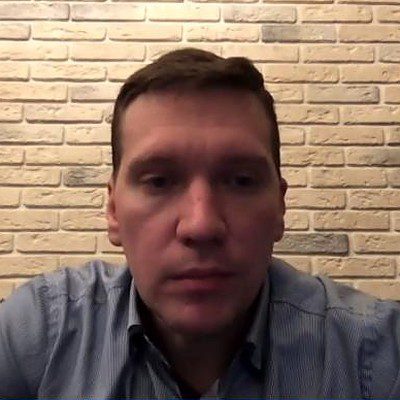
Ashton Addison: What is Orion Protocol focused on right now, and what problem does it solve?▶ 00:24
Alexey Koloskov: Our main focus is building a liquidity aggregator, and we have built the most advanced one on the market. It aggregates the order books and trading pairs of centralized and decentralized exchanges, plus liquidity pools, into one platform. Traders can access the liquidity of the entire crypto market in one place, and they no longer need to worry about finding the best price. Our smart routing finds the best prices and the lowest possible fees, with almost zero slippage and zero spread. Traders also no longer need to risk their assets to access liquidity. Traders can connect their wallets to Orion and execute trades directly from their cold wallets, without any exchange accounts.
Ashton: What are the biggest problems in the industry that led you to build Orion?▶ 02:11
Alexey: In my opinion, the biggest issues right now are fragmentation, centralization and liquidity. Assets are spread across a huge number of exchanges, which can be daunting for newcomers. The space is also split between centralized and decentralized entities. We have recently seen huge growth in decentralized exchanges, but they still lack liquidity and good terms and conditions for traders. Those were the main issues behind Orion.
Traders can connect their wallets to Orion and execute trades directly from their cold wallets, without any exchange accounts.
Adoption and institutional interest
Ashton: Do you have plans to take this technology beyond crypto traders and into the mainstream?▶ 03:35
Alexey: Adoption is the most important part. The crypto industry is still relatively slow compared with traditional markets. But blockchain technology can solve problems much more easily and cheaply than traditional markets can, whether that is creating financial products or building settlement functionality. When we reduce the existing issues in the crypto space, it opens up a wider possibility for new products to emerge in the market.
Ashton: Have you seen institutional interest in this kind of technology, and how big a part of industry growth is it?▶ 05:26
Alexey: We have definitely seen institutional interest increase significantly, especially this year. Institutions look for solutions they are already used to in traditional markets. They want greater liquidity, trading features in one platform and more sophisticated tools. If we provide a single access point to all crypto markets, it simplifies entering the market for institutional traders. They no longer need multiple accounts, or to analyze and integrate the different APIs of multiple exchanges. Using Orion, they get much easier access to crypto markets.
The Orion Terminal launch
Ashton: What is coming with the Orion Terminal, and how will it benefit users?▶ 08:16
Alexey: After rigorous testing by our brokers on a private mainnet, we are releasing phase one of the Orion Terminal on the public mainnet on December 15. Early access will be provided through a referral scheme, and wider access will follow early in the first quarter of next year. We already have a lot of applications. The December release will be fully functional, with the ability to trade, deposit and withdraw assets, trade across major pairs and swap between assets. More features will be implemented in the coming months. Efficiency is the core of our protocol, because aggregation is a more sophisticated service than simply giving access to one exchange, and here we are competing over milliseconds.
We are trying to solve only the real, current problems on the market.
Broker staking and the road ahead
Ashton: Who can stake ORN, and what are the benefits and incentives?▶ 10:41
Alexey: Staking underpins our system, because our protocol is built on a network of brokers. Brokers run our broker software, which automatically executes trades routed from our liquidity aggregator through their trading accounts on multiple exchanges. The network will be completely decentralized. Brokers don't need to trust anyone or share API keys, because everything is stored on their local machines. It is orchestrated by our decentralized, delegated proof-of-broker mechanism, which requires staking Orion's native token into a smart contract that acts as collateral for trade settlements. The more a broker stakes, the more frequently they are chosen to receive orders, and so the more fees they earn. Non-broker stakers can also vote for a specific broker by staking for them, and the broker shares transaction fees with those voters. That prevents monopolization, because brokers are incentivized to offer better terms to attract more voters, which increases their chance of carrying out trades. Running your own broker node is a longer process but earns more rewards. Non-broker stakers have no requirement to run any nodes.
Ashton: What will be the key factor in Orion Protocol's long-term success?▶ 14:49
Alexey: We are trying to solve only the real, current problems on the market. Long-term sustainability starts with steady and solid revenue streams, so we are not focusing only on the protocol itself. We are also building products on top of it, such as margin trading and leveraged derivatives. We also have a big division of B2B solutions for other blockchain projects and exchanges, including a price oracle, a wallet SDK, collateral optimization, enterprise trade and a liquidity boost plugin. We have already identified these products and are working on them.
This interview has been edited for length and clarity. Recorded December 2020.