Elon Musk’s America Party declares full support for Bitcoin
Elon Musk’s newly launched America Party has taken a formal pro-Bitcoin stance, positioning digital assets as a core policy plank in his breakaway political movement. The declaration signals how crypto policy has become central to high-profile political entrepreneurship, with institutional investors watching whether third-party crypto support reshapes the regulatory landscape.
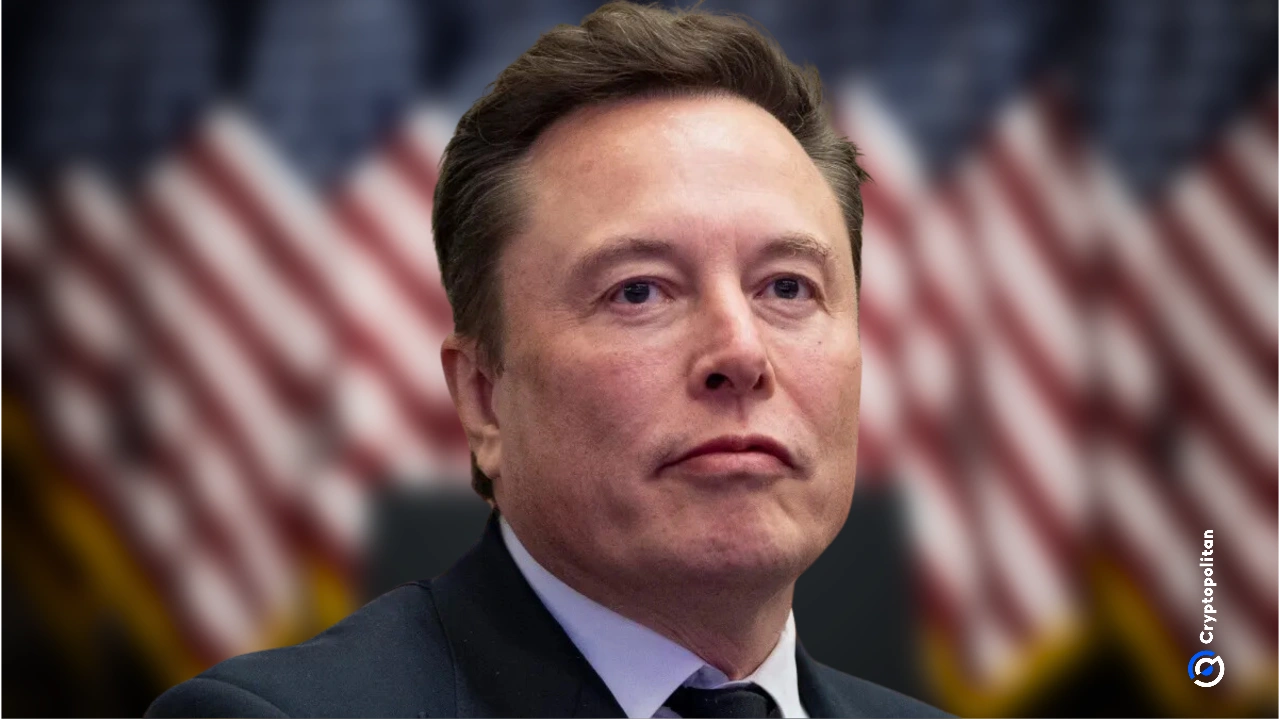
- Elon Musk declared his America Party “fully support Bitcoin,” stating “Fiat is hopeless” in a post on X.
- The party launch followed Musk’s public feud with President Trump over the One Big Beautiful Bill Act, which passed the House on July 3.
- Musk has committed to backing primary challenges against Republican lawmakers who voted for the bill, signaling electoral consequences for crypto-hostile positions.
- 80% of respondents voted yes when Musk polled followers on forming a new centrist political party
- July 3 date the One Big Beautiful Bill Act passed the House of Representatives
- South Africa Musk’s birthplace, making him constitutionally ineligible for U.S. presidency
Elon Musk has formally positioned Bitcoin and cryptocurrency at the core of his new political party, declaring in an announcement on X that the America Party will be “pro-Bitcoin” and that “Fiat is hopeless.” The move transforms his ongoing conflict with President Donald Trump into a broader third-party challenge, one explicitly anchored in crypto-friendly policy. The America Party itself launched two days before Musk’s Bitcoin declaration, emerging from his public feud with Trump over legislation Musk views as hostile to the crypto industry and to individual liberty more broadly.
Musk’s feud with Trump over financial regulation legislation triggers party formation
The rupture between Musk and Trump centers on the One Big Beautiful Bill Act, which passed the House of Representatives on July 3 and has become the flashpoint for Musk’s political exit from the Republican party framework.
Musk had accused Trump of “abandoning the center” and launched a poll asking his followers whether he should form a new party to represent “the 80 percent in the middle.” When the poll closed, approximately 80 percent voted yes, providing him with what he framed as a popular mandate.
Trump responded on Truth Social over the weekend, calling Musk a “train wreck” and stating it made him “sad” that Musk was “embarrassing himself publicly.” Rather than retreat, Musk moved forward with launching the party unofficially, pending formal registration.
He has pledged that if the bill passes the Senate, he will not only continue building the America Party but also fund and back primary challenges against Republican lawmakers who voted in favor of it, a direct electoral threat to GOP incumbents.
Competing political figures sought Musk’s backing before America Party announcement
Before committing to his own vehicle, Musk fielded overtures from other political entrepreneurs. Andrew Yang, co-founder of the Forward Party, told Politico Magazine that he had approached Musk about either forming a party together or securing his endorsement and financial support. Despite Musk’s prior endorsement of Yang’s 2020 presidential run, no agreement materialized.
Steven Nekhaila, chair of the Libertarian National Committee, also reached out last week seeking Musk’s involvement, but Musk declined engagement. Instead, he remained focused on the legislative battle that triggered his split from Trump, ultimately deciding that building his own platform aligned better with his stated goal of representing centrist voters he felt both major parties had abandoned.
Musk faces major obstacles to translating party launch into electoral influence
Musk’s personal wealth and massive social media platform do not automatically translate into political viability, according to reporting by the Washington Post, which noted that he failed to move the needle in the 2025 Wisconsin Supreme Court election despite significant effort.
Ballot access in all 50 states requires navigating complex state-by-state legal requirements and will consume substantial resources and time. Musk’s reputation has also taken hits in some circles, particularly following his tenure at the Department of Government Efficiency, which has raised questions about his credibility as a political operator beyond his core constituencies.
Public approval metrics for Musk have declined from their 2024 peaks, adding uncertainty to whether the America Party can build momentum beyond his existing supporters.
Musk has not disclosed who will serve as the America Party’s leader or how its internal governance structure will function. His South African birth makes him constitutionally ineligible to serve as U.S. president, leaving open the question of whether he intends to be a kingmaker backing another candidate or purely a funder and strategist.
The CCS read. We see Musk’s Bitcoin declaration as a signal that crypto policy has become a legitimate lever for mobilizing third-party voters and disciplining incumbent lawmakers. Institutional holders should track whether primary threats against pro-regulation Republicans force the GOP to shift its crypto stance, and whether the America Party’s growth puts pressure on Democrats to adopt more explicit crypto-friendly positions to compete for libertarian-leaning donors and voters.
Watch for the Senate vote on the One Big Beautiful Bill Act, which will trigger Musk’s promised primary challenge campaign. The outcome will signal whether his political capital is sufficient to move Republican lawmakers on a high-stakes financial regulation vote, and whether a nascent third party backed by one of the world’s wealthiest individuals can overcome ballot-access barriers to become a serious electoral factor in 2026 and 2028.