Three Countries.
One Playbook.
Zero Apologies.
While founders debate the Clarity Act, crypto lawyer Dave Rodman has been using the same offshore structure since 2023 — and says it works whether Washington acts or not. Here’s exactly how it works.
Most founders call a lawyer too late. Dave Rodman has seen it a thousand times.
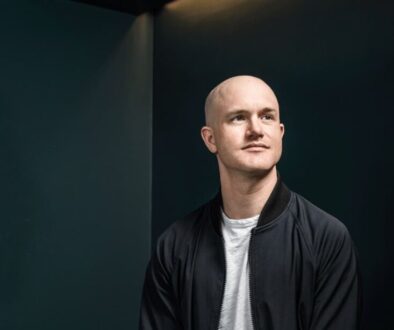
Dave Rodman has spent his entire legal career in the spaces that scare other lawyers off — cannabis, psychedelics, venture capital, and for the last decade, crypto. As Founder and Managing Partner of The Rodman Law Group, he has facilitated over a billion dollars in digital asset transactions and watched the regulatory landscape twist in every direction imaginable. He sat down with Crypto Coin Show to talk about what actually matters for crypto founders right now — and it isn’t the Clarity Act.
“It certainly isn’t boring,” Rodman told us when asked about his career. “It’s been intellectually stimulating and wildly frustrating and rewarding all at the same time.” For a lawyer who chose his specialty long before big law firms had even assigned a practice group to the space, that tension has become familiar territory.
“Move fast and break stuff doesn’t work when the underlying product either is a financial instrument, functions like one, or looks like one.”
— Dave Rodman, Founder, The Rodman Law GroupThe single most expensive mistake crypto founders make, according to Rodman, is waiting. Not waiting on legal counsel specifically — waiting on any structured thinking about compliance. The analogy he borrowed from our conversation: it’s like skipping the gym to save time, then paying for it in medical bills later. A lawyer on day one is an investment, not a cost.
Why the Clarity Act doesn’t change Rodman’s playbook
If you’ve been following crypto policy, you know the Clarity Act has been the marquee legislative promise of the current cycle — a framework that would finally resolve whether digital assets are securities or commodities, and who gets to regulate them. Rodman’s take? It won’t pass this year. And even if it does, it won’t matter as much as people think.
“There has never been an example where a thing is regulated by one agency until a nebulous point that no one understands, and then magically regulated by another,” he said. “I think both the SEC and CFTC are going to try to regulate that project at that moment — and there are going to be nasty results.”
The GENIUS Act passed, bringing some clarity to stablecoins. But Rodman points out it was gutted in a critical area: you can’t get yield-bearing stablecoins in the US. His clients’ response? Go offshore and get them permissionlessly anyway.
His broader thesis is more unsettling than any specific piece of legislation: the US is grasping at straws. A country in late-stage capitalism trying to maintain financial dominance over an industry whose entire value proposition is that borders don’t matter. He predicts a well-developed country in the global south — likely in Africa — will eventually take the position that tokens are not securities, allow programmatic revenue distribution, and leapfrog the entire regulatory tangle the way the African continent jumped from landlines directly to smartphones.
The three jurisdictions — and exactly how to use them
This is where the conversation gets practical. Rodman’s firm has refined its offshore structure since 2023, and uses the same three jurisdictions for nearly every client. The stack isn’t arbitrary — each jurisdiction does a specific job, and the combination was engineered to hold up across the scenarios crypto companies actually face.
BVI for token issuance. It’s always been BVI. The British Virgin Islands has the longest track record in the space for this use case, and nothing about the current landscape has changed that calculus. If you’re issuing a token, your issuing entity goes here.
Cayman for orphanization. The Cayman foundation company, introduced around 2020, was a structural breakthrough. It’s an entity with no owners — which makes it the ideal vehicle for decentralization. When you need a top-co that no individual can claim ownership of, Cayman is the answer. Rodman’s standard model: BVI token issuer, Cayman foundation on top.
Panama for everything else. This is the workhorse for operations — especially anything the US would classify as sensitive. Crypto in Panama is legal but unregulated, which gives founders something rare: a jurisdiction where you can operate legitimately while the rest of the world sorts out its rules. Rodman’s firm works with a sister firm on the ground there to produce legal opinions confirming each project is viable.
“If you’re going to have a social media company that needs a token — issue in BVI, orphanize with Cayman, run the social company in the US. It plugs in. And if Facebook wants to acquire you, you unplug the token and sell them a clean US company.”
— Dave RodmanFor founders who want a more regulated path and have the budget for it, Rodman also flagged Bermuda as an underrated option — a jurisdiction where startups can legitimately obtain a financial license, sit with regulators to agree on operating rules, build a compliance track record, and eventually transition to the US when the laws are ready. Rare that clients take him up on it, but the path exists.
AI agents, liability, and why “code is law” is still wrong
The conversation shifted to an area that’s getting more relevant by the month: AI agents operating autonomously in crypto — managing wallets, executing trades, running DAOs. Who is legally liable when one of them does something wrong?
Rodman’s answer is straightforward, if unsatisfying to founders hoping for a loophole: there are no special AI laws. The liability framework that applies is the same one that’s always applied. Did your product break? Did you disclose its limitations? What did your terms of service say? The existing reasonable-person standard, applied to whoever built the system and whoever deployed it, is the legal reality for now.
He’s also a practitioner of what he preaches. He told us he’s about a month away from having his first AI employee at the firm — built using the same tools available to anyone. If a lawyer can do it, he says, the developers in this space are inches from full agentic operation.
The compliance rule nobody’s talking about: CARF
Before wrapping, Rodman raised something that caught our attention — a framework most DeFi founders have never heard of, called CARF: the Crypto Asset Reporting Framework. It’s a worldwide compliance standard that most major countries have already signed, including the US, Panama, and Cayman. It requires DeFi protocols to report users’ gains and losses to tax agencies.
The mechanism of enforcement is still murky. How do you force a decentralized protocol to comply with a reporting requirement? Rodman doesn’t have a clean answer — nobody does. But the ticking clock is real: the US component takes effect in January. Some other jurisdictions come online in 2028. Projects who get caught in the first enforcement wave won’t be able to say they weren’t warned.
CARF in plain terms: most major countries — including the US, Panama, and Cayman — have signed a framework requiring DeFi protocols to report user gains and losses to tax agencies. America’s component kicks in this January. Most founders in the space have never heard of it.
His closing note on AI and legal risk was pointed: using Claude — his word — to ask whether something is legal is discoverable. If AI advice tells you something is illegal and you do it anyway, a prosecutor can use that. Attorney-client privilege cannot. It’s a distinction worth understanding before the next project launch.
Building in crypto and haven’t talked to a lawyer yet?
The Rodman Law Group works with crypto founders and Web3 companies on incorporation, token launches, offshore structuring, regulatory compliance, and everything in between. They serve clients across DeFi, DAOs, NFTs, and Web3 globally — and they operate in all three jurisdictions covered in this interview.