10,000% Gains? Why One Analyst Says the Strongest Altcoin Setup in Years Is Here
A closely watched technical pattern in altcoins has flipped bullish for the first time since 2020, with one prominent analyst citing historical precedent for rallies of 2,000% to 10,000% in the months ahead. The setup matters to institutional investors because it suggests a potential capital rotation from Bitcoin into smaller-cap tokens, but only if macroeconomic headwinds and regulatory uncertainty do not derail momentum.

- Altcoin market consolidating along ascending support line since early 2025, mirroring 2020-2021 setup that preceded major rallies
- 21% of Binance-listed altcoins have reclaimed their 200-day moving averages, up from just 2% in February
- Digital Asset Market Clarity Act of 2025 faces markup this week, with outcome potentially shaping institutional entry into altcoin markets
- 2,000%-10,000% Historical altcoin rally range when similar technical setup appeared in 2020-2021 cycle
- 21% Share of Binance altcoins above 200-day moving average now versus 2% in February
- 51 million Total altcoins in circulation, creating liquidity fragmentation across multiple blockchains
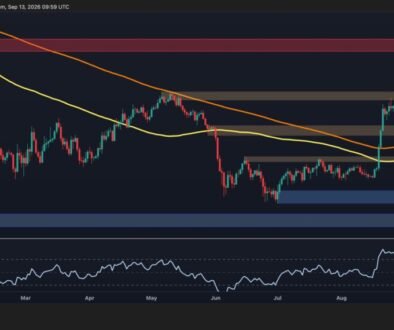
Trader Mark Chadwick posted on social media on May 13 that altcoins are displaying “one of the cleanest setups we’ve seen since 2020,” noting that the broader asset class has spent months consolidating without breaking its long-term ascending support line while absorbing consistent selling pressure.
According to Chadwick’s analysis, this pattern historically precedes periods of explosive outperformance, with altcoins gaining between 2,000% and 10,000% within months once momentum reverses.
His observation carries weight in institutional circles because the 2020-2021 cycle, the most recent comparable environment, saw exactly this technical sequence unfold before driving substantial inflows into tokens outside the Bitcoin category.
The thesis extends beyond technical chart patterns. Chadwick cited the Russell 2000 hitting all-time highs as evidence that appetite for higher-beta assets is returning to broader markets, suggesting that capital may be rotating away from defensive positions and into riskier plays, including altcoins.
This macro backdrop aligns with how institutional money typically flows during risk-on environments: once equity markets signal renewed confidence, cryptocurrency markets often follow, with capital shifting from Bitcoin’s relative stability into the higher leverage and volatility of smaller-cap tokens.
21% of Binance Altcoins Reclaim Key Moving Average as Momentum Turns
On-chain metrics are beginning to support Chadwick’s technical reading. Crypto analyst Darkfost reported that approximately 21% of altcoins listed on Binance have now reclaimed their 200-day moving averages, a threshold widely used by institutional traders to identify trend reversals and entry points.
In February, only 2% of those same tokens held above that level, representing a more than tenfold improvement in the share of assets displaying upward momentum over a roughly three-month window.
Darkfost specifically noted that altcoin performance among Binance-listed tokens has returned to levels unseen since September 2025, suggesting that this is not merely a small rebound but a restoration of momentum to levels that had been absent for months.
For institutional investors accustomed to measuring market health through the percentage of assets trading above key moving averages, this shift signals potential room for broader participation without waiting for a late-stage surge.
However, Darkfost cautioned against overinterpreting the data, warning that “it is far too early to start calling an altseason; the road ahead is still long and liquidity remains constrained.”
51 Million Altcoins Scattered Across Chains Create Liquidity Fragmentation Risk
Despite improving technical signals, substantial structural headwinds remain in place.
The altcoin ecosystem now comprises at least 51 million tokens spread across multiple blockchains, with Solana alone hosting 46% of that supply, Base accounting for 36%, and BNB Smart Chain holding 10%. This extreme fragmentation of liquidity represents a fundamental challenge for institutional portfolio managers seeking to build meaningful positions without moving markets dramatically or facing slippage on entry and exit.
The liquidity fragmentation problem becomes acute when contextualized against potential rally scenarios. If altcoins do rally 2,000% to 10,000% as Chadwick projects, that upside accrues only to tokens with sufficient trading depth and order book stability to support institutional-size orders.
Tokens lacking that infrastructure will underperform, while positions in illiquid assets may become difficult or impossible to unwind at target prices. This reality has already begun filtering into institutional trading desks, with many large players filtering the altcoin universe down to a subset of liquid tokens rather than pursuing broad-based exposure.
Analyst Michaël van de Poppe offered a more measured near-term forecast, stating that altcoins are currently trailing Bitcoin by one to three weeks and could post gains between 100% and 300% depending on liquidity conditions and market momentum. This narrower range sits below Chadwick’s upper estimates but still represents material upside for institutional allocators if sustained.
US-Iran Conflict and Regulatory Markup Could Determine Rally Durability
Macroeconomic and geopolitical factors continue to weigh on risk appetite. Darkfost cited ongoing US-Iran conflict and persistent inflation concerns as headwinds still dampening sentiment toward high-beta assets, including cryptocurrencies. These factors introduce tail risk that could reverse technical momentum quickly if they escalate or worsen market conditions.
Institutional investors managing multi-asset portfolios must therefore weigh the technical setup against the possibility that geopolitical or inflation shocks could trigger a flight back to safe havens.
Washington policy developments present a more direct lever on altcoin institutional participation. Chadwick highlighted the Digital Asset Market Clarity Act of 2025, which is scheduled for markup this week, as a potential catalyst for expanded institutional participation if it establishes clearer regulatory rules around market structure and asset classification.
The bill has already attracted more than 8,000 letters from members of Congress and has been hit with multiple amendments, suggesting both significant interest and substantial disagreement on specifics.
Clearer regulatory frameworks could unlock institutional capital currently held on the sidelines due to legal and compliance uncertainty around altcoin trading and custody.
The next immediate signal for institutional crypto investors will come from this week’s markup of the Digital Asset Market Clarity Act, which will reveal whether Washington is moving toward regulatory clarity that encourages institutional entry or whether continued political fragmentation will delay that outcome.
Simultaneously, traders should monitor whether Binance altcoins maintain the 21% threshold above their 200-day moving averages; a break below that level would suggest the technical setup is failing and risk reversing near-term momentum.
Liquidity Concentration Risk Threatens Altcoin Rally Sustainability
While the technical setup appears constructive, institutional investors face a material constraint: altcoin markets remain fragmented across 51 million tokens in active circulation, with meaningful liquidity concentrated in fewer than 200 names. This fragmentation creates execution risk for large allocators seeking to rotate capital into the space.
A single institution deploying $500 million into mid-cap altcoins could move prices sharply higher on entry, but exit liquidity at those elevated levels remains unproven, a dynamic that plagued the 2021 cycle and prompted several large funds to reduce altcoin exposure.
The concentration risk is compounded by the fact that smaller altcoins still trade at significantly wider bid-ask spreads than Bitcoin or Ethereum. Average spreads on altcoins ranked 50-200 by market capitalization hover near 0.8% to 1.2%, compared to 0.02% to 0.05% for Bitcoin on institutional venues.
This structural disadvantage means that institutions building positions during the rally’s early stages may face slippage costs that reduce net returns by 2-3 percentage points over a multi-month accumulation period, narrowing the margin of profit even under the bullish 2,000% scenario.
The critical test will arrive in June, when SEC guidance on spot altcoin ETFs is expected to clarify whether U.S. institutional custodians can hold tokens beyond Bitcoin and Ethereum in regulated vehicles. If guidance favors broader altcoin eligibility, liquidity infrastructure will likely improve materially; if it remains restrictive, the rally may stall before reaching the upper end of historical precedent.
Original reporting: cryptopotato.com