
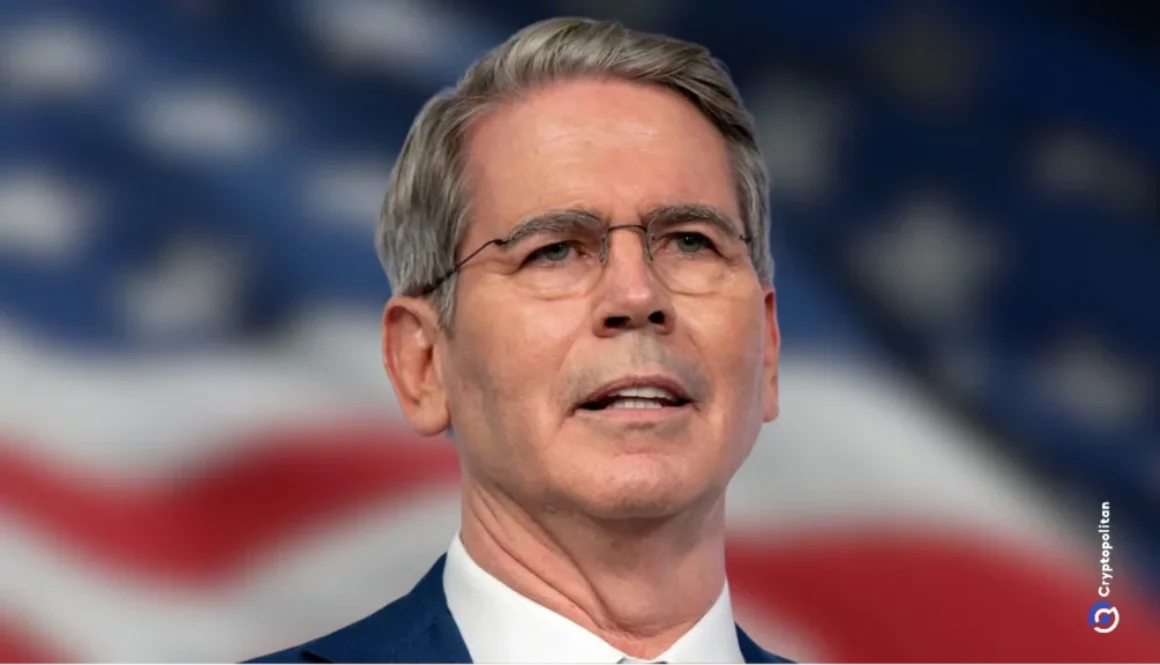
Scott Bessent says China’s rare‑earth threat was a strategic blunder
U.S. Treasury Secretary Scott Bessent has characterized China’s use of rare-earth export restrictions as a strategic miscalculation that will ultimately accelerate American efforts to develop alternative supply chains. In remarks to the Financial Times, Bessent argued that Beijing crossed a diplomatic line by weaponizing its dominant position in critical minerals, a move he says will backfire as Washington and allied nations rush to reduce their dependence on Chinese sources.
The Rare-Earth Gambit Backfires
Bessent framed the dispute as a departure from an established equilibrium between the two economic powers. He suggested that prior to China’s threatened restrictions on rare-earth exports, both governments had maintained an implicit understanding about the bounds of trade conflict. That balance, he indicated, was shattered when Beijing signaled it would restrict access to materials critical for everything from defense systems to renewable energy technologies.
The Treasury Secretary’s assessment carries particular weight given his direct involvement in shaping U.S. economic policy toward China. By openly acknowledging China’s move as miscalculated, Bessent is essentially arguing that Beijing has given Washington the political justification it needed to accelerate structural changes in global supply chains.
China will not be able to keep using rare earths as a tool of pressure, especially now that it showed its hand.
— Scott Bessent, U.S. Treasury Secretary
The practical implications are already evident. U.S. policymakers are fast-tracking investments in domestic rare-earth mining and processing, while simultaneously strengthening partnerships with allied nations that possess alternative reserves. Japan, Vietnam, and several African countries are becoming increasingly important to Western supply security discussions.
Bessent’s comments suggest that the administration views this moment as a permanent inflection point. Once a nation demonstrates willingness to leverage commodity exports as a coercive tool, trust in that supplier erodes significantly. Companies and governments begin hedging against future restrictions immediately.
China controls approximately 70 percent of global rare-earth processing capacity, though not all raw reserves. This dominance in processing—rather than resource availability alone—has historically provided Beijing with outsized leverage in negotiations. The rare-earth industry encompasses seventeen elements essential to modern manufacturing, including neodymium, dysprosium, and terbium. Applications span military defense systems, wind turbine generators, electric vehicle motors, and semiconductor production. The global rare-earth market, valued at approximately $7 billion annually, is projected to grow at compound rates of 8-10 percent through the 2030s as renewable energy and electrification accelerate worldwide demand.
Market Restructuring and Supply Chain Resilience
The implications of supply-chain decoupling extend far beyond immediate trade disputes. Investment banks have begun pricing in persistent premium costs for alternative sourcing arrangements. Companies sourcing from non-Chinese suppliers typically absorb 15-25 percent higher material costs, at least during transition phases. However, this structural shift reflects a calculated decision that supply security outweighs near-term margin compression.
The Defense Department has already allocated substantial funding toward establishing domestic rare-earth processing capabilities through the Defense Production Act. Mountain Pass, California’s rare-earth mine—once the world’s largest before Chinese competition displaced it—is receiving investment to expand processing operations. Simultaneously, the U.S. government is funding feasibility studies for rare-earth extraction from coal fly ash and other industrial byproducts, pursuing technological pathways that would have seemed economically marginal just years ago.
Allied governments are pursuing parallel strategies. The European Union has designated rare-earth elements as critical raw materials, establishing import diversification targets. Japan, despite limited domestic reserves, is investing in recycling technologies and strategic reserves. These coordinated efforts suggest a genuine structural realignment rather than temporary political posturing.
The Soybean Front in Trade Tensions
Beyond rare earths, Bessent acknowledged the agricultural dimension of the broader U.S.-China trade confrontation. During an appearance on ABC News, he disclosed that he personally owns farmland in North Dakota where soybeans and corn are cultivated, placing him directly in the path of Chinese retaliation against American agricultural exports.
The irony is noteworthy. Bessent’s land holdings, valued between $5 million and $25 million according to financial disclosures, generate annual income ranging from $100,000 to $1 million. Yet his net worth stands at approximately $600 million, insulating him from the genuine financial distress affecting commodity-dependent farmers across the Midwest.
China, once America’s largest buyer of soybeans, implemented tariffs on the crop in May 2024 following President Trump’s imposition of duties on Chinese goods. Subsequently, Chinese purchases of American soybeans have halted entirely. For large-scale agricultural operators with diversified income streams, this represents an inconvenience. For farmers dependent primarily on crop sales, it constitutes an economic crisis.
I’m actually a soybean farmer… I have felt this pain, too.
— Scott Bessent, U.S. Treasury Secretary
Bessent’s candid admission that he has “felt the pain” carries an awkward double meaning. While technically accurate—his operations are affected—his statement obscures the vastly different impact experienced across agricultural communities. The positioning of the Treasury Secretary as a fellow sufferer, despite his substantial wealth and diversified portfolio, illustrates a broader disconnect between policy-level acknowledgment of trade war costs and the actual burden borne by economically vulnerable populations.
Chinese tariffs on American agricultural products have essentially eliminated a major market for U.S. farmers. The absence of Chinese buyers has depressed domestic commodity prices, creating cascading effects throughout rural economies dependent on export revenue. Soybean prices fell from $12+ per bushel to under $9 following tariff implementation. Rural counties in Iowa, Illinois, and Minnesota have experienced measurable increases in farm debt and equipment sales, traditional indicators of agricultural distress. Government support programs have partially offset losses, but direct payments cannot fully compensate for market access elimination.
TikTok Resolution Advances
In more constructive developments, Bessent indicated that negotiations surrounding TikTok’s ownership structure have progressed substantially. Speaking with Fox Business, he confirmed that representatives from both governments finalized key components of an agreement in Kuala Lumpur, with formal resolution expected within weeks or months.
The TikTok dispute has consumed considerable diplomatic and legislative bandwidth for over eighteen months. Congress enacted legislation in 2024 mandating that ByteDance, TikTok’s Chinese parent company, divest U.S. operations by January 2025. President Trump subsequently issued an executive order on September 25 confirming that proposed sale arrangements satisfy national security requirements established in the legislation.
Prospective buyers now face a 120-day window to complete the transaction, with Trump extending the final deadline to January 20. This timeline remains compressed, but Bessent’s comments suggest confidence that interested parties are prepared to move forward. The resolution of this particular irritant in U.S.-China relations may provide minor breathing room in an otherwise contentious economic standoff.
For investors tracking geopolitical risk and supply-chain volatility, crypto market movements often reflect broader concerns about international trade stability and currency competition. Understanding the trajectory of trade disputes helps contextualize longer-term economic trends.
Broader Strategic Implications
Bessent’s public statements collectively paint a picture of an administration consolidating its approach toward China across multiple fronts: critical materials, agriculture, and technology. The Treasury Secretary’s role as a principal voice on these matters underscores their economic—rather than purely political—character.
The rare-earth commentary is particularly significant for long-term planning. Once supply chains begin shifting away from a dominant supplier, reverting to previous arrangements becomes extraordinarily difficult, even if political conditions change. Companies that invest in alternative sourcing or domestic production capacity will not easily abandon those investments based on temporary price improvements from the original supplier. This represents a fundamental characteristic of industrial economics: switching costs create path dependency that persists across political cycles.
Industry observers note that the global mining sector is responding to supply-chain diversification signals through substantial capital allocation. Lithium, cobalt, and rare-earth mining projects in Australia, Canada, and Africa are attracting accelerated investment timelines and higher valuations, reflecting investor confidence that these alternatives will capture market share regardless of short-term commodity price fluctuations.
For those monitoring developments in blockchain and digital assets, trade tensions merit attention. Currency volatility, capital controls, and sanctions regimes all influence cryptocurrency adoption and cross-border transaction patterns. Understanding macroeconomic friction points provides context for understanding shifts in digital asset flows.
Whether Bessent’s characterization of China’s rare-earth strategy as a “real mistake” reflects genuine confidence or diplomatic messaging remains open to interpretation. What is clear is that the Treasury Secretary has publicly aligned himself with a policy direction predicated on supply-chain decoupling—a process that, once initiated, tends to advance regardless of near-term negotiations or apparent consensus.
The interconnection between rare-earth supply, agricultural trade, and technology governance reveals how modern economic conflict operates across multiple registers simultaneously. Bessent’s commentary illuminates where the administration is placing its strategic bets, even as it acknowledges the costs of sustained trade tensions. The coming months will clarify whether these various threads resolve into coherent policy outcomes or devolve into prolonged uncertainty. What appears most probable is a continuation of structural supply-chain reorganization, with near-term negotiations addressing specific irritants while underlying competitive dynamics reshape global commerce architecture for the foreseeable future.
Get weekly blockchain insights via the CCS Insider newsletter.