
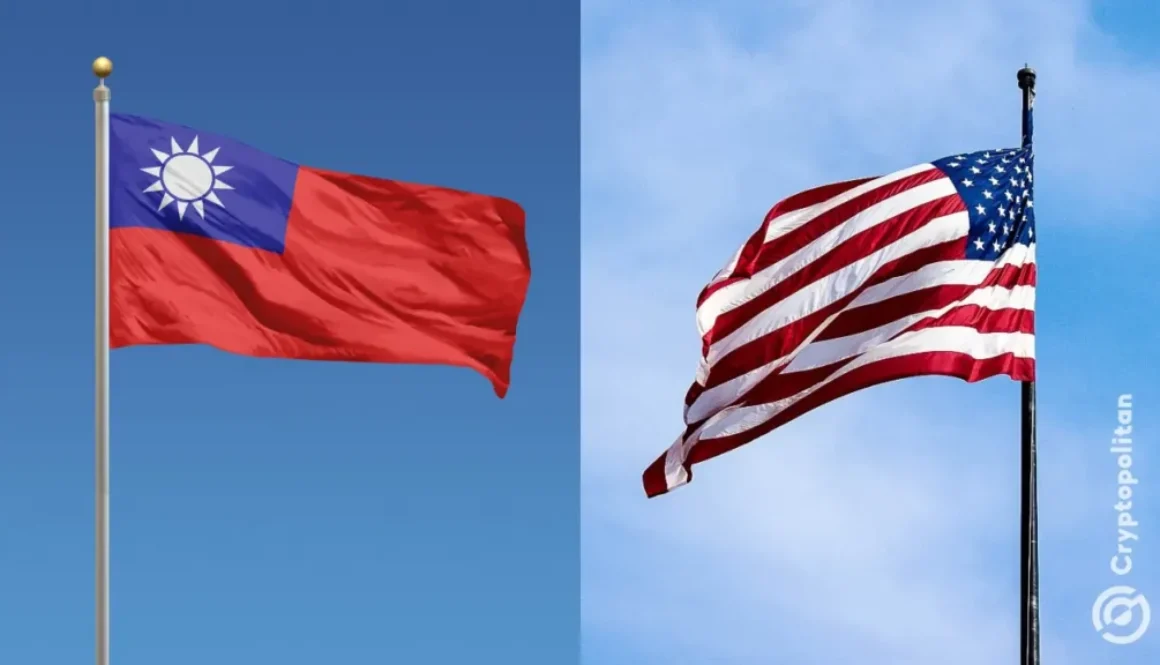
Taiwan to revise 2025 growth outlook after US tariffs
Taiwan’s government plans to revise its economic growth projections for 2025 following the announcement of sweeping US tariffs that threaten the island’s semiconductor export sector. The revision comes as policymakers assess the real impact of President Trump’s trade policies on one of the world’s most critical technology hubs.
Taiwan’s statistics bureau previously forecast 3.1% growth for 2025, but independent economists surveyed have projected the economy could reach 4.1% expansion. The revised estimate will also include initial GDP forecasts for 2026 and updated inflation projections for both years. Officials have committed to releasing the new figures promptly as economic conditions shift rapidly.
Taiwan’s Role in Global Semiconductor Supply Chains
Taiwan accounts for approximately 65% of global semiconductor foundry capacity, with TSMC alone commanding over 54% of worldwide manufacturing. This concentration makes Taiwan’s economic trajectory directly relevant to every technology-dependent sector worldwide, from consumer electronics to cloud computing infrastructure. The island’s manufacturing prowess emerged from decades of focused investment in chip production expertise, government industrial policy support, and geographic clustering of specialized suppliers and talent.
The semiconductor industry represents roughly 15% of Taiwan’s total exports and constitutes the backbone of its technology sector. Beyond TSMC, companies like MediaTek, Realtek, and numerous specialized suppliers contribute to an ecosystem generating over $180 billion in annual revenue. This sector’s health directly influences Taiwan’s currency strength, investment climate, and ability to fund infrastructure and social programs.
AI Demand Drove Recent Surge, But Uncertainty Looms
Taiwan’s recent economic strength stems largely from surging global demand for advanced semiconductor chips, particularly those powering artificial intelligence applications. As companies worldwide raced to secure AI-capable processors, purchases of Taiwan’s tech products accelerated significantly in the final quarter.
Export revenues reached $154 billion in the latest reporting period. However, this surge created complications: the spike widened the US trade deficit with Taiwan and put upward pressure on the New Taiwan Dollar, drawing scrutiny from Washington.
Taiwan’s economy may experience a decline as a result of Trump’s tariff rates and a decrease in front-loading activity, though growing AI demand will provide significant benefits.
— Hyosung Kwon, Korea Economist, Bloomberg Economics
Economists debate whether Taiwan can sustain this momentum. The underlying concern centers on whether the current growth reflects genuine structural demand or temporary “front-loading”—companies accelerating purchases ahead of tariff implementation.
Front-loading occurs when businesses rush to purchase goods before tariffs take effect, artificially inflating short-term economic activity. Once tariffs are in place, demand typically normalizes or declines.
The 20% Tariff and Beyond
The Trump administration initially announced a 20% tariff on Taiwanese exports to the United States. Taiwan’s government characterized this as temporary and pledged to negotiate with US officials to find a resolution that protects its manufacturers.
However, a more serious threat has emerged. Trump announced potential 100% tariffs on semiconductor imports to the US—a rate that would severely damage Taiwan’s core export market. For context, semiconductors represent a substantial portion of Taiwan’s trade with America, making this threat existential for many local companies.
To avoid maximum tariffs, the administration has signaled a condition: semiconductor companies must significantly expand manufacturing capacity within the United States. This effectively pressures Taiwan’s leading chipmakers, including Taiwan Semiconductor Manufacturing Company (TSMC), to either invest heavily in US production or face prohibitive duties.
The tariff uncertainty creates a critical decision point for Taiwan’s semiconductor sector: invest in US operations or accept constrained market access.
— CCS Analysis
Market Implications Across Global Tech Supply Chains
Taiwan’s economic contraction would reverberate through interconnected technology markets globally. US-based semiconductor equipment manufacturers rely on Taiwan’s foundries for a significant portion of revenue. European chip designers depend on TSMC for manufacturing partnerships. Japanese materials suppliers count Taiwan as a primary customer. Any sustained slowdown in Taiwanese semiconductor production cascades through these dependent industries.
The financial markets have already begun pricing in these risks. Technology-heavy indices with Taiwan exposure experienced volatility following tariff announcements. Investors holding positions in semiconductor equipment manufacturers, packaging materials companies, and industrial tool suppliers have recognized that Taiwan’s economic health directly affects their portfolio performance.
Currency markets present another consideration. The New Taiwan Dollar’s strength reflects investor confidence in Taiwan’s growth prospects. Economic contraction would likely weaken the currency, affecting purchasing power for imported materials and creating headwinds for companies with dollar-denominated debt obligations.
Structural Questions for Asia’s Tech Hub
Taiwan’s economic model has long depended on its competitive advantage in chip manufacturing. Rising labor costs, geopolitical tensions, and now explicit US tariff pressure threaten this traditional advantage. The nation must decide whether to deepen US investment or pursue alternative markets and strategies.
TSMC has already committed to significant US production expansion through its Arizona fabrication plants, representing a fundamental shift in the company’s geographic diversification strategy. However, US manufacturing carries higher costs than Taiwan operations, potentially reducing profitability and competitiveness against emerging competitors in South Korea and Japan.
The AI boom provides a genuine tailwind. Demand for processors used in machine learning, data centers, and AI inference remains robust. Yet this demand exists alongside tariff threats—creating contradictory pressures on investment and production planning. Companies must balance expanding capacity to meet AI demand while simultaneously considering whether investments in Taiwan remain economically viable under tariff scenarios.
For investors monitoring cryptocurrency and blockchain sectors, Taiwan’s situation matters indirectly. Bitcoin mining, which depends on semiconductor chips, would face higher equipment costs if US tariffs on components persist. Similarly, broader economic slowdown in Taiwan could reduce regional technology spending.
Taiwan’s revised growth forecast will influence regional asset valuations, technology stocks, and currency markets. The island’s economic health affects supply chains for bitcoin mining hardware and broader tech infrastructure.
Government Response and Negotiation Strategies
Taiwan’s government has activated multiple diplomatic channels to address tariff concerns. Officials have emphasized Taiwan’s strategic importance as a US security partner and highlighted the potential disruption to global technology markets should tariffs severely constrain Taiwanese production. These arguments attempt to reframe trade policy discussions within broader geopolitical context rather than pure economic metrics.
Additionally, Taiwan’s authorities are exploring alternative market development strategies. Increased focus on Japanese, South Korean, and European markets could reduce dependence on US trade relationships. However, these markets have developed alternative supplier relationships and face their own protectionist pressures, limiting the realistic expansion potential.
What’s Next
Taiwan’s statistics bureau will release its revised 2025 growth estimate within weeks. The figure will signal whether economists expect the economy to accelerate beyond 3.1% or whether tariff concerns warrant downward revision. Either outcome carries implications for regional stability and technology sector planning.
The broader dynamic remains unresolved: can Taiwan’s semiconductor sector navigate simultaneous AI-driven demand growth and tariff-driven market contraction? The revised growth forecast will offer the first quantitative answer to that question.
Industry observers recommend tracking additional data points, including semiconductor export orders, manufacturing investment announcements from major chipmakers, and any updates to US-Taiwan trade negotiations. These indicators will provide advance warning of whether Taiwan’s economy can sustain momentum or faces the contraction some analysts forecast.
For those monitoring global economic trends and their intersection with technology sectors, Taiwan’s economic revision represents a critical inflection point. The numbers released by Taipei’s statistics bureau will help clarify the real impact of tariff policy on one of the world’s most strategically important manufacturing hubs. Whether Taiwan’s economy ultimately accelerates or contracts will determine the trajectory for semiconductor availability, technology costs, and investment opportunities across dependent industries worldwide.
Get weekly blockchain insights via the CCS Insider newsletter.