
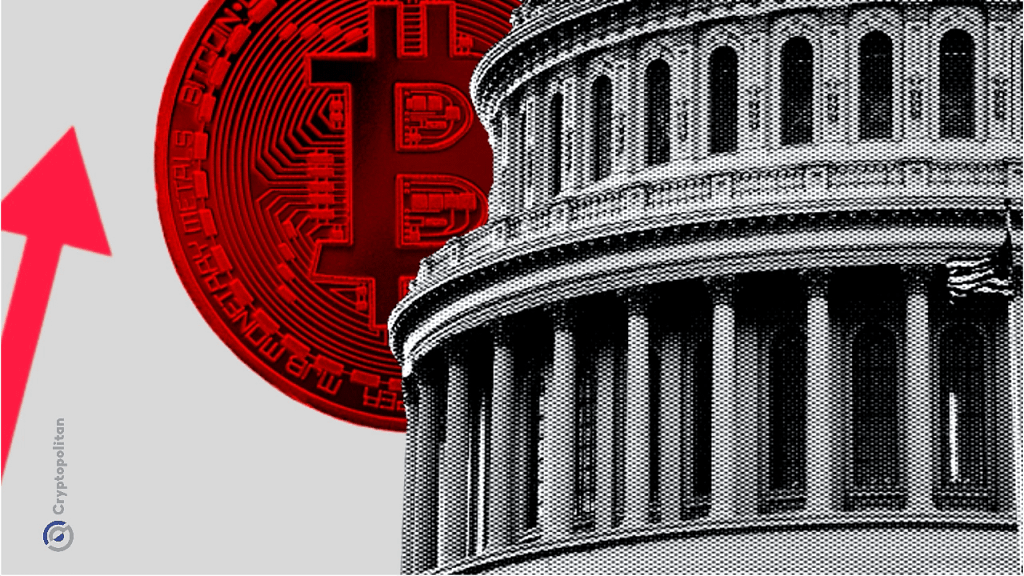
Senator Lummis introduces bill to allow cryptocurrency as mortgage collateral
A Senate bill would allow Americans to use cryptocurrency as collateral for mortgages without converting holdings to cash, marking the first legislative effort to codify crypto-asset recognition in traditional housing finance. Institutional investors face a critical regulatory test: whether digital assets can function as stable collateral in a long-term, systemically important lending market.
- Senator Cynthia Lummis introduced the 21st Century Mortgage Act allowing crypto to serve as mortgage collateral without forced conversion to fiat currency.
- Only 36% of Americans aged 35 and younger own homes, versus older age groups, spurring proposals to expand homeownership through digital assets.
- Senate Democrats have formally warned that crypto volatility and illiquidity pose systemic risks to housing finance, demanding a full FHFA risk assessment.
- 36% Homeownership rate for Americans aged 35 or younger, versus older cohorts
- July 24 Date Senate Democrats submitted formal risk concerns to FHFA Director William Pulte
- 2 Parallel crypto mortgage bills advancing in House and Senate simultaneously
US Senator Cynthia Lummis of Wyoming has introduced legislation that would officially recognize cryptocurrency as collateral for single-family mortgages, according to reporting first covered by Cryptopolitan. The 21st Century Mortgage Act would permit borrowers to pledge digital assets directly to lenders without liquidating holdings into fiat currency, allowing the crypto’s market value to count toward meeting lending requirements. The bill codifies legislative action that follows a June directive from the US Federal Housing Finance Agency instructing federal mortgage agencies to evaluate crypto assets in loan applications. Lummis framed the measure as a response to declining homeownership among younger Americans and positioned it as economic inclusion for a digitally native investor class.
Lummis targets homeownership gap among millennials and Gen Z through crypto collateral
The impetus for the bill rests on demographic data. According to a US Census Bureau report cited by Lummis, only 36% of Americans aged 35 and younger owned homes in the first quarter of 2025, compared with significantly higher ownership rates among older cohorts.
Lummis argued that permitting crypto to count as mortgage collateral could open a new pathway to homeownership for digitally savvy younger investors who hold substantial digital-asset portfolios but lack sufficient traditional wealth to qualify for conventional loans.
The risk that crypto holders face today is forced liquidation: selling assets at potentially unfavorable prices to qualify for a mortgage, thereby forfeiting future appreciation. Allowing crypto to serve as collateral without conversion addresses that friction point directly.
Senate Democrats warn crypto volatility poses systemic risk to housing finance
Opposition has crystallized within the Democratic caucus. On July 24, a group of Senate Democrats submitted a formal letter to FHFA Director William Pulte warning that cryptocurrency remains too volatile and illiquid to function as stable collateral for long-term mortgage obligations.
The Democrats raised three specific concerns: that borrowers may be unable to convert crypto to cash at sufficient prices to cover mortgage payments if markets decline sharply; that crypto-backed lending could inflate housing prices and fuel speculation; and that sudden cryptocurrency value collapse could destabilize the broader economy.
The letter demanded a comprehensive risk assessment before FHFA proceeds with any policy framework incorporating digital assets into federal mortgage underwriting standards. This disagreement mirrors a larger pattern in Congress, where crypto policy has increasingly split along ideological lines rather than party affiliation.
Companion House bill and international precedent accelerate crypto mortgage momentum
The Senate measure has a House counterpart. Representative Nancy Mace introduced the American Homeowner Crypto Modernization Act on July 14, requiring mortgage lenders to factor digital assets held in crypto brokerage accounts into underwriting decisions. The parallel legislative push suggests sustained momentum behind the concept.
Internationally, precedent is emerging. In July, Australian fintech Block Earner announced a Bitcoin-backed mortgage product after Australia’s Federal Court ruled that such crypto loan products fall outside the scope of existing financial regulations.
That legal victory abroad may embolden US policymakers to move forward, though it also signals how unsettled the legal status of crypto collateral remains across major markets.
The Senate will return from August recess in September with this measure pending, and FHFA has not yet issued the risk assessment Democrats demanded. The central question remains unresolved: whether the agency will embrace crypto collateral voluntarily or whether Congress will force the issue through legislation, and on what timeline. Lummis has signaled intent to push the bill forward, but Democratic skepticism and the FHFA’s own cautious posture mean the outcome is far from certain.