
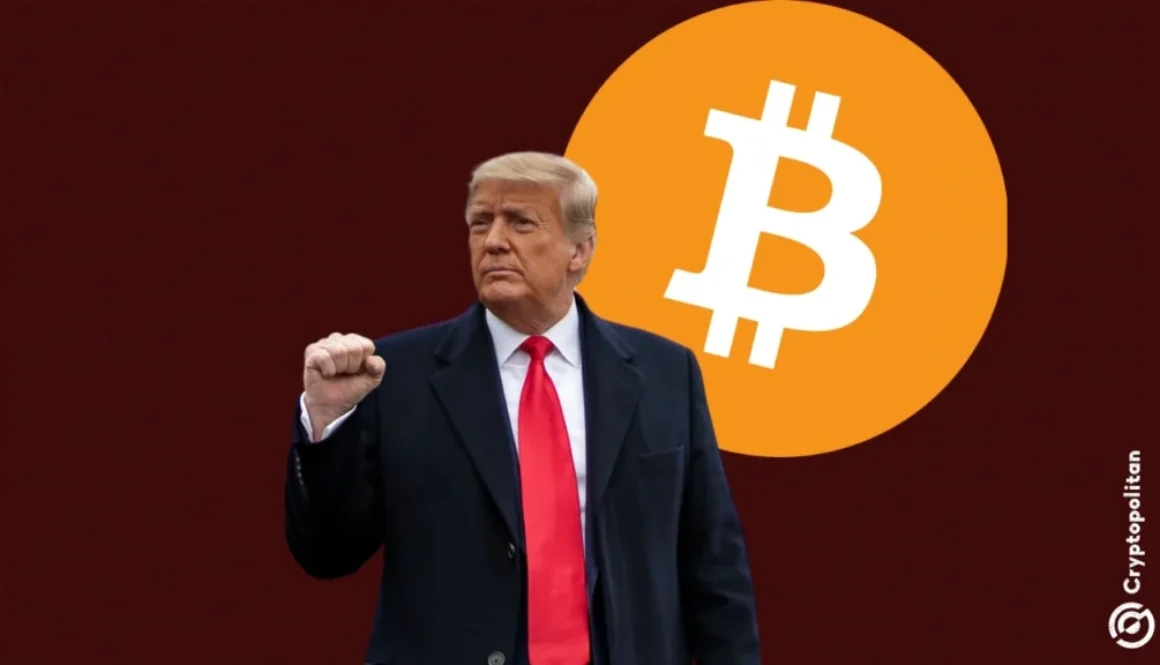
President Trump signs executive order to stop debanking of the Bitcoin and crypto industry
President Trump has signed an executive order aimed at addressing what his administration characterizes as politically motivated account closures and service denials within the banking sector. The action, titled “Guaranteeing Fair Banking for All Americans,” represents a significant regulatory intervention into financial institution practices and directly affects how banks handle customers in politically sensitive sectors, including the cryptocurrency and digital asset industries.
Scope of the Executive Order
The directive prohibits banks and federal regulators from denying financial services based on customers’ political beliefs, religious affiliations, or engagement in lawful business activities. It specifically targets the removal of “reputational risk” as a justification for account termination or service denial—a concept that has become increasingly controversial in regulatory discussions.
According to White House documentation, the order addresses what the administration views as systematic abuses. These alleged violations include frozen payrolls, account opening rejections, and blocked payment processing for individuals and businesses engaged in legal operations. The administration provided specific examples, such as a major financial institution initially refusing to process ticket payments for a Republican political event, only reversing course after public pressure.
Nobody knows the banking industry better than me, and I’m not going to let them take advantage of you any longer.
— President Trump
The White House fact sheet also highlighted cases where federal regulators allegedly encouraged banks to flag transactions associated with retailers like Bass Pro Shop and Cabela’s, or to scrutinize payments containing terms such as “Trump” or “MAGA” without any underlying evidence of illegal activity. Two major banking institutions were cited as having denied services to Trump’s own business ventures.
Implementation and Regulatory Requirements
The executive order contains specific directives for federal banking regulators. They must systematically remove language from guidance documents and examination materials that supports what the administration calls “politicized or unlawful debanking.” This represents a direct challenge to existing regulatory frameworks that have governed financial institution decision-making in recent years.
Regulators are required to conduct comprehensive reviews of financial institutions to identify current or historical policies that encourage discriminatory account closures. Findings can result in enforcement actions, including financial penalties or consent decrees—formal agreements that impose operational restrictions on violating institutions.
Cases involving unlawful debanking based on religious grounds must be formally reported to the U.S. Attorney General, creating a new reporting mechanism within the federal justice system.
The Small Business Administration receives instructions to work with financial institutions under its purview to reinstate previously terminated customers whose accounts were closed for allegedly political or ideological reasons. Federal regulators are further tasked with developing a comprehensive strategy to prevent such practices going forward, including potential legislative recommendations.
Industry Context and Market Implications
The banking sector’s approach to account management has evolved significantly since the 2008 financial crisis. Enhanced regulatory scrutiny and compliance requirements have created institutional risk-aversion, with many banks adopting strict policies regarding customer segmentation and account termination. The concept of “reputational risk”—the potential damage to a bank’s brand or regulatory standing from association with certain customers or industries—has become embedded in risk management frameworks across major financial institutions.
This executive order emerges within a broader market context where banks face competing pressures: regulatory mandates for comprehensive compliance, shareholder expectations for risk mitigation, and increasingly, political and executive branch directives regarding service provision. The order’s intervention signals a recalibration of these priorities, placing greater emphasis on non-discrimination and service continuity.
Community banks and regional financial institutions, which comprise a significant portion of the U.S. banking ecosystem, have reported varying experiences with account denials. While some have maintained more flexible policies, larger institutions with extensive regulatory oversight and compliance infrastructure have implemented more restrictive approaches. This order may particularly impact the largest banking institutions, which hold disproportionate market share and regulatory scrutiny.
Implications for the Cryptocurrency Sector
This action carries particular significance for cryptocurrency companies and blockchain-focused businesses. The digital asset industry has faced persistent banking challenges, with numerous crypto firms and exchanges reporting difficulties obtaining and maintaining bank accounts. These obstacles have frequently been attributed to regulatory uncertainty and perceived reputational concerns from financial institutions.
The executive order’s prohibition on using reputational risk as a disqualifying factor could substantially alter how banks approach cryptocurrency-related accounts. Historically, financial institutions have cited vague or broad reputational concerns when declining service to digital asset companies, even those operating within regulatory compliance frameworks.
The banks discriminate against conservatives, they discriminate against religion, because they’re afraid of the radical left.
— President Trump
However, the order’s practical impact will depend on regulatory interpretation and enforcement. Banks may still decline service based on documented compliance risks, anti-money laundering concerns, or other established regulatory grounds. The distinction between politically motivated denial and legitimate risk management will become a central point of contention in subsequent regulatory guidance.
For the cryptocurrency industry, banking access has represented one of the most significant operational constraints. Stablecoins, exchanges, custody providers, and blockchain infrastructure companies have collectively faced withdrawal of banking relationships that predated widespread regulatory frameworks for digital assets. The executive order creates potential leverage for these companies to challenge past account closures and negotiate renewed access, particularly if their business models align with emerging regulatory standards from agencies like the SEC and CFTC.
Legislative and Broader Context
The executive order references a Senate Banking Committee hearing where witnesses testified about experiencing account closures based on political or ideological considerations. This legislative context suggests bipartisan concerns about banking industry practices, though interpretations of the underlying causes differ significantly across the political spectrum.
Cryptocurrency advocates have long argued that banking access restrictions represent a critical barrier to industry growth and legitimacy. Recent crypto industry developments show increasing regulatory engagement, but banking relationships remain challenging for many digital asset firms. This order signals a shift in the regulatory approach toward such denials.
The order establishes multiple accountability measures: regulator guidance reviews, institutional policy audits, potential financial penalties, consent decree authority, and Attorney General reporting requirements for religion-based denials.
The administration’s characterization of these practices as “unlawful” represents an aggressive legal framing that may face judicial challenge. Banks and their regulatory overseers may argue that service denial decisions reflect legitimate risk assessments rather than political discrimination. This distinction will likely define litigation and regulatory disputes in coming months.
Financial regulators now face competing pressures: implementing the executive order’s directive to eliminate perceived political discrimination while maintaining prudential standards and anti-money laundering compliance. Regulators must develop guidance that accommodates both requirements, a task that will test the boundaries of executive authority over regulatory agencies.
The cryptocurrency sector’s response to this development has been notably cautious. While some industry participants view the order favorably as removing arbitrary barriers to banking access, others note that substantive banking challenges stem from legitimate regulatory uncertainty rather than pure political motivation. Clarifying the distinction between illegitimate discrimination and justified risk management remains critical for industry stakeholders.
Forward-Looking Considerations
This executive order represents one of the most direct federal interventions into banking discrimination practices in recent memory. Its long-term effectiveness will depend on regulatory implementation, judicial review, and whether the underlying concerns reflect genuine political bias or more complex compliance and risk assessment dynamics. Regulatory agencies must translate the order’s directives into operational guidance that provides clarity to financial institutions while maintaining compliance infrastructure.
For the cryptocurrency industry specifically, the order may reduce some barriers to banking access. However, sustainable solutions to crypto banking challenges likely require broader regulatory clarity on digital asset classification, custody standards, and anti-money laundering integration—matters that extend beyond this order’s scope. The industry’s continued growth and institutional adoption depend not only on access to banking services, but on regulatory frameworks that enable banks to serve crypto customers with confidence in their compliance posture.
Market participants should expect heightened scrutiny of banking policies, potential regulatory enforcement actions against institutions with discriminatory historical practices, and evolution in regulatory guidance regarding service provision to politically sensitive sectors. The practical implementation of this order will unfold over months, with regulatory guidance and enforcement decisions shaping its ultimate impact on the financial services landscape.
Get weekly blockchain insights via the CCS Insider newsletter.