Bitcoin Prints A 2022-Like Iran War Chart, But It’s Not
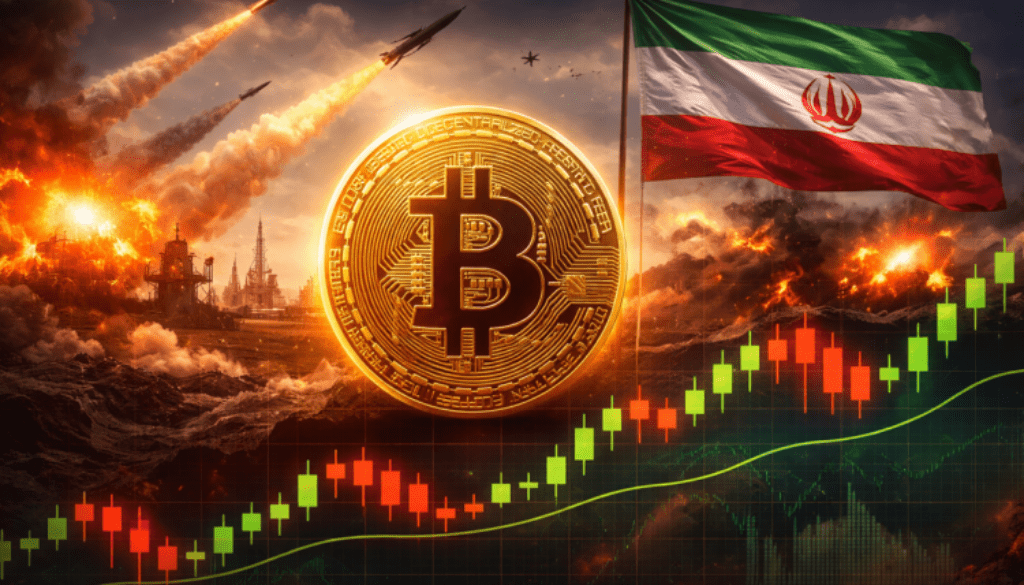
As geopolitical tensions escalate in the Middle East, market participants are drawing parallels to 2022’s Russia-Ukraine invasion—warning that Bitcoin and risk assets face a similar downturn ahead. But according to macro analyst Alex Krüger, the comparison obscures a critical distinction: while the chart patterns may look familiar, the underlying economic conditions that drove the 2022 collapse are fundamentally absent today.
The Chart Pattern That Isn’t a Match
The visual similarity between current market conditions and early 2022 is undeniable. Bitcoin initially spiked following the geopolitical shock, then retreated as broader risk-off sentiment took hold—mirroring the exact sequence investors witnessed during Russia’s invasion of Ukraine. This surface-level resemblance has prompted calls for caution across trading desks and cryptocurrency platforms.
Krüger’s central argument challenges this narrative head-on. Yes, he acknowledges, the technical setups appear nearly identical. The energy shock is real, and markets are exhibiting fear-driven behavior. But the macro backdrop—the factor that ultimately determined whether 2022 became a catastrophic year for risk assets—tells a different story today.
Markets are panicking. Everyone sees 2022 again. The chart setups look almost identical and the energy shock is real. But the comparison falls apart under scrutiny. The macro is different, and the oil disruption is transitory.
— Alex Krüger, Macro Analyst
The Federal Reserve’s Constrained Position
The 2022 collapse wasn’t primarily triggered by the invasion itself. Rather, the war served as a catalyst for an already-deteriorating macro environment. When Russia invaded Ukraine on February 24, 2022, Bitcoin and equities initially bounced—only to resume their downward trajectory as a different problem reasserted itself.
The core issue was monetary policy. The Federal Reserve entered 2022 dramatically behind the inflation curve, with year-over-year price increases at 7.9% and the real Fed Funds rate deeply negative at approximately -7.5%. This meant that even as the central bank began raising rates, it was still providing net stimulus to the economy.
The oil spike from the invasion made this situation worse, not better. Higher energy prices fed directly into inflation expectations, forcing the Fed into an even more aggressive hiking cycle. The central bank had no flexibility to look through the supply shock—it was forced to tighten monetary conditions regardless of the geopolitical circumstances.
In early 2022, the real Fed Funds rate sat at -7.5%, meaning inflation was running nearly 8 percentage points ahead of interest rates. This extraordinary gap left the Fed with no choice but to raise rates aggressively, creating a headwind for all risk assets including Bitcoin.
The Policy Environment Today
The monetary backdrop in 2025 is starkly different. The Fed currently operates in what Krüger describes as “wait-and-see mode,” with inflation trending downward and real rates at approximately +1.2%. This positive real rate suggests the central bank is no longer providing emergency monetary accommodation.
This distinction matters enormously for how the Fed responds to supply shocks. Even if the current geopolitical tensions push oil prices higher and temporarily elevate headline inflation, the Fed has genuine flexibility to look through the disruption. Officials are not forced to tighten aggressively into a supply-driven price shock as they were in 2022.
Recent Fed communication supports this interpretation. John Williams noted that oil would affect the near-term inflation outlook, but emphasized that persistence was what mattered—signaling the central bank will maintain its measured approach unless the disruption proves structural rather than temporary. Treasury Secretary Scott Bessent explicitly stated the US is “in a very different position than when Russia invaded Ukraine.”
Meanwhile, other Fed speakers have maintained their forward guidance without major revisions. Neel Kashkari continues to anticipate one to two rate cuts if inflation cools as expected. Beth Hammack characterized current policy as “neutral” while advocating for an extended pause. Four Fed officials have spoken since the strikes began without altering their outlooks.
With real rates at +1.2% and inflation on a declining trend, the Federal Reserve retains significant flexibility to accommodate transitory supply shocks—a luxury it did not possess in early 2022. This policy asymmetry is the primary reason geopolitical shocks carry different implications for risk assets today.
Temporary vs. Structural Shocks
The second pillar of Krüger’s analysis concerns the nature of the energy disruption itself. In 2022, Europe lost access to approximately 4.5 million barrels of Russian oil per day, representing a structural break in global energy supply that persisted for years. This wasn’t a temporary hiccup—it was a permanent reallocation of energy flows that required sustained economic adjustment.
Current geopolitical tensions, by contrast, appear more likely to produce temporary supply disruptions rather than lasting structural changes. The US economy is also less oil-dependent than it was in past decades, reducing the magnitude of any price shock’s economic impact.
This distinction shapes how investors should think about duration. In 2022, the inflation shock lasted precisely because the supply shock was durable. Oil prices didn’t normalize within months—they remained elevated, keeping inflation persistent and the Fed in tightening mode. A temporary energy disruption resolves differently: prices spike briefly, inflation nudges higher temporarily, and the Fed’s long-term hiking cycle remains intact.
For cryptocurrency markets, this matters because it determines whether geopolitical risk translates into sustained monetary tightening. In 2022, it did. Today, the base case suggests it won’t.
Historical Precedent for Geopolitical Shocks
Krüger’s historical analysis reveals that wars and kinetic conflicts have frequently generated buying opportunities in financial markets, despite initial risk-off reactions. This pattern suggests that treating geopolitical shocks as inherently negative for risk assets misses an important nuance.
The real damage to Bitcoin and equities in 2022 came not from the invasion but from what followed: a policy response that had no choice but to tighten aggressively. If that policy constraint is absent—as current Fed communication suggests—then the geopolitical event becomes a temporary market disruptor rather than a fundamental repricing catalyst.
Investors accustomed to risk management deserve clarity on this distinction. Crypto market participants should monitor Fed communication closely rather than extrapolating charts from two years ago. The setups may rhyme, but the verse has changed significantly.
Why Crypto Markets React Differently Today
The cryptocurrency industry has matured substantially since 2022. Bitcoin’s integration into traditional finance—through spot ETF approvals in the US and growing institutional adoption—has paradoxically insulated digital assets from the most extreme policy scenarios. When the Fed was forced to tighten aggressively in 2022, crypto markets suffered cascading liquidations driven by margin requirements and forced deleveraging. Today’s market structure is more resilient to transitory shocks because leverage cycles operate differently in a policy environment where rate cuts remain possible.
The broader implications extend across the digital asset ecosystem. Stablecoin reserve management, exchange-traded product flows, and on-chain lending dynamics all benefit from a Fed that maintains optionality rather than one locked into a tightening cycle. This structural difference explains why Bitcoin rallied in 2024 despite persistent geopolitical risks—the underlying monetary conditions improved, not worsened.
Global Energy Markets and Supply Chain Resilience
The global energy market itself has adapted since Russia’s invasion. The US now leads in crude oil production, OPEC+ has demonstrated supply management discipline, and energy infrastructure investments have created redundancy in critical regions. These supply-side improvements reduce the probability that geopolitical incidents translate into persistent price inflation.
Additionally, the renewable energy transition—accelerated by the 2022 energy crisis—has begun reducing the correlation between geopolitical shocks and economic outcomes in energy-intensive sectors. While oil price spikes still matter, their systemic impact on growth and inflation expectations is structurally weaker than it was three years ago.
For market participants assessing risk, this represents a meaningful shift in how to price uncertainty. Historical crisis models that assume energy shocks automatically trigger Fed tightening are becoming obsolete as the relationship between commodity prices and monetary policy loosens under different inflation regimes.
Conclusion: Context Over Pattern Matching
The critical insight from Krüger’s analysis applies broadly across financial markets: chart pattern similarity without contextual understanding is a recipe for poor decision-making. The 2022 parallel has intuitive appeal—wars cause energy spikes, energy spikes cause inflation, inflation causes the Fed to tighten. But this mechanical view ignores the genuine differences in initial conditions, policy constraints, and market structure that prevail today.
Investors should focus on three questions when evaluating geopolitical risk in the current environment: First, is the Fed constrained by inflation running ahead of its mandate? (No—inflation is trending downward.) Second, is the energy disruption likely to be structural or temporary? (Current evidence points to temporary.) Third, has Fed communication shifted toward tightening bias? (No—officials maintain wait-and-see guidance.)
Bitcoin and risk assets face real volatility from geopolitical events. But volatility is not catastrophe. The 2022 collapse occurred because policy makers had no choice but to tighten aggressively while economic conditions deteriorated. Today, the Fed retains flexibility to accommodate supply shocks without derailing its patient approach to rate decisions. This asymmetry is the essential difference that separates historical pattern repetition from informed market analysis.
For investors navigating uncertain geopolitical terrain, the lesson is clear: understand the macro foundations beneath the charts. Chart patterns provide context for near-term volatility, but policy regimes determine whether volatility becomes a multi-year bear market or a temporary correction.
Get weekly blockchain insights via the CCS Insider newsletter.